Brewing Methods
Pour-Over vs Drip Coffee: Which to Choose
Pour over vs drip coffee compared on taste, cost, and convenience so you can pick the right brewing method for your kitchen and morning routine.
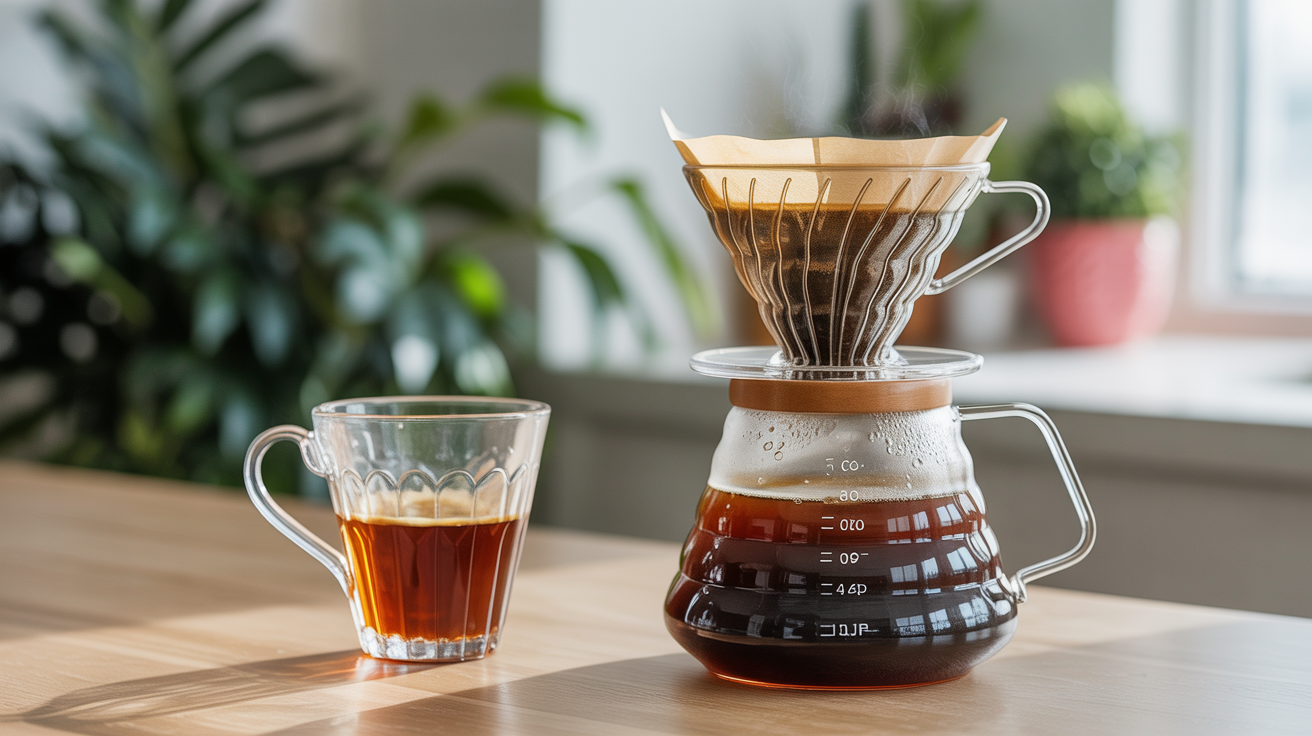
Both pour-over and drip coffee run hot water through ground coffee into a filter. That shared foundation makes the drip vs pour over coffee debate feel more complicated than it needs to be, because the gap between them is real but specific. If you want more control and a cleaner, more expressive cup, pour-over earns its reputation. If you want eight mugs ready before anyone in the house is fully awake, a drip machine does what no kettle and cone can match. The right choice depends on how you actually use your mornings, not on which method looks better on a coffee shelf.
How Each Method Works
The mechanics explain the difference in flavor better than any tasting note.
Pour-Over: Manual Water Placement
You heat water to 195-205°F (90-96°C), place a paper or metal filter in a cone or carafe dripper, add ground coffee (a starting point is 25g of coffee to 375-400ml of water, or roughly a 1:15 to 1:16 ratio), and pour the water yourself. The usual approach starts with a short bloom pour: about 50ml of water over the grounds, a 30-45 second pause to let trapped CO2 escape, then two or three more controlled pours until the full brew volume is reached. Total time from first pour to finished cup runs about 3 to 4 minutes.
Because you control where the water lands, how fast you pour, and when you pause, you can steer extraction toward clarity, brightness, or body. The manual nature is the feature, not a limitation.
Drip Machine: Automated Brewing
A drip machine heats a reservoir of cold water and pumps it through a showerhead onto the grounds sitting in a basket above a carafe. You measure coffee and water, press a button, and walk away. The machine manages everything else. A full 10-cup carafe typically brews in 5 to 8 minutes.
The quality of a drip machine turns almost entirely on how consistently it reaches 195-205°F (90-96°C) at the showerhead. Budget machines often brew at 175-185°F (79-85°C), which underextracts the grounds and leaves coffee tasting thin or sour. Machines certified by the Specialty Coffee Association meet stricter temperature and saturation standards. That certification is one reliable indicator of whether a drip machine will perform at the level the grounds deserve.
How They Taste Different
The filter coffee comparison between these two methods often gets framed as pour-over winning on flavor, full stop. The reality is more specific.
Pour-over tends to produce a brighter, lighter-bodied cup with more defined acidity and cleaner finish. A well-made V60 or Chemex brew can show fruit notes that a drip machine often softens into the background. The paper filter traps most oils and fine sediment, which keeps the cup clear and lets subtle flavors come through.
Drip machines with a quality build and proper water temperature can produce genuinely excellent coffee. The difference is that the brew profile is fixed by the machine's engineering rather than your hands. You cannot adjust mid-brew if the grounds look dry on one side. With a good machine, that rigidity is fine. With a poor one, there is no workaround.
Grind matters for both. A medium grind works as a starting point for either method, but you will likely need to dial finer for pour-over (to slow extraction through a fast-draining cone) and coarser for a flat-bottom drip basket (which holds water longer). A burr grinder gives you the consistent particle size that makes those adjustments predictable.
Cost and Counter Space
Neither method is inherently expensive. The filter coffee comparison on price looks like this:
Pour-over gear:
- Dripper (glass, ceramic, or plastic cone): $10-$45
- Gooseneck kettle with temperature control: $35-$90
- Kitchen scale: $10-$25
- Paper or metal filters: $5-$12 per box
Total entry cost is roughly $60-$170 depending on the kettle. A basic pour-over setup takes very little counter space, and the kettle doubles as a general-purpose water heater.
Drip machine:
- Budget models: $25-$60 (with temperature caveats above)
- Mid-range: $100-$200
- SCA-certified: $150-$350
A good drip machine costs more upfront but consolidates heating, brewing, and holding into one appliance. The tradeoff is counter real estate, and most machines are not especially space-efficient.
Running cost for both is low. Paper pour-over filters run less than a few cents each. Machine carafe carafes and shower heads need periodic descaling but no costly replacement parts.
Which Method Fits Your Routine
This is the more useful question. The taste gap between methods, while real, is narrower than the lifestyle fit.
Pour-Over Is a Good Fit If You...
- Brew one or two cups at a time. A single pour-over cone is calibrated for small volumes; scaling up means multiple batches.
- Want to engage with brewing as a brief, focused part of your morning rather than treat it as a background task.
- Enjoy dialing in variables. Once you have a working recipe (grind size, ratio, pour speed), you can hold it consistently and refine from there. See how to make pour-over coffee at home for a step-by-step starting point.
- Already own a decent kettle. A gooseneck helps with pour control, but any kettle with a thermometer gets you close.
Drip Machine Is a Good Fit If You...
- Brew multiple cups in one go, whether for yourself over an extended morning or for a household.
- Want coffee ready with minimal attention. You can grind the night before, set the timer, and come down to a full carafe.
- Prefer consistency without manual effort. A calibrated machine repeats the same extraction every morning without variation.
- Share your coffee maker with people who do not want to learn a brewing method.
There is nothing wrong with owning both. Many home brewers use a drip machine on weekdays and pour-over on weekend mornings when they have time to slow down. The equipment cost for a basic pour-over setup is low enough that adding one to a drip-machine household is straightforward.
If you want to explore other manual options alongside pour-over, AeroPress recipes and technique covers a method that sits somewhere between espresso and filter coffee, with even more control over brew variables.
A Quick Side-by-Side
| Factor | Pour-Over | Drip Machine |
|---|---|---|
| Brew time (single cup) | 3-4 min | 5-8 min (more coffee) |
| Hands-on effort | High | Low |
| Volume per batch | 1-2 cups ideal | 4-12 cups typical |
| Temperature control | You manage it | Machine manages it |
| Flavor clarity | High | Good (varies by machine) |
| Entry cost | $60-$170 | $25-$350 |
| Counter footprint | Small | Medium-large |
Frequently Asked Questions
Does pour-over use a different ratio than drip?
Starting ratios are similar: 1:15 to 1:17 (coffee to water by weight) works for both. A common pour-over starting point is 25g of coffee to 375-400ml of water. Drip machines often work better with slightly more coffee per liter because their showerheads cover the grounds less evenly than a careful hand pour. Try 60g per liter as a baseline for drip and adjust from there.
Can a drip machine produce coffee as good as pour-over?
Yes, with a quality machine that reaches proper brew temperature. The ceiling for drip coffee is high. The floor, on cheap machines that brew at low temperatures, is noticeably lower than a basic pour-over setup. If flavor quality is the priority, the drip machine investment matters more than the brewing method.
What grind size should I use for each method?
Pour-over typically calls for medium to medium-fine depending on the dripper. A V60 with a fast-draining single hole usually wants medium-fine. A Chemex with its thick paper filter can handle medium-coarse. Drip machines with flat-bottom baskets generally do well with medium to medium-coarse. The best approach is to start at medium for either method and adjust based on whether the cup tastes sour (grind finer) or bitter (grind coarser).
Is pour-over harder to learn?
The learning curve is modest. Once you settle on a recipe (dose, ratio, water temperature, number of pours), the process is repeatable within a week or two of daily practice. The main skill is consistent pour speed and placement, which improves quickly. Drip machines require almost no technique but reward attention to grind consistency and coffee freshness just as much.
Can I make iced coffee with both methods?
Both methods adapt to iced brewing. Pour-over lends itself to flash-brew, where you brew directly onto ice using a concentrated ratio (roughly 1:10 instead of 1:15) so the ice dilutes the brew to normal strength as it melts. Drip machines can do the same if the carafe is replaced with a pitcher full of ice. For cold options that do not involve heat at all, French press coffee can also be used as a cold-steep vessel with a long overnight steep.