Espresso
How to Make Espresso Without a Machine
AeroPress, Moka pot, and French press can all produce strong espresso-style coffee at home. Here's how each method works and what to expect.
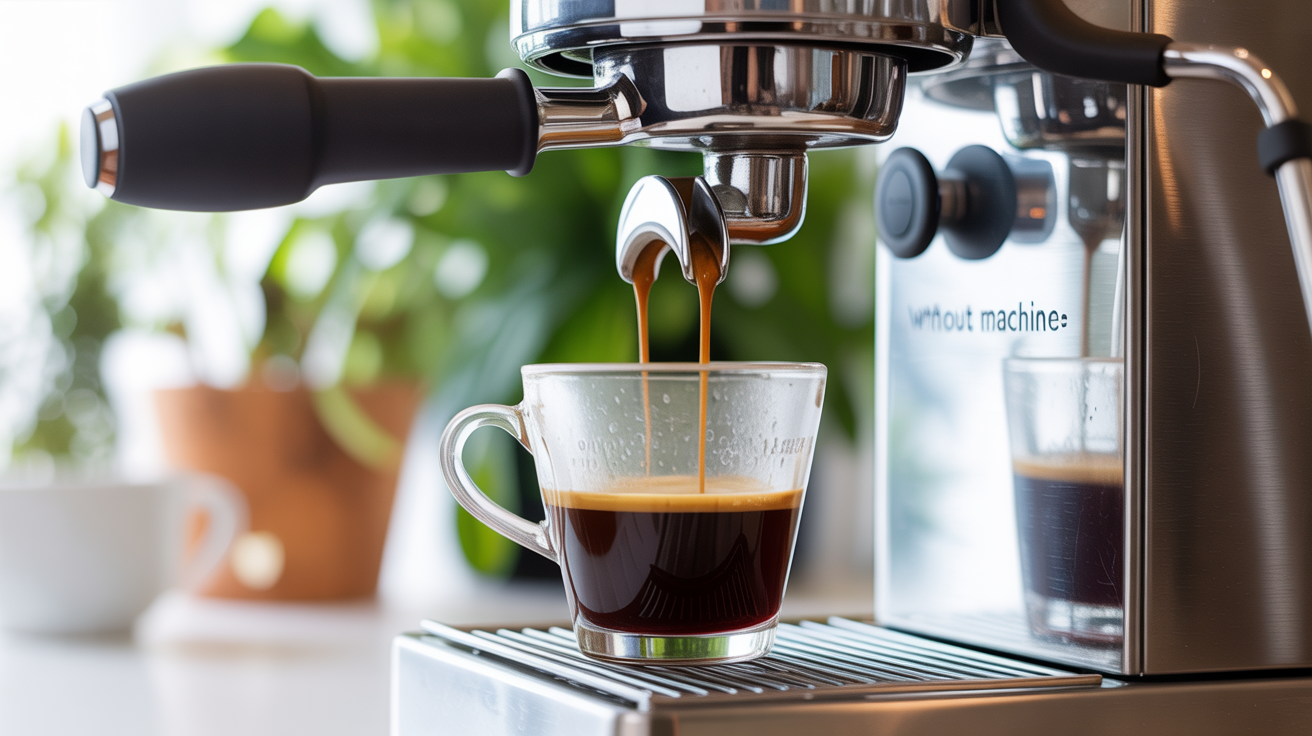
You can make a strong, concentrated coffee that tastes close to espresso using gear you probably already own. The honest caveat first: none of these methods produce true espresso, which requires 9 bars of pressure and a pump machine to achieve. What you get instead is concentrated, intense coffee that works in lattes, Americanos, and most drinks calling for a shot. That's good enough for most mornings.
What Makes Espresso "Espresso"
True espresso is defined by pressure, not grind size or roast level. A pump machine forces nearly-boiling water through finely ground coffee at 9 bars of pressure in 25-30 seconds, the high-pressure method the National Coffee Association uses to define espresso. The result is a small, syrupy shot with crema (that pale foam layer) on top.
Without a machine, you can replicate the concentration and the flavor profile. You cannot replicate the crema or the exact mouthfeel. Some methods get closer than others.
A few things that apply across all three approaches:
- Use a fine-to-medium-fine grind. Coarser than that and the brew tastes thin.
- Use a dark or medium-dark roast. Light roasts at high concentration tend to taste sour without the pressure extraction that balances them.
- Use a 1:5 or 1:6 coffee-to-water ratio. Espresso machines pull a 1:2 ratio, but without pressure you need more water to properly extract the grounds.
- Preheat your equipment. Cold gear drops the brew temperature and under-extracts.
AeroPress Espresso
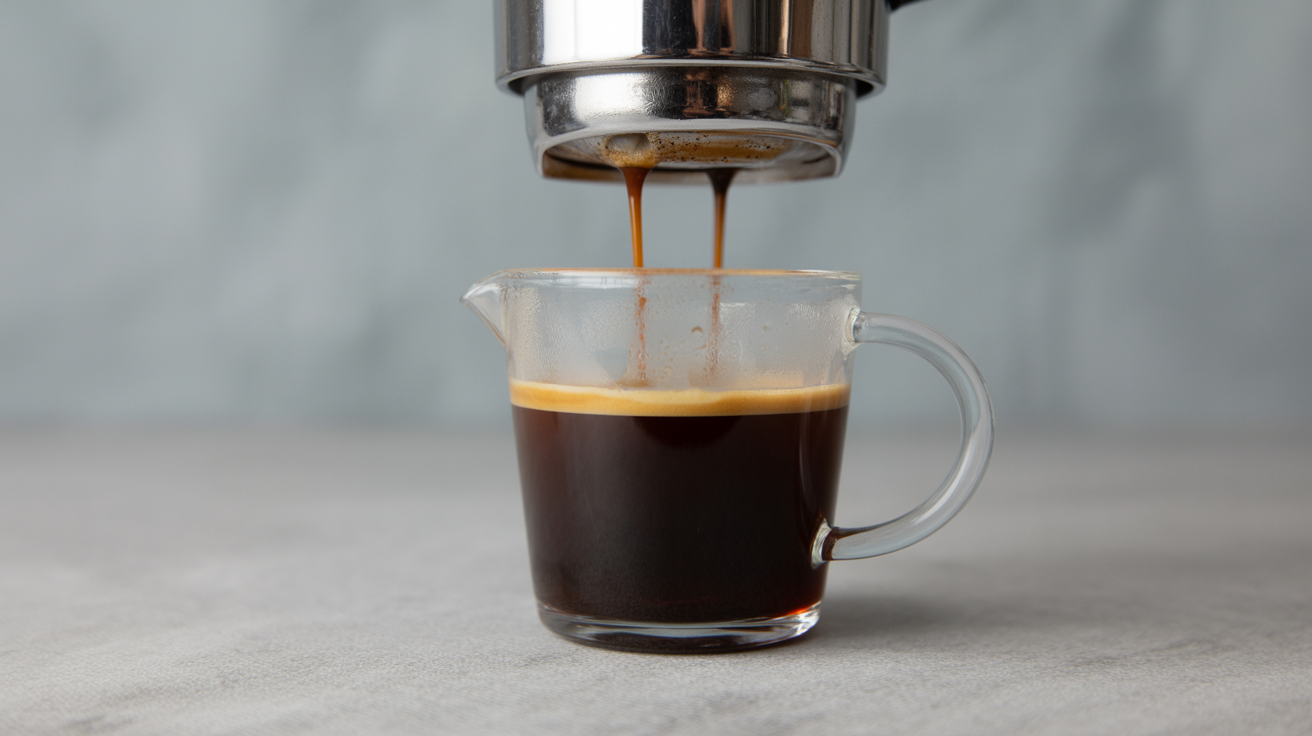
The AeroPress is the closest thing to a pressure-based brewer that doesn't cost hundreds of dollars. It generates 0.35-0.75 bars of pressure through manual pressing, which is nowhere near the 9 bars of a real machine, but it's enough to produce a denser, more textured cup than any other hand method.
What you need
- AeroPress (standard or Go)
- Fine grind, about the texture of table salt
- 18g coffee
- 50-60ml water at 88-92°C (190-197°F)
Method
Set the AeroPress in inverted position (plunger end down). Add 18g of finely ground coffee. Pour in 50-60ml of water just off the boil, stir 3-4 times, and put the filter cap on. Let it steep for 60 seconds, then flip onto your cup and press slowly over 20-30 seconds. Apply firm, even pressure.
The output is roughly 40-45ml of concentrated coffee. Drink it straight, or add 90ml of hot water for an Americano.
The main variable to dial in is grind size. Too fine and the plunger barely moves; the resulting cup tastes bitter and over-extracted. Too coarse and it presses too easily and tastes watery. Aim for a press that takes 20-30 seconds with moderate hand pressure. If you want to dig deeper into extraction troubleshooting, our espresso troubleshooting guide covers the common off-flavors and their causes.
Moka Pot Espresso
The Moka pot (also called a stovetop espresso maker) is the closest thing to an espresso machine in terms of the finished product. It brews under about 1.5 bars of steam pressure, which is still well below a pump machine, but produces a strong, bold coffee that Italians have been drinking for nearly a century as an espresso substitute.
What you need
- Moka pot (any size; 3-cup is a good starting point)
- Fine-medium grind, slightly coarser than AeroPress
- Coffee level: fill the basket to the rim without tamping
- Fresh, cold water filled to just below the safety valve
Method
Fill the bottom chamber with cold water to just below the pressure release valve. Fill the filter basket with ground coffee, leveled off but not packed down. Screw the top chamber on firmly. Place on a burner set to medium-low heat.
The brew takes 5-8 minutes. You'll hear a gurgling sound when the top chamber is nearly full; remove the pot from heat immediately. Running it too long scorches the coffee and produces a bitter, metallic taste.
The Moka pot rewards patience. High heat rushes the process and burns the coffee. Medium-low heat lets the extraction happen at the right pace.
One grind note: if your grind is too fine, the pot will clog or build too much pressure. Slightly coarser than your AeroPress setting is the right target.
French Press "Espresso"
French press is the least espresso-like of the three, but it's what most people have on hand. The method produces a full-bodied, strong cup by using a finer grind and a higher dose than you'd use for regular French press coffee.
It won't fool anyone into thinking it's espresso. It lacks the concentration and the body that pressure creates. But for use in a latte or over ice, it works.
What you need
- French press
- Medium-fine grind (coarser than AeroPress, finer than typical French press)
- 22g coffee
- 120ml water at 93-96°C (200-205°F)
Method
Add 22g of ground coffee to the press. Pour in 120ml of hot water, ensuring all grounds are saturated. Stir once. Place the lid on without pressing and let it steep for 4 minutes. Press slowly and serve immediately.
Letting the coffee sit after pressing means the grounds keep extracting through the metal filter, and the cup turns bitter fast. Pour it out as soon as you press.
Method Comparison
| Method | Pressure | Brew time | Closest to espresso? | Best for |
|---|---|---|---|---|
| AeroPress | ~0.5 bar | 60-90 sec | Yes | Concentrated shots, Americanos |
| Moka pot | ~1.5 bar | 5-8 min | Very close | Strong coffee, milk drinks |
| French press | 0 bar | 4 min | No | Strong coffee, iced drinks |
| Real espresso machine | 9 bar | 25-30 sec | Yes (it is espresso) | Everything |
Grind and Roast Notes
Grind size makes or breaks all three methods. Most home grinders (blade grinders especially) can't hit the fine, consistent grind that espresso extraction needs. A burr grinder is worth the investment if you're serious about this. Blade grinders produce uneven particles that simultaneously over- and under-extract, which is why the resulting cup tastes both bitter and sour at once.
On roast: medium-dark and dark roasts were historically designed for espresso-style extraction. They extract faster, which compensates for the lower pressure these methods produce. If you're buying coffee specifically for machine-free espresso, look for something labeled "espresso roast" or "dark roast" from a reputable roaster.
If you do eventually want to move toward a real machine, understanding how to dial in espresso grind and dose will save you a lot of wasted coffee in the early weeks.
Getting the Ratio Right
Espresso ratios feel counterintuitive if you're used to drip coffee. A proper espresso shot uses roughly 18g of coffee to produce 36ml of liquid (a 1:2 ratio). At home without pressure, you need more water to properly extract the same dose.
Start with these targets:
- AeroPress: 18g coffee / 55ml water (1:3 ratio)
- Moka pot: fill the basket fully / water to below valve (roughly 1:4-1:5 depending on pot size)
- French press: 22g coffee / 120ml water (1:5.5 ratio)
These are starting points. Taste your output and adjust. Tastes sour or thin? Grind finer or add less water. Tastes bitter and harsh? Grind slightly coarser or reduce steep time. The basics of pulling a balanced shot apply even without a machine once you understand what you're tasting for.
Frequently Asked Questions
Can you actually make espresso without an espresso machine?
Not technically. Espresso requires 9 bars of pressure to extract properly and produce crema. What you can make is a strong, concentrated coffee that resembles espresso closely enough for most purposes. The AeroPress and Moka pot come closest; French press is a more distant approximation.
Why doesn't my AeroPress coffee have crema?
Crema forms when high-pressure extraction emulsifies the oils in coffee. At 0.5 bars, the AeroPress can't produce real crema. Some people get a thin foam layer from the agitation during pressing, but it dissipates quickly and isn't the same thing. If you want crema, you need a machine.
Is Moka pot coffee the same as espresso?
No, but it's the closest you'll get without a machine. Moka pots brew at about 1.5 bars, which produces a strong, concentrated coffee with a similar flavor profile to espresso. Traditional Italian espresso culture grew up around Moka pots, so there's a genuine lineage there, even if the chemistry differs.
What grind size should I use for each method?
AeroPress: fine (table salt texture). Moka pot: fine-medium (slightly coarser than AeroPress). French press: medium-fine (noticeably coarser than AeroPress but finer than standard French press). All three are finer than drip coffee and require a burr grinder to get right.
Can I make a latte or cappuccino without an espresso machine?
Yes. Use an AeroPress or Moka pot to make the concentrated coffee base, then froth milk separately using a handheld frother, a French press (pump it vigorously with hot milk), or a small stovetop steamer. The result won't have the microfoam texture of a professional machine, but it's a reasonable approximation for home use.