Espresso
Espresso Troubleshooting: Why Your Shot Runs Off
Shot too fast, too slow, sour, or bitter? This guide diagnoses the most common espresso problems and tells you exactly how to fix them.
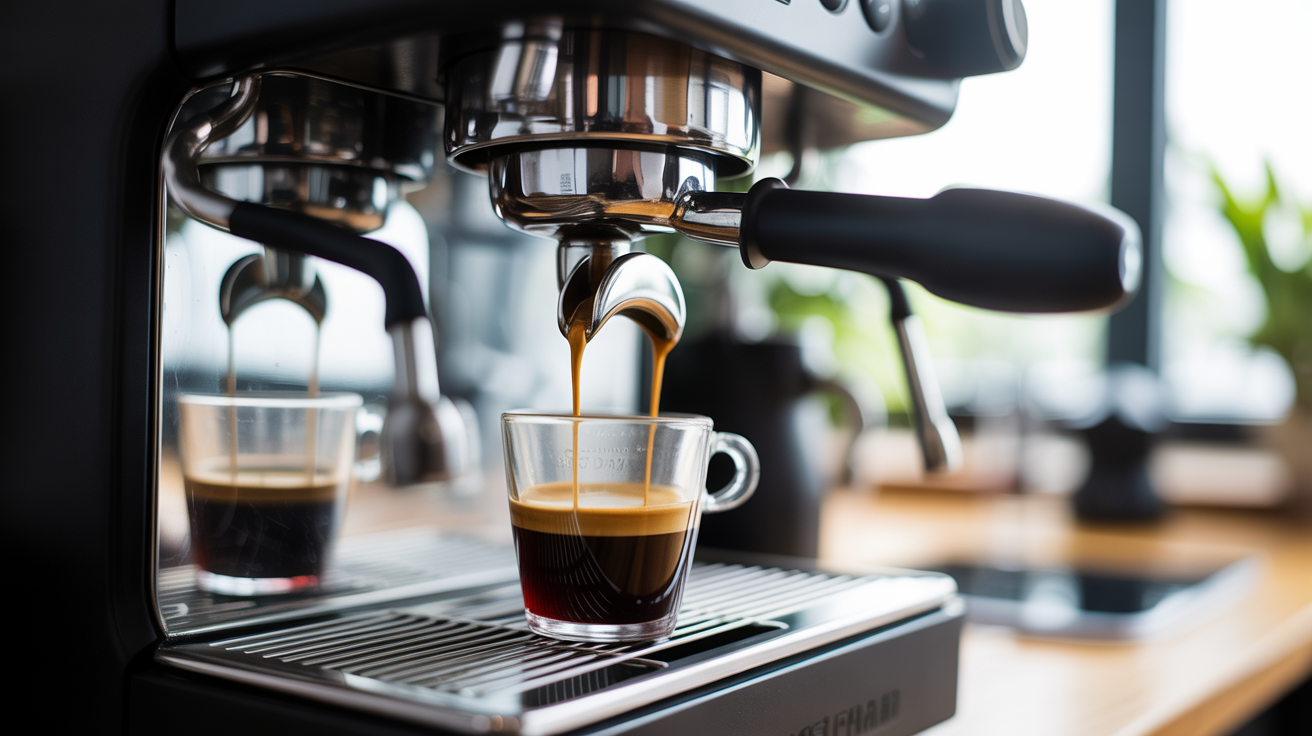
Most espresso problems come down to three variables: grind size, dose, and distribution. Once you know which symptom you're looking at, the fix is usually one adjustment away.
At a Glance
- Target is 18-20 g of coffee in, 36-40 g out, in 25-30 seconds. Anything well outside that window points to a specific, fixable cause.
- Fast shots (under 20 seconds) are almost always grind-too-coarse or dose-too-low; slow shots (past 35-40 seconds) are almost always grind-too-fine, dose-too-high, or a dirty machine.
- Sour means underextracted; bitter means overextracted. The grind is your first lever in both directions.
- Channeling produces sour and bitter in the same cup because water blasted through one path while the rest of the puck barely got wet.
- A weekly backflush and a monthly descale (with hard water) fix more bitterness than any grind adjustment will.
- Coffee changes as it ages off the roast date, so a recipe that worked two weeks ago may need a small grind adjustment now, with nothing else different.
Reading your shot before you taste it
Watch the shot while it pulls. The color, speed, and texture of the stream tell you a lot before the cup even reaches your lips.
A healthy shot starts with a short pre-infusion, then flows as a thick, honey-colored stream that gradually lightens toward the end. The whole pull should take 25 to 30 seconds from the moment you press the button (or 20 to 28 seconds from first drip if your machine doesn't pre-infuse), which lines up with the roughly 20-30 second contact time the National Coffee Association cites as the standard for espresso brewing.
If the stream is thin and watery from the start, it's running too fast. If the machine strains and the drip is nearly black, it's running too slow. Both are fixable.
The quick-reference table
| Symptom | Likely cause | Fix |
|---|---|---|
| Shot runs in under 20 seconds | Grind too coarse, dose too low, or poor tamp | Grind finer by 1 step; check dose is 18-20 g |
| Shot runs past 35 seconds | Grind too fine or dose too high | Grind coarser by 1 step; reduce dose by 0.5 g |
| Sour taste | Underextracted (water moved through too fast) | Grind finer, raise dose slightly, slow the shot |
| Bitter taste | Overextracted or water too hot | Grind coarser, drop temp 1-2°C, pull shorter |
| Blonding early then streaks | Channeling | Check distribution and tamp evenness |
| Uneven flow, one side drips faster | Channeling or uneven grind distribution | WDT before tamping; replace worn gasket |
| Splattering at start | Channeling or pump spike | Slow pre-infusion; check portafilter seal |
Shot runs too fast: the underextraction problem
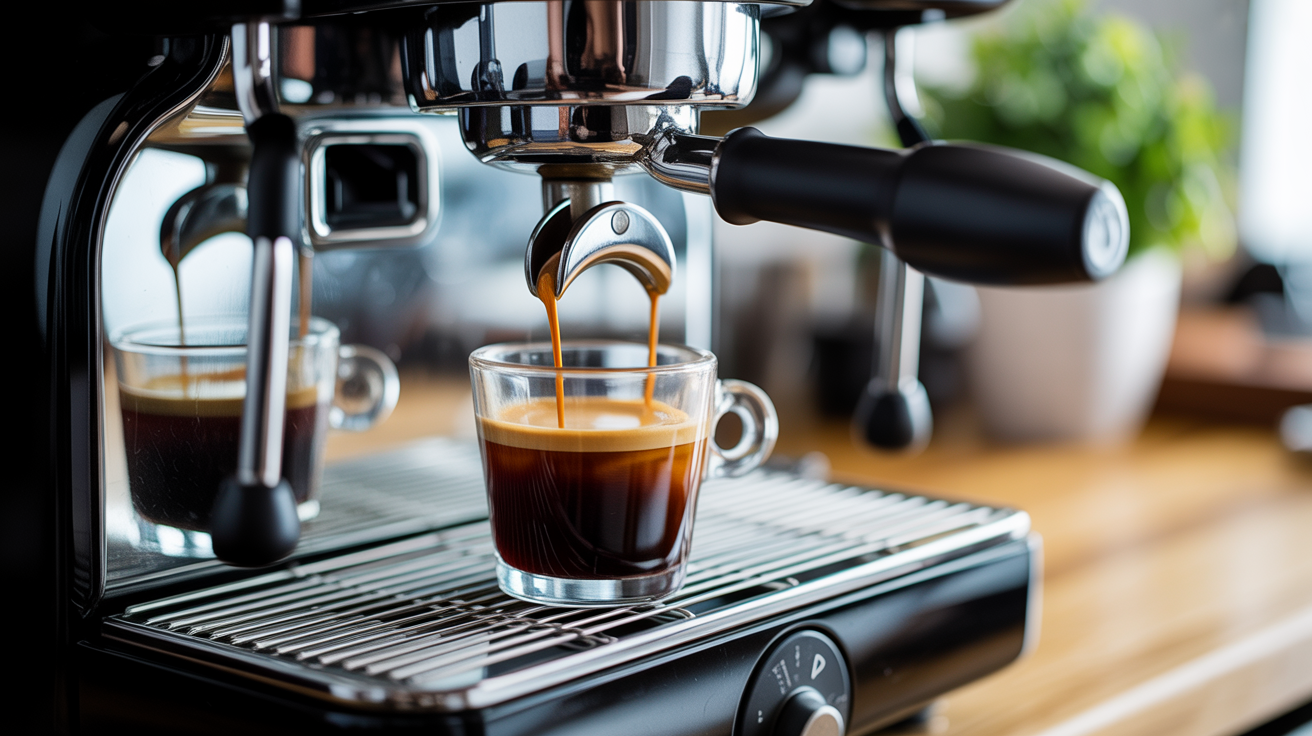
Fast shots are the most common beginner issue. The water rushes through the puck before it can dissolve enough soluble compounds, so the result tastes sour, thin, or grassy.
Target: 18-20 g of coffee in, 36-40 g of liquid out, in 25-30 seconds. If you're hitting 15 seconds or less, you have a grind or dose problem.
Grind coarser than you think. Espresso grind is fine, but there's a wide range within "fine." Many grinders ship with a default setting that's too coarse for espresso. If your shot tastes sour and runs fast, go finer in small steps, one click or notch at a time, and pull again.
Check your dose. An 18 g dose in a basket designed for 20 g leaves too much headspace. The puck is thin, the water blasts through. Weigh every dose on a scale. If you're eyeballing it, stop.
Tamp evenly, not harder. Tamping harder than about 15-20 kg of pressure doesn't do much; the main thing is a level surface. An angled tamp creates gaps on one side and the water finds them immediately.
Check your basket size against your dose. Baskets are usually stamped with a dose range (for example, "18-20g" or "20-22g"). Running a dose near the bottom of that range with an aggressive grind adjustment is one of the more overlooked causes of a fast, thin shot; the puck simply doesn't have enough depth to slow the water down.
If you want a more complete workflow for closing in on the right settings, the guide to dialing in espresso at home walks through it step by step.
Shot runs too slow: the overextraction problem
A shot that drips out over 40 seconds is usually overextracted. The coffee often tastes bitter, dry, or ashy. Sometimes there's a throat-coating harshness that lingers.
The grind is almost always the culprit. Go coarser. If you adjusted fine yesterday and now it's too slow, your coffee may have gotten stale and more porous, or the ambient humidity changed, which affects how tightly ground particles pack.
Other causes of slow shots:
- Dose too high (the puck is too dense for the water to push through)
- Basket clogged with old oils (clean with a blind filter and backflush weekly)
- Water temperature too high (above 94°C for most medium roasts)
- Spent or compressed old coffee sitting in the basket from a previous pull
- Beans well past their freshness window, which can extract unpredictably as the oils on the surface degrade
One check worth doing: after pulling a shot, pop the portafilter out and look at the puck. It should hold its shape and feel damp but firm. If it's soupy or has cracked, your machine may have a pressure spike at the start, which compresses the puck and causes slow extraction.
Sour espresso: what's actually happening
Sourness in espresso means underextraction. The organic acids in coffee extract before the sugars and bitter compounds do, so if you stop the process too early (or the water moves too fast), all you get is acid.
The fix is almost always to slow the shot down. Grind finer. Add a gram or two to your dose. Both force the water to take longer, giving the extraction time to move past the acid phase into the sweeter compounds.
Temperature matters here too. Lighter roasts need more heat, around 93-94°C, to fully extract. If you're pulling a bright Ethiopian natural at 90°C because you read somewhere that "lower is better," you may be sourcing your own problem.
Ratio also plays a role. Pulling a 1:3 ratio (18 g in, 54 g out) will taste sour almost regardless of your other settings, because you've diluted the shot with low-extraction water that extracted last. Try 1:2 (18 g in, 36 g out), the standard espresso brew ratio the National Coffee Association starts from, and see where that lands.
When sourness persists despite a slow shot, the beans themselves may simply be underroasted for espresso. A very light roast pushed to a full 1:2 ratio can still taste sharp; that's a roast-level mismatch, not a technique failure, and the fix is either a longer ratio (1:2.5 to 1:3) or a different, slightly darker bean for espresso.
Bitter espresso: usually overextraction, sometimes water
Bitterness beyond a pleasant background note means you've extracted too much. The late-stage compounds in coffee are astringent and harsh, and they come out when the water stays in contact too long.
Go coarser first. If that doesn't move the needle, drop your brew temperature by 1-2°C. Some machines let you set this directly; on others you can use a temperature surfing technique (letting the boiler cool slightly before pulling).
One thing people miss: a dirty machine makes everything bitter. Old coffee oils oxidize fast and leave a rancid coating on the group head, shower screen, and basket. A weekly backflush and monthly citric acid descale (if you have hard water) will take more bitterness out of your shots than any grind adjustment.
Roast level matters too. A dark roast pulled at 94°C with a 30-second extraction will be bitter. Dark roasts need a coarser grind, a shorter pull, or lower temperature, sometimes all three.
For context on what a well-balanced shot should actually taste like, see the guide to pulling a balanced espresso shot.
Espresso channeling: the sneaky problem
Channeling happens when water finds a path of least resistance through the puck and blasts through that path instead of saturating the whole bed evenly. The result is a mix of underextracted coffee (from the areas water didn't reach) and overextracted coffee (from the channel itself). You get sour and bitter in the same shot, which is confusing.
Signs of channeling:
- The shot blondes (turns pale) very early, within 10-12 seconds
- You see the stream flicker or split at the start
- The spent puck has a hole or crack through it
- Flow from one side of the basket is noticeably faster than the other
The main causes and fixes:
Clumpy ground coffee creates gaps when it hits the basket. Run a WDT (Weiss Distribution Technique) before tamping: use a thin needle or WDT tool to stir the grounds and break up clumps, then tamp.
An uneven tamp angles the puck surface, creating thinner areas. Use a self-leveling tamper, or practice pressing straight down.
Worn or cracked basket gaskets let water leak around the edges. Gaskets are cheap; replace them every 6-12 months.
A worn or pitted basket with enlarged holes on one side will channel regardless of your prep. Look at the basket under good light; even wear matters.
A quick diagnostic: pull a shot, then immediately knock out the puck onto a plate instead of into the trash. A healthy puck comes out as one solid, slightly damp disc. A channeled puck usually shows a visible crater, crack, or a wet ring around the edge where water bypassed the center. Comparing pucks over a few shots is one of the fastest ways to confirm whether channeling, not grind size, is the actual problem.
A worked example: diagnosing a real shot
Say you dose 18 g, and the shot runs to 36 g in 14 seconds. It tastes sour and thin. Here's the reasoning, step by step, rather than just the fix:
- 14 seconds is well under the 25-30 second target, so this is underextraction, and the sourness confirms it.
- Dose is correct (18 g), so the first suspect is grind size, not dose.
- Adjust the grinder two clicks finer (not ten; small moves keep the change legible) and pull again with a fresh dose.
- New result: 36 g in 21 seconds. Better, but still short of 25 seconds and still a little sharp.
- Adjust one more click finer. New result: 36 g in 27 seconds, and the sourness is gone, replaced by a light sweetness.
That's three grind adjustments and three test shots to go from a broken recipe to a balanced one. It looks slow written out, but at roughly two minutes per shot including cleanup, the whole process took under ten minutes and used about 55 g of coffee. Rushing to a single large grind adjustment instead of three small ones would likely have overshot into overextraction territory, trading one problem for the opposite one.
Frequently Asked Questions
Why does my espresso taste different every day if I don't change anything?
Coffee goes stale between uses, and stale coffee extracts differently than fresh. The National Coffee Association notes that roasted beans start losing freshness almost immediately and are best used within one to three weeks at room temperature, so if your beans are more than 3-4 weeks past roast, you'll notice shot-to-shot variation even on the same settings. Humidity also affects grind particle density, so a damp morning can shift your shot slower without any change on your end. A small grind adjustment (one click) usually corrects it.
My shot tastes fine but the flow looks wrong. Should I adjust?
Taste is the actual goal. If the shot looks textbook in the cup, don't chase the visual. That said, weird flow patterns (blonding early, uneven streams) can mask problems that will get worse as beans age. Check your puck after the shot and look for channeling signs, but if the cup is good, leave the main settings alone.
How do I know if my problem is the grinder or the machine?
Borrow a different grinder and pull a shot with your machine, or buy a bag of pre-ground espresso as a baseline. If pre-ground shots come out balanced and yours don't, the problem is almost certainly the grinder. If even pre-ground shots come out off, the machine (temperature, pressure, or cleanliness) is worth investigating.
Why is the first shot of the day always worse?
The machine is cold at first, even if it's been warming up for 20 minutes. The thermal mass of the portafilter and basket pulls heat from the water. A thorough blank flush (pulling a shot with no coffee to heat everything up) and leaving the portafilter locked in the group during warm-up helps. Some machines need a full hour before the first shot is reliable.
Can I fix espresso channeling without buying new equipment?
Yes. A $5 WDT tool (or a thin needle stuck in a wine cork) and careful leveling before tamping fixes channeling in most cases. Replacing a worn basket gasket costs about $3. The equipment sold as "channeling solutions" speeds up a good workflow, but the technique matters more than the gear. If you want to start with the fundamentals first, the espresso basics guide covers puck prep and what each variable actually does.
My shot times are inconsistent even though I weigh everything. What am I missing?
Check the bean age and your grinder's retention first. Beans that are either very fresh (under 4 days off roast) or well past their peak (beyond 4 weeks) tend to behave less predictably than beans in the 5-to-21-day window. A grinder that retains a gram or two of old, stale coffee in the chamber will also blend a bit of yesterday's grind into today's dose, which adds noise you can't fix by weighing more carefully. If both of those check out, look at your water: mineral content changes shot-to-shot with some municipal supplies, and a sudden change in tap water can shift extraction slightly even when nothing else did.