Maintenance & Care
How to Clean a Coffee Grinder
Step-by-step guide to cleaning burr and blade coffee grinders, including deep clean frequency, tablet vs. rice debate, and grinder maintenance tips.
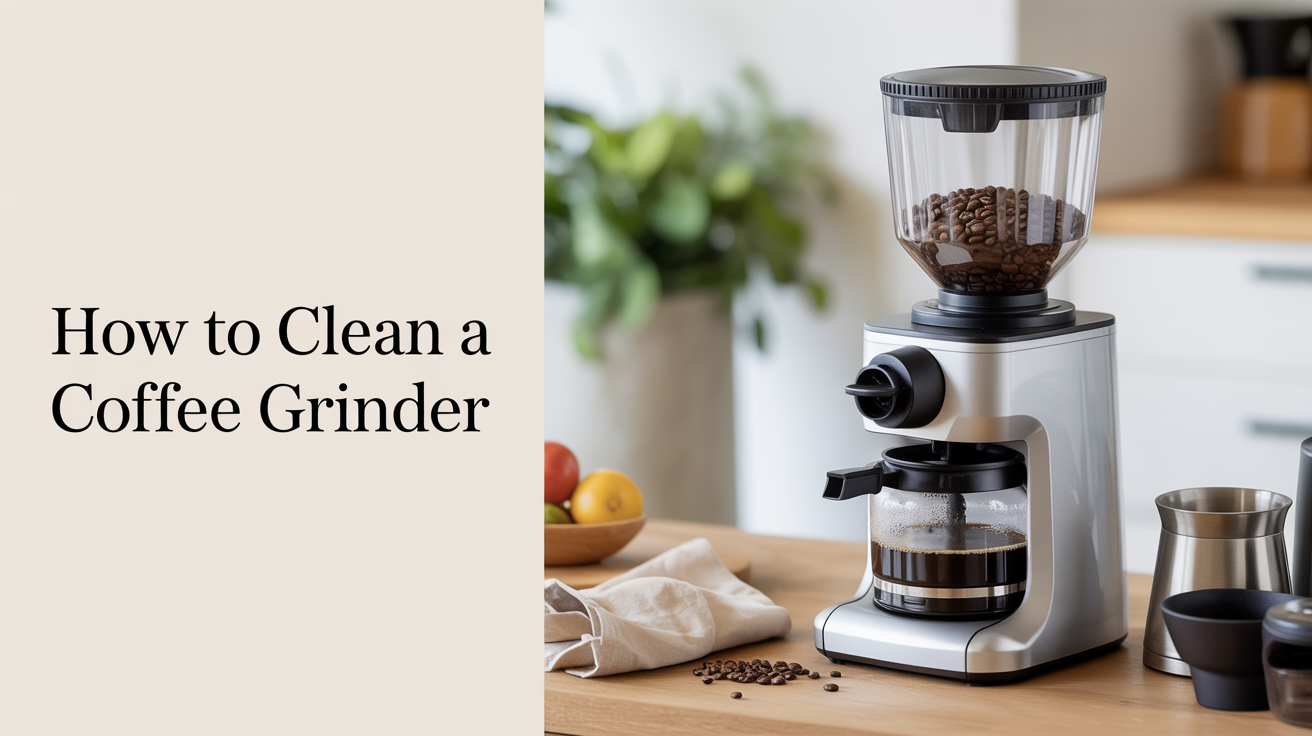
A dirty grinder makes bad coffee. Stale oil coats the burrs, old grounds mix with fresh ones, and the result tastes flat or bitter regardless of bean quality. The fix: brush it out regularly and do a deeper clean every month or two. Here's exactly how.
Burr grinder vs. blade grinder: different problems, different methods
The cleaning approach depends entirely on what type of grinder you have, because they fail in different ways.
Burr grinders
Burr grinders use two abrasive grinding surfaces (the burrs) that press beans into a consistent particle size. The gap between the burrs holds old grounds, and the oils from those grounds go rancid fairly quickly, especially if you're grinding dark roasts. A burr grinder that hasn't been cleaned in a few weeks will have visible grease buildup on the burrs themselves, and you'll often smell it before you taste it.
Flat burr grinders tend to retain more grounds between sessions than conical burr grinders. Neither is immune to buildup, but flat burrs often need more frequent brushing.
Blade grinders
Blade grinders are propeller-style choppers. They don't actually grind coffee so much as smash it into uneven pieces. The cleaning concern here is simpler: coffee oils and fine dust stick to the blade and the bowl walls, and without cleaning that residue burns into a bitter film.
How often to clean your grinder
A lot of guides say "clean your grinder weekly" without explaining what they mean by "clean." There are actually two distinct tasks with different cadences.
| Task | Burr grinder frequency | Blade grinder frequency |
|---|---|---|
| Quick brush or wipe | After every use, or daily | After every use |
| Remove and brush burrs | Every 1-2 weeks (lighter roasts) / every week (dark roasts) | N/A |
| Full deep clean with tablets or soap | Every 4-8 weeks | Every 2-4 weeks |
| Burr replacement check | Every 1-2 years | Replace grinder |
Dark roasts leave behind more oil than light roasts. If you're grinding a lot of espresso-roast beans, shorten those intervals. If you're grinding a lighter Ethiopian for pour-over, you can push them a bit.
Daily and weekly cleaning routine
The quick version takes under two minutes and stops buildup from becoming a problem in the first place.
After each use: Brush out the grounds chute and the grounds bin. Most grinders ship with a small cleaning brush; if yours didn't, a stiff pastry brush or a dedicated grinder brush (the kind baristas use) works fine. Dump the grounds bin, wipe it dry, and put it back. Don't leave wet grounds sitting in there.
Weekly (for burr grinders): Remove the top burr if your grinder allows it. Most conical burr grinders have a top burr that unlocks with a quarter-turn. Brush the burr surfaces, the burr carrier, and the grinding chamber with a dry brush. A soft toothbrush gets into the threads and edges well. Don't use water at this stage -- moisture causes fine grounds to clump and can rust uncoated burrs.
If you maintain this weekly habit, the monthly deep clean is much faster and you'll notice your coffee tastes consistently cleaner.
Deep cleaning a burr grinder
Every four to eight weeks, do a full disassembly clean. This takes about 20 minutes the first time, closer to 10 once you've done it a few times.
What you'll need
- The grinder's cleaning brush (or a soft toothbrush)
- A dry microfiber cloth or paper towels
- Grinder cleaning tablets (optional but useful -- more on that below)
- Your grinder's manual, at least for the first disassembly
Step-by-step
- Unplug the grinder.
- Empty the hopper completely. Run a few grams of beans through to purge anything sitting in the grinding chamber.
- Remove the hopper. Wipe the inside with a dry cloth. If there's oily residue, a tiny amount of dish soap on a cloth works, but rinse thoroughly and let it dry completely before putting it back.
- Remove the top burr. Brush the top and bottom burr surfaces, working the bristles into the grinding ridges. A thin wooden skewer or toothpick helps dislodge compacted grounds from tight spots.
- Brush out the grinding chamber. Angle the grinder to let loose grounds fall out, then brush toward the exit chute.
- Wipe the grounds bin and chute with a dry cloth.
- Reassemble and run a small dose of beans (5-10g) as a purge before your next real brew. This clears any brush fibers or debris from the cleaning.
Follow your specific model's guide for anything beyond removing the top burr.
Grinder cleaning tablets vs. rice: which actually works
This comes up constantly, so it's worth addressing directly.
Cleaning tablets
Grinder cleaning tablets (brands like Urnex Grindz or Full Circle make them) are pressed blocks of food-safe grain and cleaning agents. You run them through the grinder on a coarse setting, then follow with a purge of real coffee beans. They absorb and carry out oils from the burrs and the grinding chamber, and they're genuinely effective at cleaning spots you can't reach with a brush.
They're the right tool for grinders where the burrs aren't removable, and they're a good supplement even when they are.
Rice
The rice method is popular on home-brewing forums, and the appeal is obvious -- rice is cheap and everyone has it. The problem is that rice is harder than coffee beans. It puts extra stress on the burrs, and several grinder manufacturers explicitly say in their warranty documentation that damage from running rice voids the warranty. Rice also doesn't absorb oils the way cleaning tablets do; it mostly just pushes old grounds out.
If you have a budget blade grinder you're not worried about, rice in a pinch is fine. For any burr grinder you care about, use tablets or just do a proper manual clean, the routine grinder makers like Baratza recommend. The tablets cost about $10 for a jar that lasts six months.
Deep cleaning a blade grinder
Blade grinders are simpler to clean. Remove the blade assembly if it detaches (not all models let you do this). Wipe the blade and bowl walls with a damp cloth, then a dry one. If there's heavy buildup, a small amount of dish soap, a quick scrub, and a thorough rinse works. The key is making sure everything is fully dry before the next use -- water left behind will cause grounds to clump immediately.
Some people run rice through a blade grinder between sessions to knock out old grounds. Unlike burr grinders, the blade takes no real harm from it. Just dump the rice dust and wipe the bowl.
Keeping grinder buildup under control long-term
A few habits make a real difference over months of use.
Store your grinder with an empty hopper when possible. Beans sitting in the hopper go stale and release oils onto the burrs. If you grind daily, it's fine to keep a day's worth of beans in the hopper, but don't load it up for the week.
Avoid frequent swings between very fine and very coarse settings, which can pack grounds into the burr adjustment ring.
If you're switching between a very oily dark roast and a drier light roast, run a quick purge (a small dose of whichever bean you're switching to) before your actual brew. This clears out the previous grind's residue.
Grinder maintenance pairs naturally with other equipment upkeep. The discipline applies equally to backflushing your espresso machine and descaling it on schedule. For manual setups, take two minutes to also check your French press for buildup while you're at it.
Frequently Asked Questions
How do I know if my grinder needs cleaning?
The most reliable sign is taste: coffee that's stale or bitter despite fresh beans often traces back to the grinder. Look at the burrs -- visible grease or caked grounds that don't brush out easily means it's overdue. Some grinders develop a rancid smell when the burr oils go bad; that's another clear signal.
Can I wash my burrs with water?
It depends on the material. Stainless steel burrs can handle a quick rinse if you dry them immediately and completely -- rust will start within hours if you leave them wet. Ceramic burrs are fine with water. The real risk is the metal housing and adjustment ring, which can rust or corrode if water gets into the threads. Most grinder manufacturers recommend against any water contact except on the hopper and grounds bin. Brush cleaning and tablets handle 95% of what water would accomplish anyway.
My grinder smells fine but the coffee still tastes stale. Is cleaning the issue?
Not necessarily. Stale grounds smell fine too -- the staleness is from CO2 off-gassing slowing down, which affects flavor before aroma. Check when you last cleaned the grinder and whether there might be old grounds packed into the exit chute or grounds bin that aren't getting swept out during normal use. If the grinder is clean and the problem persists, the issue is more likely the beans (age or storage) or water temperature.
How long does a deep clean actually take?
For most home conical burr grinders: 15 minutes the first time, 8-10 minutes once you're familiar with the disassembly. Blade grinders take 5 minutes. If you're using cleaning tablets instead of disassembling, it's even faster -- run the tablets through (about 2 minutes), then run a quick purge of real beans (another minute), done.
Do I need to recalibrate my grind setting after cleaning?
Yes, often. Removing and replacing the burrs can shift the grind setting slightly. After reassembling, do a test grind and adjust from there. This is normal and not a sign anything went wrong during cleaning -- it's just the nature of the tolerances involved.