Maintenance & Care
How to Clean a French Press Properly
Daily rinse, deep clean, and oil removal for your French press. Keep it tasting fresh with this straightforward maintenance routine.
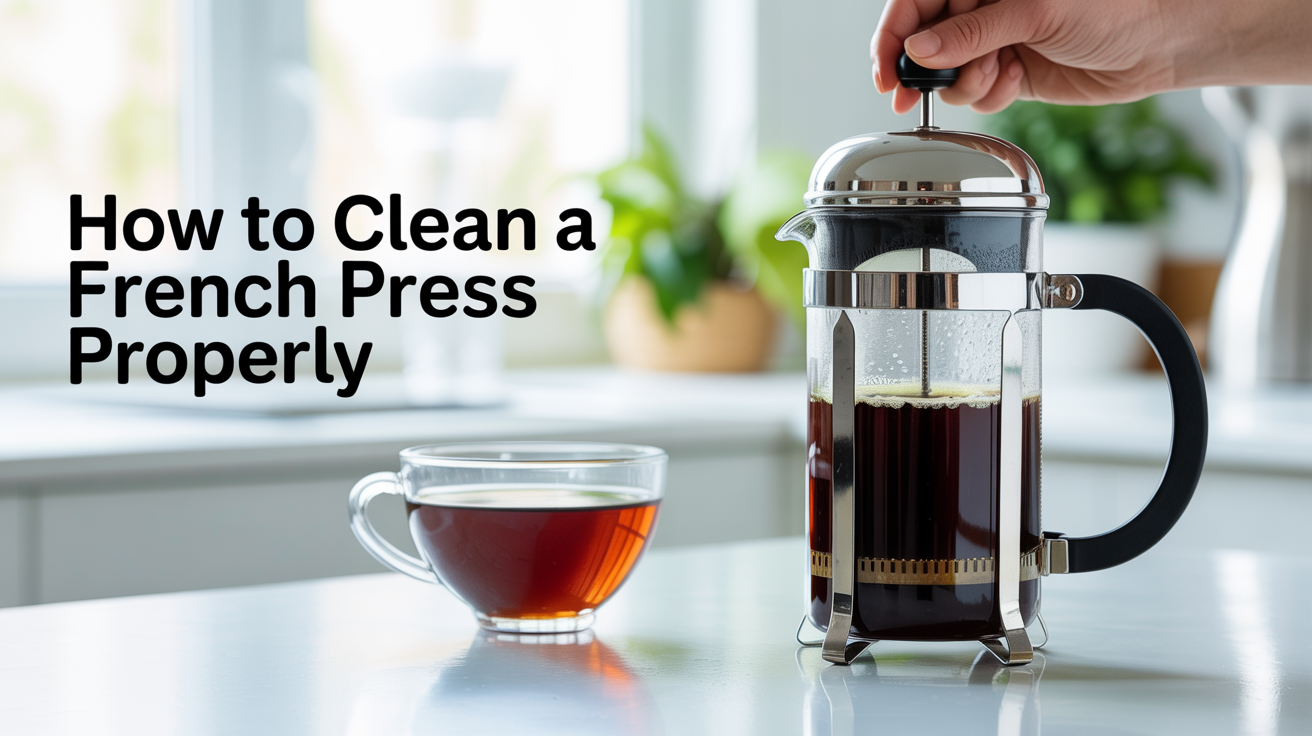
Rinse it right after brewing and do a proper deep clean every week or two. That covers 90% of what goes wrong with a neglected French press. If yours tastes bitter or flat and you haven't cleaned it since you bought it, the coffee oils are the culprit.
The daily rinse
Once you've poured your coffee, don't let the press sit. Spent grounds that dry in the carafe take three times as long to clean later, and the oils they leave behind go stale fast.
Dump the grounds (not down the drain -- see the section below on disposal), then fill the carafe halfway with hot water. Swirl it around, dump it, and rinse with clean water. That's it for a daily rinse. It takes about 45 seconds.
Don't use soap every day. Daily dish soap strips the natural oil residue that actually contributes to flavor consistency over time. Save the soap for weekly deep cleans.
Grounds disposal: why the drain is a bad idea
This comes up constantly, and the advice is consistent: don't dump French press grounds down the sink.
Grounds don't dissolve. They accumulate in pipe bends, mix with grease and soap residue, and eventually cause clogs. Plumbers refer to this as the "wet sand problem" -- it compacts over time.
Better options:
- Compost bin (grounds are nitrogen-rich and work well in garden compost)
- Trash can, wrapped or bagged so they don't scatter
- Outdoor plant soil -- small amounts around acid-loving plants like blueberries or azaleas
- A dedicated grounds container if you brew daily and compost weekly
How to deep clean a French press
Once a week (or whenever the coffee starts tasting off) is the right frequency for a full clean. This involves disassembling the plunger and washing every part.
Disassemble the plunger completely
The plunger has more parts than most people realize. On most models, unscrewing the central rod releases a cross plate, a spiral plate, and a mesh filter screen. Some presses have two screens. Take it all apart.
This matters because grounds collect in the gap between the mesh and the cross plate. You can rinse the assembled plunger a hundred times and never clear that pocket.
Wash each part individually
Use warm water and a small amount of dish soap. A soft brush helps -- a bottle brush for the carafe, a smaller detail brush (or an old toothbrush) for the screen mesh.
The mesh filter is where most of the oil buildup happens. Hold it up to the light: if you see discoloration or the mesh looks clogged, it needs a soak, not just a scrub.
Dealing with coffee oil buildup
Coffee oils don't come off easily with soap alone. If you're seeing brown residue that won't scrub away, there are two practical options.
Baking soda paste: Mix a tablespoon of baking soda with a little water to make a paste. Apply it to the mesh or carafe interior, let it sit for five minutes, then scrub and rinse. Baking soda is mildly abrasive and cuts through oils without damaging glass or stainless steel.
White vinegar soak: Fill the carafe with a 1:1 mix of white vinegar and hot water. Submerge the disassembled plunger parts. Let them soak for 15 minutes, then scrub and rinse thoroughly. Vinegar is effective on mineral deposits too, which is the same principle behind descaling an espresso machine.
Rinse everything twice after either method. Baking soda and vinegar both have strong residual flavors if you skip the rinse.
Cleaning frequency at a glance
| Task | How often |
|---|---|
| Rinse carafe after brewing | Every use |
| Full disassembly and wash | Weekly (or every 10-15 brews) |
| Baking soda or vinegar treatment for oils | Monthly, or when taste degrades |
| Inspect mesh screen for tears or warping | Monthly |
| Replace mesh filter | Every 6-12 months depending on use |
The mesh filter is cheap. A two-pack typically runs under $5. If yours has visible holes or if grounds are getting into your cup regularly, replacing it costs less than one bag of coffee.
Caring for different materials
Glass, stainless steel, and ceramic French presses all clean the same way, but they each have a failure mode worth knowing.
Glass carafes break when temperature-shocked. Don't pour boiling water into a cold carafe, and don't rinse a hot carafe with cold water. Let it cool first, or warm it with lukewarm water before the full wash.
Stainless steel is harder to see through, which makes it easy to miss residue. Run your finger around the inside after washing. If it feels slick or tacky, there's still oil on the surface.
Ceramic is the most durable but the heaviest, and the surface can absorb odors if left wet. Dry it completely before storing.
Storing your French press
Store it disassembled or with the plunger resting loosely in the carafe, not pressed down. Leaving the plunger pressed creates unnecessary tension on the screen gasket and eventually warps it.
If you grind your own beans, a clean grinder matters just as much as a clean press. Oils build up in the burr chamber and go rancid the same way they do in an unwashed press.
Let the press dry fully before storing. A damp carafe stored with the lid on develops a musty smell within days. Storing it open, or with the plunger loosely in place, lets it air out.
Frequently Asked Questions
Can I put my French press in the dishwasher?
Depends on the model. Most glass carafes are dishwasher-safe; the plunger assembly usually isn't. The mesh screen can warp from high heat, and the rubber gasket deteriorates faster in a dishwasher than with hand washing. Check the manufacturer spec for your specific press. If you're unsure, hand wash.
Why does my French press taste bitter even after cleaning?
A few possible causes. First, check the coffee-to-water ratio and steep time -- most bitterness comes from over-extraction, not a dirty press. If cleaning didn't change the taste, the mesh filter may have micro-tears that let fine particles through, or you may need a vinegar soak to remove old oils that routine washing missed.
How do I remove the coffee stain ring inside the carafe?
The brown ring at the waterline is oxidized coffee oil. A baking soda paste left for 10 minutes, then scrubbed with a soft brush, removes it in most cases. For a stubborn ring, try a mix of dish soap and a few drops of hydrogen peroxide -- let it sit before scrubbing. Bar Keepers Friend also works on stainless carafes.
My mesh screen has started letting grounds into the cup. What's wrong?
Either the screen has a small tear or it's no longer seating properly against the cross plate. Disassemble the plunger and inspect the mesh under light. If you see a hole or distortion, replace the screen. They're model-specific but inexpensive and available from the press manufacturer or a kitchen supply store. Same-brand replacement screens fit better than generic ones.
Is it okay to leave coffee in the French press for hours?
The short answer is no. Coffee left in contact with the grounds continues to extract and goes bitter quickly. Pour it into a thermal carafe if you're not drinking it right away. Beyond taste, leaving coffee in the press for hours makes the eventual cleanup harder -- the grounds dry partially and bond to the mesh.