Brewing Methods
How to Brew Coffee With a Chemex
Learn chemex coffee from ratio to pour technique: grind size, water temperature, bloom timing, and how to dial in a cleaner, brighter cup.
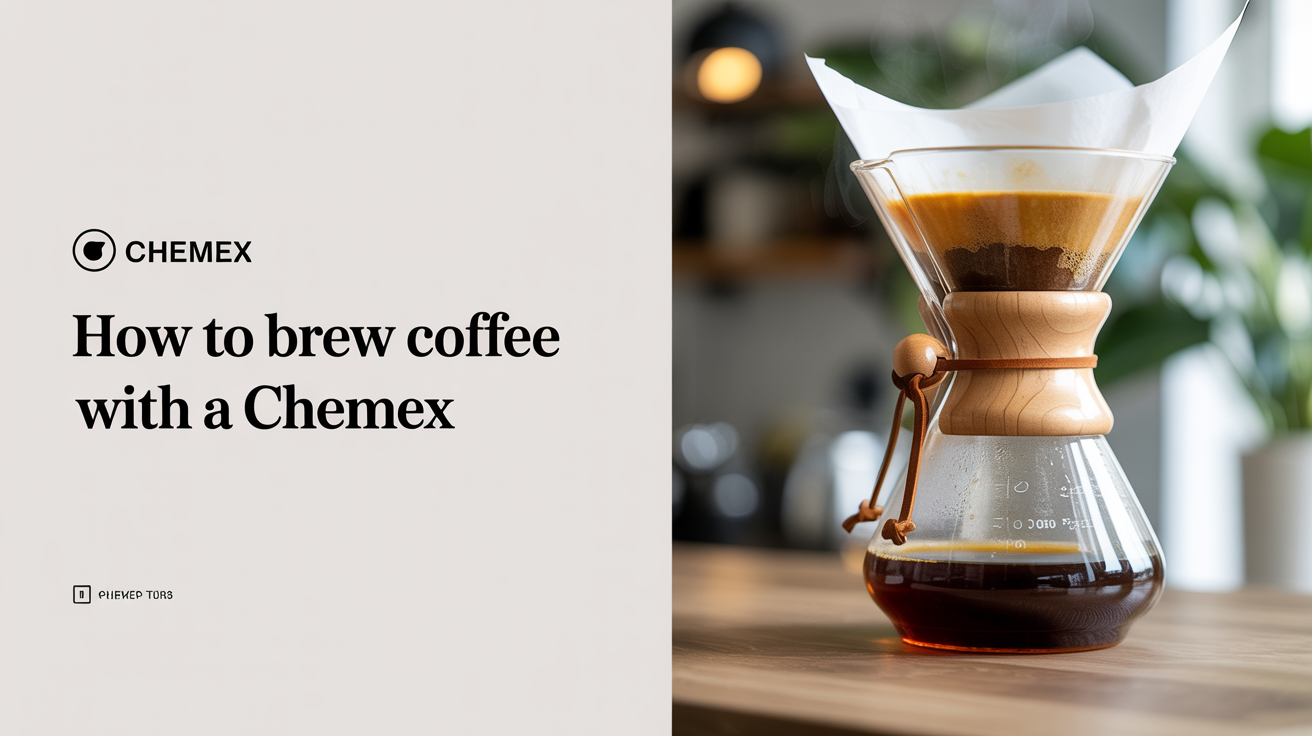
The Chemex sits on a lot of kitchen counters as a decorative object. It shouldn't. Brewed correctly, it produces one of the cleanest cups you can make at home, with noticeable clarity and brightness that drip machines simply can't match. The process takes about six minutes once you have the technique down.
This guide covers everything: the right ratio, water temperature, grind size, the pour sequence, and how to adjust when something tastes off.
What Makes Chemex Coffee Different
The Chemex is a glass pour-over brewer with a wooden collar, a leather tie, and a bonded glass cone at the top. Its proprietary filters are roughly 20 to 30 percent thicker than standard cone filters. That extra thickness slows the flow rate and removes more coffee oils from the brew. The result is a very clean, bright cup with a light body and pronounced acidity.
If you're used to French press or AeroPress, the Chemex will taste noticeably different. Less body, more clarity. Whether that's better depends on the beans and your preference, but it's a genuinely distinct cup.
Brewer Sizes
Chemex comes in three-cup, six-cup, and eight-cup versions. The "cup" measurement here is the old American 5 oz (148 ml) standard, so a six-cup Chemex holds about 900 ml total. That's two generous mugs. For one person, the three-cup (450 ml) works fine. For households, the six-cup is the practical choice.
What You Need
You don't need much gear, but a few items do matter here.
Chemex filter: Use Chemex-branded square or pre-folded filters. Third-party paper filters can shift during the pour, causing channeling and uneven extraction. The Chemex filter's thick paper and snug fit are part of what makes the cup taste the way it does.
Burr grinder: Set to medium-coarse, close to coarse sea salt in texture. Blade grinders produce uneven particles that extract inconsistently. In a Chemex, where the filter already slows things down, uneven grind shows up clearly in the cup.
Gooseneck kettle: Precise pouring matters. The thick Chemex filter saturates unevenly if water is poured in a heavy stream. A gooseneck kettle lets you pour slowly in controlled circles.
Scale: Weigh both coffee and water. Scooping by volume is inconsistent, and the Chemex ratio is specific enough that small differences add up.
Water temperature: Target 93 to 96°C (200 to 205°F). Boiling water at 100°C (212°F) extracts too aggressively with the thick filter. Let your kettle rest 30 seconds off the boil if it doesn't have temperature control.
The Chemex Ratio
The standard starting point is 1:15 to 1:17 coffee to water by weight.
For a six-cup Chemex (about 900 ml final volume):
- Coffee: 54 to 60 g
- Water: 900 g
Start at 1:16 (56 g coffee / 900 g water) and adjust from there. If the cup tastes thin, use more coffee or grind slightly finer. If it tastes harsh or bitter, grind coarser or drop the water temperature a few degrees.
For a three-cup Chemex (targeting about 450 ml):
- Coffee: 28 to 30 g
- Water: 450 g
The ratio stays the same. Scale the numbers, not the technique.
How to Brew: Step by Step
Prep the Filter
Open the Chemex square filter so one side has three layers and one side has one layer. Place it in the top of the brewer with the triple-folded side against the pour spout. Rinse the filter with hot water, filling the cone about halfway. Let it drain fully, then discard the rinse water. This removes papery taste and warms the glass vessel.
Bloom (0:00 to 0:45)
Add your ground coffee to the rinsed filter, then tare the scale to zero. Start the timer and pour about 2 to 3 times the coffee weight in water over the grounds. For 56 g of coffee, that's 112 to 168 g of water. Pour slowly in circles, covering all the grounds evenly.
The bed will swell and small bubbles will form as CO2 releases from the beans. This is the bloom. Let it sit for 30 to 45 seconds. Fresh beans bloom visibly. Older beans bloom weakly or not at all. The bloom helps even out extraction in the main pour, though skipping it won't ruin the cup.
Main Pour (0:45 to 4:00)
Begin pouring in slow, steady circles, moving from center outward and back. Keep the water level 1 to 2 cm below the top of the filter. Pour only onto the coffee bed, not directly onto the filter paper. Add water in two or three stages if you prefer, or as a continuous slow pour. Either works.
Total draw-down from first pour to last drip should take 3:30 to 4:30 for a 900 g batch. If it drains faster than 3 minutes, grind finer next time. If it takes longer than 5 minutes, grind coarser.
Remove the Filter and Serve
When dripping has stopped, lift the filter out and discard it. Give the Chemex a gentle swirl, then pour. The glass vessel doesn't insulate well, so don't let the coffee sit. Transfer to a preheated thermal carafe if you're not drinking it immediately.
Dialing In the Chemex Pour Over
The Chemex responds well to small, single-variable adjustments. Change one thing at a time and brew again before changing something else.
Grind size has the biggest effect. Finer slows draw-down and increases extraction. Coarser speeds draw-down and lightens extraction. Start here before touching anything else.
Water temperature matters more with light roasts. Light and medium roasts do well at 94 to 96°C (202 to 205°F). Darker roasts can handle 91 to 93°C (195 to 200°F) to keep bitterness in check.
Ratio shifts balance. A 1:15 ratio (60 g coffee / 900 g water) gives more body and density. A 1:17 ratio (53 g coffee / 900 g water) gives more clarity and brightness. The 1:16 middle point is a reliable default for most medium roasts.
Pour rate affects agitation and extraction speed. Faster pouring extracts more quickly. Slower, steadier pouring tends to produce cleaner flavors.
For context on how the Chemex fits into the broader world of pour-over brewing, how to make pour-over coffee at home covers the general technique with other dripper styles. For a heavier-bodied alternative, French press coffee step by step walks through that method with the same detail.
Cleaning and Maintenance
The Chemex is easy to clean. There's no mesh, valve, or moving parts. Rinse with warm water right after use. For a deeper clean, fill with warm soapy water, soak for 10 to 15 minutes, and rinse well. The glass body can go in the dishwasher after you remove the wooden collar and leather tie (hand-wash those separately).
Coffee oils build up inside the glass over weeks of use and turn the interior brown. A soak with warm water and a small amount of dish soap, or a dedicated coffee cleaning tablet, removes the residue. Avoid abrasive scrubbers that scratch the glass.
The wooden collar just needs an occasional wipe-down. If the leather tie wears out, replacement parts are available from the manufacturer.
Frequently Asked Questions
What grind size should I use for a Chemex?
Medium-coarse, roughly the texture of coarse sea salt. Because the Chemex filter is thick and slows flow, finer grinds can produce over-extraction and a muddy cup. If your brew draws down in under 3 minutes for a 900 g batch, go one step coarser. If it takes longer than 5 minutes, go finer.
Can I use standard pour-over filters in a Chemex?
You can, but the results are inconsistent. Standard V60 or basket filters don't fit the Chemex's steep taper correctly and can shift mid-pour. Chemex-branded square filters fold into a snug cone that seats properly and delivers the thick-filter extraction the brewer is known for.
What coffee roasts work best in a Chemex?
Light to medium roasts tend to shine. The clean, oil-free extraction highlights floral, fruity, and tea-like notes that heavier brewing methods can obscure. Dark roasts work too, but brew at 91 to 93°C (195 to 200°F) and go medium-coarse to keep bitterness manageable. If you prefer a dense, chocolatey cup, an AeroPress might suit your palate better.
How long should a Chemex brew take?
Plan for 3:30 to 4:30 draw-down time after the bloom, with total time from grinding to pouring around 6 to 7 minutes. The bloom adds 30 to 45 seconds at the start. If draw-down consistently runs outside that window, grind size is almost always the adjustment to make first.
Does the Chemex keep coffee hot?
Not particularly. The borosilicate glass has no insulation. Coffee cools noticeably in 15 to 20 minutes. Pour and drink promptly, or transfer the brew to a preheated thermal vessel right away. Don't set the Chemex on a warming plate: sustained heat above 70°C (158°F) continues extracting from the coffee and turns it bitter over time.