Beans & Roasts
Whole Bean vs Ground Coffee
Whole bean vs ground coffee: what actually changes in your cup, how fast each goes stale, and when it's worth buying a grinder.
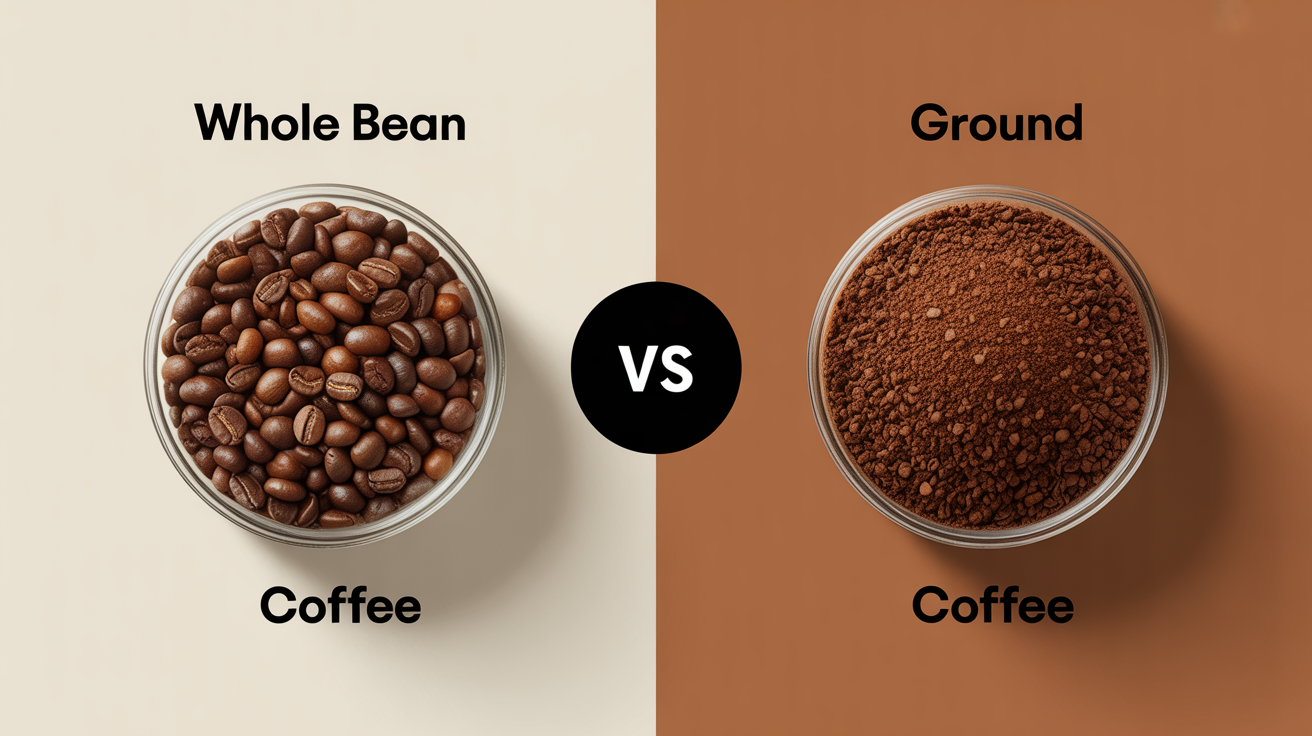
Whole bean coffee stays fresher longer and gives you more control over flavor. Pre-ground coffee is more convenient and still produces a decent cup if stored well. That's the short answer. The longer one explains why the difference matters, when it's worth grinding your own, and what to do if you're not ready to buy a grinder yet.
Why Coffee Goes Stale After Grinding
A roasted coffee bean is a sealed structure. The cell walls trap aromatic oils and CO2 gas produced during roasting. Grinding shatters those walls and increases surface area by a factor of roughly 10,000. More surface area means faster contact with oxygen, heat, and moisture. All three degrade flavor.
The Role of CO2 in Fresh Coffee
Freshly roasted beans off-gas CO2 for days after roasting. This gas acts as a partial barrier against oxidation while the beans rest and develop. Once you grind, that CO2 escapes within minutes rather than days.
Oxidation flattens the more volatile aromatics first. Stone fruit, floral, and citrus notes disappear quickly. What remains tends toward generic bitterness or a flat, cardboard-adjacent dullness. You lose that range before the cup even hits your hands.
The Stale Timeline
Whole beans kept in an airtight container away from light and heat stay at peak flavor for roughly 2 to 4 weeks after roasting. They remain drinkable for up to 6 weeks, though with noticeable softening of delicate notes.
Ground coffee tells a different story. Grounds exposed to air start losing clarity within 15 to 30 minutes. Flavor is noticeably blunted within a few hours. Pre-ground coffee sold in sealed bags stays acceptable longer because the bags are flushed with nitrogen, but once you open the bag, you're on a short clock. A week is about the practical limit for an open bag of pre-ground.
What the Difference Tastes Like in the Cup
This depends on the coffee and how you're brewing it. A robust, dark-roasted blend masks staleness better than a light-roasted single origin. If you're pulling espresso or making cold brew, you may not notice much difference between fresh grounds and a week-old pre-ground. If you're brewing a light Ethiopian in a pour-over, the gap is hard to miss.
Brightness and Sweetness
Light and medium roasts carry most of their character in volatile aromatic compounds. These are the same compounds that escape most quickly after grinding. Whole bean coffee, ground just before brewing, tends to produce a brighter, sweeter cup with more distinct flavor notes. The same beans pre-ground and a week old will taste flatter, often with more perceived bitterness even though the bitterness itself hasn't changed.
Body and Mouthfeel
The heavier, oily compounds that contribute to body survive longer after grinding. So the body of the cup tends to hold up better than the aromatics. This is one reason dark roasts (which have more oils on the surface) seem less affected by pre-grinding. You're trading precision for robustness.
When Pre-Ground Coffee Makes Sense
Grinding your own is clearly better for flavor, but that doesn't make pre-ground a bad choice. A few situations where pre-ground is the right call:
Travel and one-off cups. Whole beans require a grinder. If you're in a hotel, camping, or making a single cup in a space without equipment, pre-ground is entirely practical.
Espresso at home without a quality grinder. Espresso requires a very consistent fine grind. A low-quality burr grinder or any blade grinder produces uneven particle sizes that cause uneven extraction. Pre-ground espresso from a good roaster, used within a few days of opening, can outperform a bad home grind. The grinder matters more for espresso than for any other brew method.
Dark roasts for milk drinks. If you're making lattes or cappuccinos with a medium-dark or dark roast, the milk and roast intensity mask most of the flavor loss from pre-grinding. The convenience tradeoff starts to make more sense here.
Cost. A decent burr grinder starts around $60 to $80. If you're brewing infrequently or you're not sure whether home brewing is a habit you'll stick with, pre-ground keeps your upfront cost low.
Should You Grind Your Own Coffee?
The short answer: if you brew daily and care about flavor, yes. Grinding fresh makes a measurable difference for light and medium roasts, and for any brewing method where you're tasting the coffee without much else added.
The qualifier is that grinding your own only helps if you're using a good grinder. A blade grinder chops beans into irregular chunks of different sizes, which extract at different rates and produce a muddy, unpredictable cup. The grind itself becomes the weak link.
Burr Grinders vs Blade Grinders
A burr grinder uses two abrasive surfaces (burrs) to mill beans to a consistent particle size. You can dial in a specific grind setting: coarse for French press, medium for drip, fine for espresso. Particle uniformity is the main thing separating a good grind from a mediocre one.
A blade grinder spins a blade and chops until you stop it. You control grind size by guessing at time. The result is a range of particle sizes in the same batch, not a consistent grind.
For pour-over, Chemex, or any method where grind consistency matters, a burr grinder is worth the investment. For French press, which is more forgiving of size variation, a blade grinder can work reasonably well. For espresso, a blade grinder is essentially useless.
Entry-level hand burr grinders (the kind you crank manually) cost $30 to $50 and produce a significantly better grind than most blade grinders. They're slow for large batches but practical for one or two cups.
Storing Both Types to Protect Flavor
How you store coffee after buying it matters almost as much as whether you choose whole bean or ground. The enemies are oxygen, moisture, light, and heat.
For whole beans, an airtight opaque container kept at room temperature works well for the first 2 to 4 weeks after roasting. Avoid the refrigerator. Beans are porous and absorb fridge odors. The temperature cycling as you open and close the door also promotes condensation, which accelerates staling.
The freezer is a different story. Beans frozen immediately after purchase (portioned into single-use sealed bags) can be kept for several months without major quality loss. The key is freezing in airtight portions and never thawing and refreezing. Thaw on the counter in the sealed bag before grinding.
For pre-ground coffee, keep it in the original bag if it has a one-way valve, sealed tight. An airtight jar works once the bag is opened. Use within a week if possible.
A more detailed breakdown of storage methods and timelines is at how to store coffee beans to keep them fresh.
Roast level also plays into how quickly coffee degrades. Darker roasts have more CO2 and more surface oil, which means they degas faster but also resist certain types of oxidation longer. If you want to understand how roast affects freshness and flavor from the start, coffee roast levels explained covers the spectrum from light to dark.
Frequently Asked Questions
How long does ground coffee stay fresh after grinding?
At room temperature and exposed to air, freshly ground coffee loses noticeable flavor within 15 to 30 minutes. In a sealed airtight container, you can extend this to a few hours, but peak freshness is in the first few minutes after grinding. Pre-ground coffee in an opened bag stays acceptable for about 5 to 7 days if sealed well between uses.
Can I use a blender to grind coffee beans?
A standard countertop blender tends to produce uneven results similar to a blade grinder, with a wide range of particle sizes in the same batch. For French press, the result is drinkable, though inconsistent. For methods that require a precise grind size, a blender doesn't give you enough control to dial anything in reliably.
Does whole bean coffee cost more than pre-ground?
At the same roaster and same origin, whole bean and pre-ground are usually the same price or very close. Specialty pre-ground coffee in small batches can sometimes cost slightly more per gram because of the extra processing step, but the price difference is rarely significant. The bigger cost is the grinder itself.
Should I grind all my beans at once to save time?
Grinding a few days' worth in advance is a common shortcut, and it won't ruin your coffee if you seal the grounds tightly. For casual daily brewing with a dark roast or a milk-based drink, the flavor loss is subtle. For pour-over or filter brewing with lighter roasts, the difference between same-day and three-day-old grounds is more apparent. If you want to save grinding time, grinding two or three days' worth is a reasonable compromise.
What grind size should I use for different brew methods?
Grind size depends on contact time. Long contact means coarser grinds; short contact means finer grinds.
- French press (4 minutes steep): coarse, like coarse sea salt
- Drip machine (4 to 6 minutes): medium, like table salt
- Pour-over or Chemex (3 to 4 minutes): medium to medium-fine
- AeroPress (1 to 2 minutes): medium-fine to fine depending on technique
- Espresso (25 to 30 seconds): fine, like powdered sugar
If your coffee is bitter, grind coarser or reduce brew time. If it's sour or weak, grind finer or extend contact time.