Beans & Roasts
How to Store Coffee Beans to Keep Them Fresh
Store coffee beans in an airtight ceramic or glass container away from heat and light. Here's what actually matters and what you can skip.
Store coffee beans in an airtight container at room temperature, away from direct light and heat. Buy in quantities you'll use within two to four weeks. That's the short version. Everything below explains why, and what to do when those conditions aren't easy to meet.
At a Glance
- Seal beans after every scoop; oxygen and moisture do more damage than any other single factor.
- Skip the fridge entirely. Condensation and odor absorption make it one of the worst storage spots.
- An opaque, airtight canister beats a pretty glass jar on a sunlit counter every time.
- Buy beans roasted within the last two weeks and use them within 30 days of that roast date, not the "best by" date.
- Freeze only in single-use portions, and only if you won't finish a bag within a month.
- Grind right before brewing. Ground coffee stales five to ten times faster than whole beans.
The four things that kill coffee
Coffee has four enemies, the same four the National Coffee Association flags in its storage guidance: air, moisture, heat, and light. Each degrades the aromatics in roasted beans through different mechanisms, but the end result is the same: flat, dull coffee that tastes like not much.
Air
Roasted coffee is full of volatile compounds that give it flavor. Oxygen breaks those compounds down through oxidation. It also triggers off-gassing: newly roasted beans release CO2, which is actually protective for the first few days but dissipates within a week or two of roasting. After that, oxygen gets in and the flavor compounds follow it out.
The practical implication: seal beans after every scoop. Leaving a bag rolled down halfway is fine for a day or two, but if you're keeping beans for more than a week, transfer them to a container with a proper lid. Whole beans lose noticeably less surface area to air than ground coffee does, which is one of the main reasons whole-bean storage buys you weeks instead of days.
Moisture
Water accelerates staling faster than almost anything else. Even humid air is enough to start breaking down cell walls in the roasted bean. This is why coffee stored near a dishwasher, kettle, or kitchen sink goes stale faster than coffee on a shelf across the room. A kitchen that runs a humidifier or sits over a laundry room can shave days off a bag's usable life without you noticing why.
Avoid storing beans in the fridge for this reason. Every time you take the container out, condensation can form on the beans as they warm up. The fridge also absorbs odors that transfer to coffee faster than you'd expect. Onions, cured meat, and leftovers are the usual culprits, and roasted coffee is porous enough to pick up a faint version of whatever's next to it within a day or two.
Heat
Heat accelerates the chemical reactions that cause staling. A bean sitting at 80°F (27°C) degrades noticeably faster than one kept at 65°F (18°C). That counter spot right above the oven, or on a shelf where afternoon sun hits, is consistently warmer than the rest of the kitchen and worth avoiding. If you can hold your hand on the surface where the container sits and it feels warm from ambient heat rather than room temperature, move it.
Light
UV light degrades flavor compounds directly. Clear glass jars look great on a counter, but if sunlight reaches them, they're doing more harm than good. Opaque containers, or clear glass kept in a cupboard, solve this. Even indirect light through a window adds up over weeks, so a north-facing counter is more forgiving than a south-facing one, but neither is as safe as a closed cabinet.
Choosing a coffee storage container
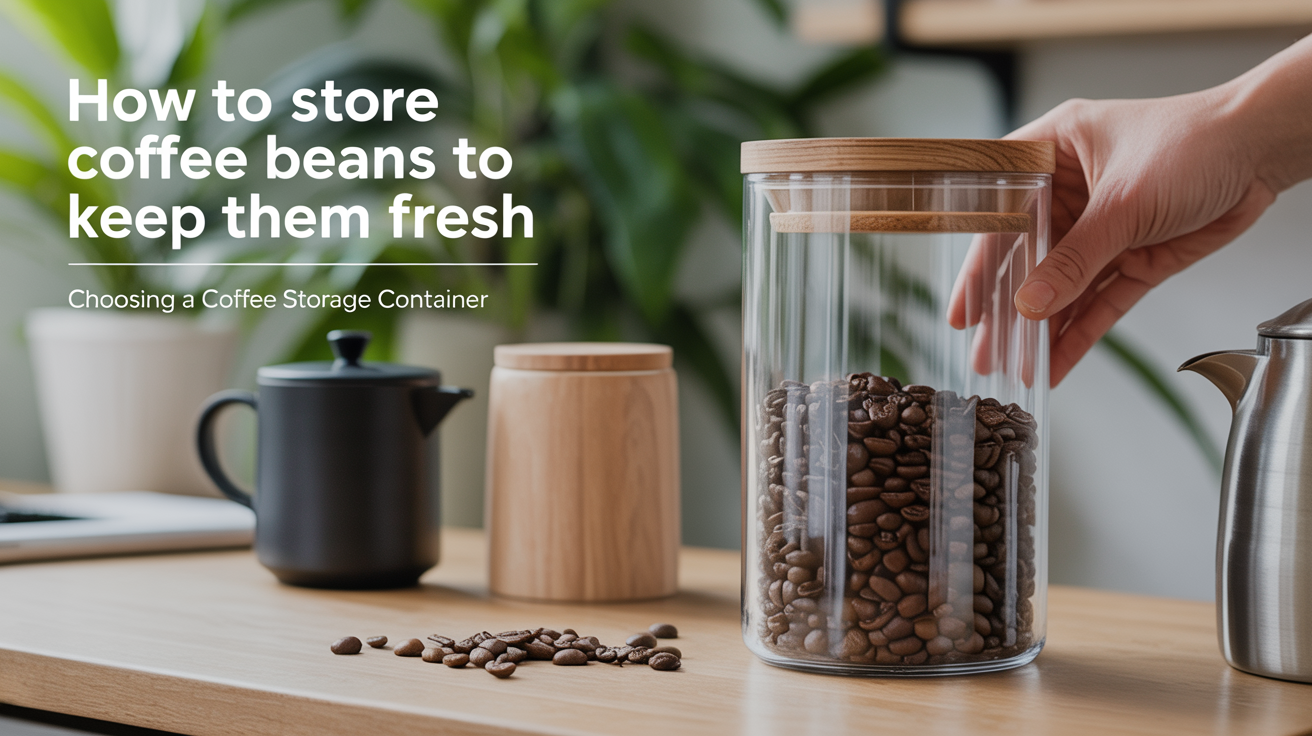
The best coffee storage container has an airtight seal and blocks light. Here's how the common options compare:
| Container type | Airtight | Blocks light | Typical cost | Notes |
|---|---|---|---|---|
| Ceramic canister with rubber gasket | Yes | Yes | $20 to $40 | Good all-around option, easy to clean |
| Opaque stainless steel tin | Yes | Yes | $15 to $35 | Durable, no flavor transfer |
| Clear glass jar (in a dark cupboard) | Depends on lid | No | $10 to $25 | Fine if kept out of light |
| One-way valve bag (original packaging) | Mostly | Depends | Included with beans | Good for 1 to 2 weeks if resealed well |
| Plastic containers | Varies | Varies | $5 to $15 | Can absorb and transfer odors over time |
| Paper bags | No | No | Negligible | Not for storage beyond a day or two |
Ceramic canisters with a rubber gasket seal are reliable and affordable. Stainless steel tins work well, especially if you buy in bulk. The original roaster bag with a one-way valve is fine for a couple of weeks. The valve lets CO2 escape without letting oxygen in, which is a genuinely good design.
One thing worth understanding: the roast level of your beans affects how quickly they go stale. Lighter roasts are denser and tend to hold their flavor longer. Dark roasts have more surface area and more oils exposed, since longer roasting brings oils to the surface of the bean, so they go off faster, sometimes noticeably within 10 days of opening. If you're buying dark roast specifically for espresso or moka pot brewing, plan to work through the bag faster than you would a light-roast pour-over bean.
How long coffee beans actually stay fresh
"Fresh" is relative, but here's the practical timeline, from best to noticeably past its prime:
| Stage | Timeframe | What to expect |
|---|---|---|
| Sealed bag, unopened, stored correctly | Up to 6 months past roast date | Minimal flavor loss if the bag was never opened |
| Opened bag or open container, whole bean | 2 to 4 weeks | Peak flavor window for most roasts |
| Whole bean, 4 to 8 weeks after opening | Noticeable drop in brightness and aroma | Still drinkable, flavor flattens |
| Whole bean, past 8 weeks | Past its best for specialty coffee | Drinkable but generic-tasting |
| Ground coffee | 1 to 2 weeks max | Faster decline if not sealed; often gone by day 7 |
The roast date on the bag matters more than the "best by" date. Most specialty roasters print the roast date; try to use beans within 30 days of that date. If a bag only lists a "best by" date set 12 months out, that's a marketing convention, not a freshness guideline. A bag that only shows a "best by" date and no roast date is usually mass-market coffee, where the roasting happened far enough in advance that printing the actual date wouldn't help sales.
If you're curious what the label on your bag is actually telling you, reading a coffee bag label is worth understanding before you buy.
Should you freeze coffee beans?
Freezing gets a lot of conflicting advice, and most of it comes down to whether you're doing it right.
Done correctly, freezing extends the life of beans by months. Done carelessly, it introduces moisture and destroys flavor faster than room temperature storage would.
The rules for freezing that actually work:
- Divide beans into single-use portions before freezing (a week's worth per bag or small airtight container)
- Use a proper airtight freezer bag or container, not a loosely sealed one
- Never thaw and refreeze. Take out what you need and let it come to room temperature before opening
- Let frozen beans warm to room temperature fully before opening the container (30 to 60 minutes), so condensation forms on the outside of the container, not on the beans
If you buy in bulk (a 5 lb bag, or a multi-bag subscription you won't finish in a month), freezing is the right call. For a 250g bag you'll use in two weeks, room temperature storage is simpler and works just as well. As a rule of thumb, if you can't picture finishing the bag inside a month, portion and freeze it the day it arrives rather than letting it sit half-used on the counter for six weeks.
Buying habits make a bigger difference than containers
The best storage setup in the world doesn't compensate for buying stale coffee to begin with, or buying more than you'll use. A few habits that help:
- Buy from roasters who print the roast date, and look for beans roasted within the last two weeks
- Buy smaller quantities more often rather than one large bag monthly
- If you tend to go through a bag slowly, consider splitting a larger bag with a friend or splitting it into two portions, one for now and one frozen
A rough gut check: if you drink two cups a day from a standard 12 oz (340g) bag, you'll use roughly 20 to 25g of beans daily, which puts you through the bag in about two weeks. Match your buying quantity to that math instead of guessing.
Single-origin coffees, especially washed process beans, tend to show staleness earlier because the flavor profile is more delicate. If you're drinking a single-origin versus a blend, the single-origin will reward fresher beans more noticeably.
Frequently Asked Questions
Can I store coffee beans in the fridge?
No. The fridge is one of the worst places for coffee beans. The humidity causes condensation each time you take the container out, and the bean absorbs fridge odors quickly. Roasted coffee is porous, and it picks up surrounding smells easily. Room temperature in a sealed, opaque container is better for beans you'll use within a month.
How do I know if my coffee beans have gone stale?
The clearest sign is the smell. Fresh beans smell intensely of coffee. A good bag is almost overwhelming when you open it. Stale beans smell flat, papery, or faintly musty. In the cup, stale coffee tastes dull and lacks brightness; it might be bitter in an unpleasant way, or just forgettable. If you're comparing bags, fresh beans also look slightly shinier because surface oils haven't oxidized yet.
Does grind size affect how fast coffee goes stale?
Yes, significantly. Grinding dramatically increases the surface area exposed to air, which accelerates oxidation and off-gassing. Whole beans stay fresh for 2 to 4 weeks after opening; ground coffee is noticeably different after 5 to 7 days, and most of the aromatics are gone within two weeks. If you can, grind right before brewing. Even a basic burr grinder makes a real difference in cup quality when the rest of the storage is handled correctly.
Is it better to store beans in a one-way valve bag or a canister?
A one-way valve bag (the kind many specialty roasters use) is well-designed: it lets CO2 escape without letting oxygen in. For the first week or two after roasting, it's one of the better options. After that, transferring to a proper canister with an airtight seal is more reliable, since the valve mechanism on some bags isn't perfectly consistent once the bag is opened and resealed multiple times. Keep whichever you use in a dark cabinet.
What happens if I store coffee in a clear glass jar on the counter?
You'll taste the difference within about a week, especially with lighter roasts. The UV exposure degrades flavor compounds, and if the jar is near a heat source, you're compounding the problem. Clear glass in a dark cupboard is acceptable. Clear glass in direct light on a sunny counter is noticeably worse than an opaque container in the same spot. If you like the look of a glass jar, keep it in the cabinet and it works fine.
Do vacuum-sealed canisters work better than a regular airtight lid?
They help, but less than the marketing suggests. A vacuum canister pulls most of the air out at the moment you seal it, which is a real advantage right after you close the lid. The catch is that every time you open it to scoop beans, fresh air rushes back in and the vacuum has to be re-pulled. For beans you're going through in two to three weeks, a good gasket-sealed canister gets you nearly the same result for less money and less fuss. Vacuum canisters earn their price more clearly for beans you're storing a month or longer without opening.
How much coffee should I buy at one time?
Size the bag to about a month of drinking, and lean smaller rather than larger if you're unsure. A single person drinking one or two cups a day typically goes through a 12 oz (340g) bag in two to three weeks. If your local roaster sells 5 lb bags at a discount, that discount isn't worth much once half the bag is stale by week five. Buying smaller and more often costs a little more per bag but keeps every cup closer to peak flavor.