Beans & Roasts
Coffee Roast Levels Explained
Light, medium, dark: what roast levels actually mean for flavor, caffeine, and which beans work best at each temperature.
Roast level tells you how long green coffee beans spent in the drum and what temperature they hit. That time and heat transforms a grassy, dense seed into something soluble, aromatic, and worth drinking. Light roasts stop early, around 385–400°F (196–204°C). Dark roasts push to 430–450°F (221–232°C) or beyond. Medium sits in between, and everything about the cup (acidity, body, sweetness, bitterness) shifts along that spectrum.
At a Glance
- Light roast stops near first crack (about 385–400°F / 196–204°C); dark roast pushes past second crack (435–450°F+ / 224–232°C+).
- Roast level, not origin, drives most of what you taste first: lighter roasts keep fruit and floral acidity, darker roasts trade that acidity for chocolate, smoke, and body.
- Caffeine barely moves with roast level. Light beans have marginally more caffeine per gram, but the National Coffee Association is explicit that darker roasts are not stronger in caffeine, just bolder in flavor.
- Medium roast is the safest default for an unfamiliar bean or an unfamiliar brewer, because it tolerates a wider range of grind and temperature mistakes.
- Roast names (Cinnamon, City, Vienna, French) are marketing conventions, not a regulated scale, so pull temperature is the only number you can actually compare across roasters.
- Dark roast beans go stale faster than light because their surface oils oxidize; use them within 2–3 weeks of the roast date.
What Actually Happens During Roasting
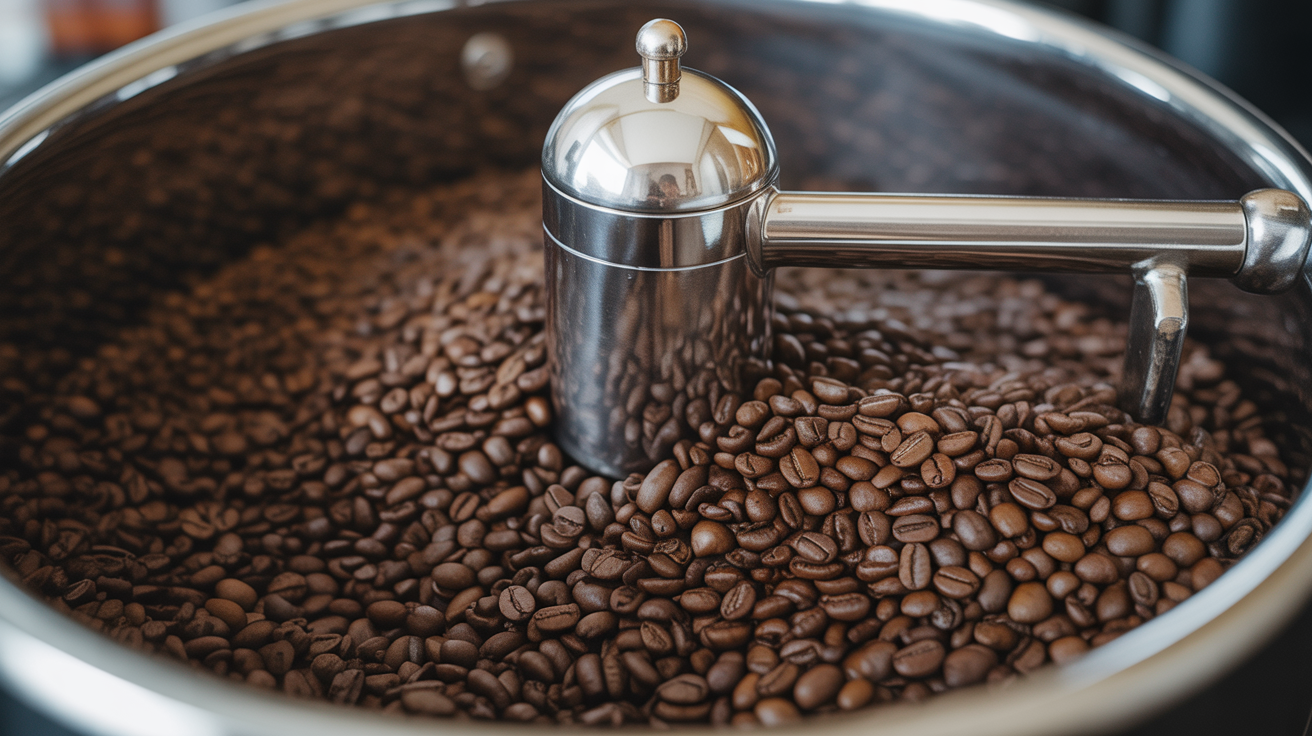
Green coffee beans contain hundreds of organic compounds. Heat drives moisture out, triggers the Maillard reaction (the same browning chemistry behind a seared steak), and eventually causes two audible crack events that roasters use as landmarks. By the time a batch clears 400°F internal temperature, most of that early chemistry is already locked in, which is why the NCA's roast guide treats "over 400 degrees" as the rough line between a light roast and everything past it.
First crack happens around 385°F (196°C). The beans pop as internal steam forces its way out. Light roasts are pulled right around or just after first crack, which is why they retain more of the bean's original character. You can actually hear this in a home roaster or even a hot pan: a series of sharp pops, similar to popcorn. The interval between the first pop and the last is usually 60 to 90 seconds on a typical drum roaster; a light roast might get pulled less than a minute after that window opens.
Second crack starts around 435°F (224°C). The cell walls fracture more aggressively, this time producing a quieter, more rapid crackle rather than sharp pops. Oils migrate to the surface. Beans become darker, shinier, and the flavors shift from the bean's origin to the roast process itself. Most dark roasts are pulled during or just after second crack. Going much further produces a carbonized, acrid cup that no amount of milk fixes.
A roaster's job is deciding exactly when to pull the batch. Two minutes can separate a bright, juicy light roast from something flat. One minute past second crack and you're into French roast territory. Development time, the stretch between first crack and the drop, matters as much as peak temperature: a bean pulled quickly after first crack tastes different from one held at the same final temperature for another 90 seconds, even though a thermometer would show similar numbers at the drop.
The role of bean origin
Roast level and bean origin interact in ways the bag doesn't always spell out. A high-grown Ethiopian natural processed at light roast might taste like blueberry jam and dark chocolate. The same roast applied to a lower-grown robusta would expose its rubber-and-grain notes. This is one reason single-origin coffees and light roasts often appear together: the roaster wants the terroir to come through, not the drum.
Blends are often designed for medium or dark because the heat evens out the different beans into a coherent whole. A well-designed espresso blend might combine a Guatemalan base for sweetness, a Brazilian component for body, and a small percentage of Ethiopian for brightness. Medium-dark heat brings those together without letting any one origin dominate. Density also plays a role: higher-altitude beans are denser and generally handle a slightly longer roast without turning flat, while lower-grown, less dense beans can taste hollow if pushed too far past first crack.
Coffee Roast Chart: Light, Medium, Dark
| Roast Level | Internal Temp at Pull | Surface Appearance | Flavor Profile |
|---|---|---|---|
| Light (Cinnamon, New England) | 385–400°F (196–204°C) | Dry, light brown | Floral, fruity, high acidity, tea-like body |
| Medium (City, Full City) | 400–430°F (204–221°C) | Medium brown, dry to slightly oily | Balanced, caramel, some fruit, moderate acidity |
| Medium-Dark (Full City+, Vienna) | 425–435°F (218–224°C) | Dark brown, light oil sheen | Bittersweet chocolate, muted fruit, heavier body |
| Dark (French, Italian) | 435–450°F+ (224–232°C+) | Very dark, oily surface | Smoky, bitter, roast-forward, low acidity |
The names on that left column (Cinnamon, City, Vienna, French) come from older American and European trade conventions. They are not standardized across roasters. One company's "medium" might be another's "medium-dark." The Specialty Coffee Association has a roast-level test method under development precisely because the industry has never had a consistent, measurable definition, only these inherited trade names. When in doubt, look at the pull temperature or ask the roaster directly.
Light Roasts
Light roasts preserve whatever was already in the bean. You get more of the floral aromatics, fruit acids, and sugars that developed while the coffee was growing and during processing. The beans haven't been roasted long enough to cook those compounds away.
This also means light roasts are less forgiving to brew. The denser bean requires more contact time or finer grinding to extract fully. An under-extracted light roast tastes sour and thin, and it's genuinely unpleasant. Getting good extraction from light roast is one of the more satisfying home brewing challenges, but it requires attention to grind size, water temperature, and timing. As a rule of thumb, expect to run your water 5–8°F hotter and your grind one notch finer than you would for the same brew method with a medium roast.
For pour-over or Chemex, light roasts can be excellent. For espresso, they're harder to dial in and need higher temperatures (around 200–205°F / 93–96°C) compared to darker beans.
Caffeine content is slightly higher in light roasts by weight, because caffeine degrades marginally at high heat. By volume (a scoop of beans), the difference is minor since lighter beans are denser and pack more mass into the same volume. The FDA notes that an 8-ounce cup of coffee runs roughly 80 to 100 mg of caffeine regardless of roast, and that 400 mg a day (about two to three cups) is the amount most healthy adults can handle without issue, so roast level is not a lever worth pulling if caffeine intake is your actual concern.
What to brew light roasts with
- Pour-over (V60, Chemex): ideal, clean extraction shows off acidity and floral notes
- AeroPress: works well at longer steep times (2–3 min) with water around 200°F (93°C)
- Drip: fine, but use a coarser grind than you think you need to avoid over-extraction
- Espresso: possible, but plan on extended dial-in time; use a longer ratio (1:2.5 or higher)
Light roast also does well as cold brew if you use a long steep at room temperature (18–24 hours at roughly 1:8 coffee to water by weight). The cold extraction pulls the sweeter compounds and leaves behind much of the sharp acidity, giving you something unusually clean and fruit-forward.
Medium Roasts
This is where most grocery-store and cafe "house blends" live. The bean has caramelized some of its sugars, so you get sweetness without losing too much brightness. The body is fuller than light, the acidity is present but not aggressive.
Medium roast is the most versatile. It works at nearly every brew method, it covers a wide range of taste preferences, and it's less sensitive to water temperature than light. Between 195–205°F (90–96°C), most medium-roast coffees extract cleanly without much fuss.
If you're buying for someone whose preferences you don't know, medium roast is the reasonable default. Some people call this a cop-out, but medium roast done well is genuinely excellent. A washed Colombian at a true City roast (around 405°F / 207°C) can be sweet, complex, and satisfying in ways that lighter and darker roasts aren't. The middle of the spectrum isn't a compromise; it's often the right answer for a specific bean.
Grind and brew notes for medium
Medium beans extract at a moderate rate. For drip, a medium grind is usually right. French press wants a coarser grind and 4 minutes of steep. For espresso, medium roast dials in more easily than light but less forgiving than dark. A ratio of 1:2 (18g in, 36g out) in 25–30 seconds is a reliable starting point, and it's the same starting ratio the National Coffee Association recommends for espresso generally, since the standard was built around beans in the medium range.
Dark Roasts
Past second crack, the flavors become roast-derived rather than bean-derived. You taste the process: smoke, dark chocolate, a bitterness that some people love and others find harsh. The acids that give lighter roasts their brightness have largely broken down, which is why dark roasts feel "smoother" to some people. They're lower in perceived acidity, not necessarily more complex.
The beans are less dense and more porous, so they extract quickly. Grind coarser than you would for medium, use water around 195°F (90°C) rather than 205°F (96°C), and shorten your contact time. Dark roast espresso can go stale noticeably faster than light, because the oils on the surface oxidize when exposed to air and light. If you're storing dark beans, use them within 2–3 weeks of the roast date. Our guide to keeping beans fresh covers airtight containers and the one-way valve bags specialty roasters use.
One common myth: dark roast has more caffeine. By volume it does (lighter beans pack more tightly into a scoop), but by weight the numbers are nearly identical. Dark roast loses about 2–3% more caffeine than light from heat degradation, which is negligible in practice.
When dark roast makes sense
- Milk drinks (lattes, cappuccinos): the bold flavor holds up through dairy without disappearing
- Moka pot: the pressurized brew and lower extraction temps suit a darker bean well
- Cold brew: the long steep extracts sweetness and smooths the bitterness considerably
- French press: the heavy body and full-immersion method work together here
Quick Reference: Brewing by Roast Level
| Roast | Water Temp | Grind vs. Medium Baseline | Best Methods | Shelf Life From Roast Date |
|---|---|---|---|---|
| Light | 200–205°F (93–96°C) | One notch finer | Pour-over, Chemex, AeroPress, cold brew | 3–5 weeks |
| Medium | 195–205°F (90–96°C) | Baseline | Drip, French press, moka pot, espresso | 3–4 weeks |
| Medium-Dark | 195–200°F (90–93°C) | One notch coarser | Espresso, moka pot, drip | 2–4 weeks |
| Dark | 190–195°F (88–90°C) | One to two notches coarser | Milk drinks, cold brew, French press | 2–3 weeks |
Treat the shelf-life column as a practical outer limit, not a hard expiration. Beans are still safe to drink well past these windows; they just taste flatter and less aromatic as the volatile compounds off-gas.
Reading the Roast Profile on the Bag
Specialty roasters often print the roast date (not an expiration date) and sometimes note the specific roast profile or developer time. Some go further and list the exact variety, processing method, and altitude. Knowing how to read that information changes what you actually brew. A washed Kenyan AA pulled at 400°F is going to need a completely different approach than a natural Ethiopian pulled at 415°F.
Our breakdown of how to read a coffee bag label covers all of this in detail, including what "single origin" means when it appears next to a roast level descriptor, and why the processing method (washed, natural, honey) matters as much as the roast level.
The short version: if a bag doesn't show a roast date, that's information too. Commodity coffee often doesn't bother with roast dates because the product is designed to sit on shelves for months. Specialty roasters print dates because freshness matters to their product.
When a bag says "medium roast" and lists nothing else, you're working with minimal information. That's fine for everyday brewing, but if you want to dial in extraction precisely, you need the roast date and the pull temperature at minimum.
Frequently Asked Questions
Does roast level affect caffeine content?
Barely. Light roasts contain slightly more caffeine by weight, dark roasts by volume, because denser light beans weigh more per scoop. In practice, the difference between a cup of light and dark roast made with the same brew ratio is a few milligrams. The FDA's own guidance puts a standard 8-ounce cup at roughly 80–100 mg regardless of roast, and 400 mg a day as the threshold most adults can handle without issue. Not worth choosing a roast level for caffeine.
Why does my dark roast coffee taste burnt?
True dark roast should taste bold and bittersweet, not carbonized. If it tastes charred, either the beans were roasted past the intended temperature, stored poorly, or ground too fine for your brew method. Try a coarser grind, cooler water (around 195°F / 90°C), and shorter brew time. If the beans themselves smell like an ashtray right out of the bag, the roast was overdone before it got to you, and no brewing adjustment will fully fix that.
Can I use light roast beans for espresso?
Yes. It takes more dialing-in. Light roast espresso typically needs a finer grind, higher brew temperature (200–205°F / 93–96°C), and a higher ratio (1:2.5 to 1:3 instead of the standard 1:2). The result, when you get it right, can be surprisingly complex: fruity, juicy, genuinely unusual. Many specialty espresso bars use light to medium roasts for this reason, though you won't often see it at a high-volume cafe where consistency matters more than complexity.
What does "roast profile" mean exactly?
A roast profile is the complete record of a roast: the drum temperature over time, the rate of temperature rise (called the Rate of Rise, or RoR), where first and second crack occurred, and when the batch was dropped. Two batches of the same green coffee can taste quite different based on how the roaster drove the temperature curve. A slower, lower development period tends to produce a sweeter cup. A faster climb with a steeper RoR can bring out more brightness and acidity. When roasters talk about dialing in a new crop, the profile is what they're adjusting.
Is there a best roast level?
No. There's a best roast level for a given bean, a given brew method, and a given set of preferences. Ethiopian naturals tend to work well at light to medium. Brazilian cerrados often show better at medium to medium-dark, where the nuttier, chocolatey notes develop without the thin body that lighter roasting leaves behind. If you're not sure where to start with a new coffee, ask the roaster what they'd recommend. Most roasters have a specific brew method in mind when they set a roast level, and they'll tell you if you ask.
Does a darker roast mean lower quality beans?
No, and this is one of the more persistent myths in coffee. Roasters sometimes push lower-grade or defect-heavy lots darker because heavy roasting masks flaws, but plenty of specialty roasters choose dark roast deliberately for beans that would taste thin or one-dimensional if roasted light. A well-sourced Sumatran or Brazilian cerrado can be genuinely excellent at dark roast. The roast level tells you almost nothing about bean quality on its own; it tells you what the roaster decided would showcase that particular lot best.