Beans & Roasts
Single Origin vs Blend Coffee
Single origin vs blend: what the difference actually means, how it affects flavor, price, and when to choose one over the other.
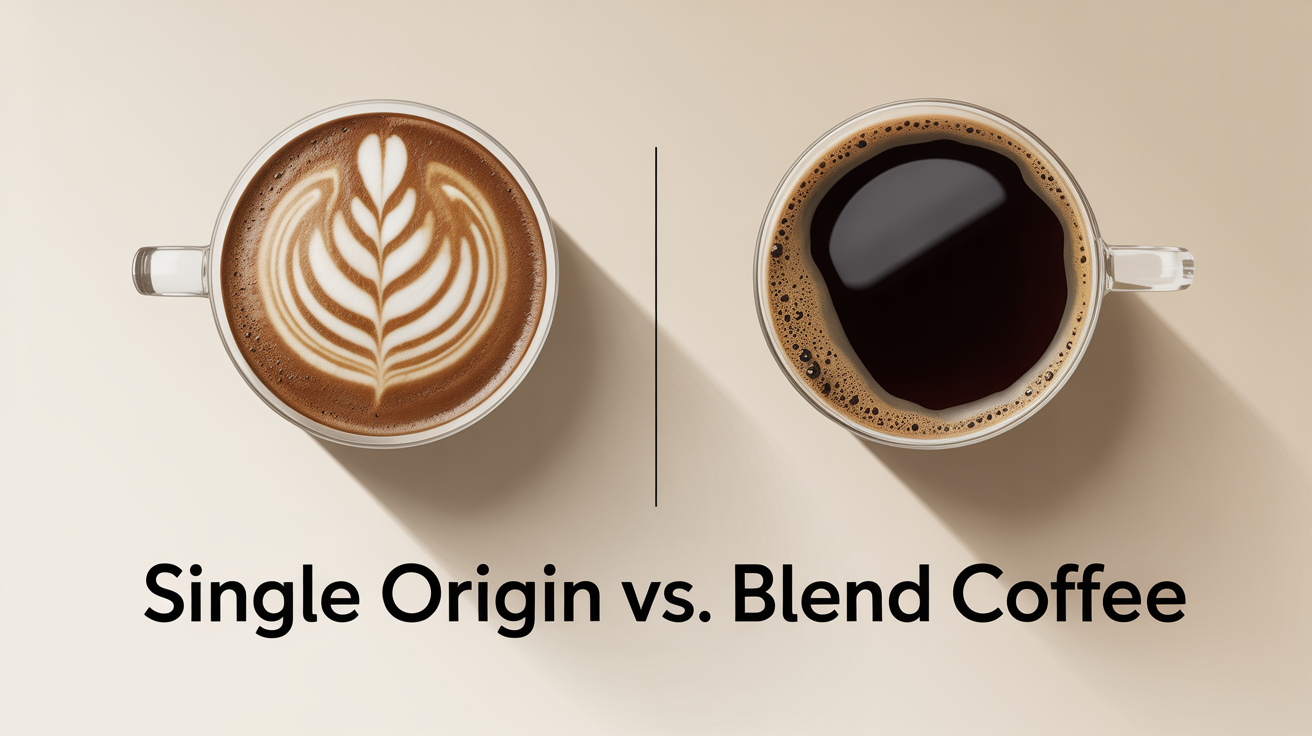
Single origin coffee comes from one defined place. Blends combine beans from two or more origins. That's the whole distinction, and most of the rest is a question of what you want in the cup.
Which you should buy depends on your brew method, how much attention you want to pay, and honestly, what you're in the mood for. Neither is objectively better. But they behave differently, and knowing why helps you spend your money on the right bag.
What "single origin" actually means
The phrase covers a wide range. A bag labeled "Ethiopia" qualifies as single origin. So does one labeled "Ethiopia, Yirgacheffe, Kochere washing station, Lot 12." These are both single origin coffees. They are not equally specific.
The narrower the sourcing, the more distinct the flavor tends to be. A regional Ethiopian will taste broadly floral and citrusy. A lot-specific washed Kochere will have a particular flavor profile that may not repeat in the same form next harvest.
Terroir and traceability
Single origin is the coffee world's answer to wine's terroir concept. Altitude, soil, rainfall, processing method, and harvest timing all shape what ends up in your cup; the National Coffee Association's tour of the world's growing regions shows how those variables give each origin its own signature. When a roaster sources from a single farm or cooperative, they can document that chain. You can often find the farmer's name and elevation on the bag.
This matters if you care about that chain, and it also matters technically: a bean from a high-altitude Kenyan farm grown in volcanic soil has different density and moisture content than a lower-altitude Sumatran. Those differences require different roasting treatment to coax out the best result.
To decode what the bag is actually telling you, the guide on how to read a coffee bag label breaks down every field you'll encounter, including region, process, and varietal.
When single origin shines
Pour-over, AeroPress, and filter methods in general let single-origin flavors express themselves cleanly. You're getting a full extraction through relatively little interference, so distinct fruit notes, florals, or wine-like acidity have room to show up.
Lighter roasts work especially well here. The bean's intrinsic character comes through before the roast flavors (caramel, smoke, toast) can dominate. If you buy a light-roasted Gesha or a washed Ethiopian and brew it as espresso without dialing things in carefully, it'll taste thin and sour. Same bean, brewed as a slow pour-over, can be extraordinary.
What goes into a blend
A blend is the roaster's recipe: specific beans combined in specific ratios to produce a consistent, intentional flavor. Most blends are designed for espresso, because espresso demands more from a bean than filter brewing does.
The pressure and speed of an espresso shot amplify everything. A single origin with high acidity gets sharper. One with thin body stays thin. Blending lets a roaster compensate: a bright East African bean for top notes, a heavy Sumatran for body, a Central American for balance and sweetness in the finish.
The consistency question
This is the main practical reason cafes use blends: they stay the same. Coffee is an agricultural product, and harvests vary. When a roaster builds a blend around a flavor profile rather than a single source, they can swap component beans as crops change while keeping the output consistent.
For home espresso, that consistency is worth something. If you dial in a shot on a particular blend and it tastes right, it'll taste right next month. A single origin may taste noticeably different after the roaster sources the next harvest, even from the same farm.
Blends and darker roasts
Most commercial espresso blends run medium to dark. Darker roasts reduce the variability between beans, which makes it easier to keep a blend tasting the same across batches. They also produce heavier body and more of the chocolatey, caramel, low-acid flavors that work well in milk drinks.
If you mostly drink lattes or cortados, a medium-dark espresso blend will hold up through the milk in a way a light single origin often won't. Roast level interacts with everything here; the guide on coffee roast levels explained goes deeper on how roast affects solubility, flavor, and what you can reasonably expect from each level.
Single origin vs blend: a direct comparison
| Factor | Single origin | Blend |
|---|---|---|
| Flavor character | Distinct, origin-specific | Intentionally balanced |
| Consistency batch to batch | Varies with harvest | Designed to stay stable |
| Best brew method | Filter, pour-over, AeroPress | Espresso, milk drinks |
| Best roast level | Light to medium | Medium to dark |
| Price per bag | Usually higher | Usually lower |
| Traceability | High (farm, lot, process) | Lower (component sourcing varies) |
| Learning curve | Higher (very sensitive to grind/temp) | More forgiving |
Price and what you're paying for
Single origin coffees generally cost more, and there are real reasons for that.
Traceable lots require more work at origin. Farmers who sort by ripeness, ferment precisely, and dry on raised beds produce better, more consistent fruit. That labor costs more. Exporters who lot-separate and document provenance add overhead. Roasters who buy smaller lots pay more per pound than those buying container quantities.
You're also paying for specificity. A lot-specific Ethiopian from a top cooperative costs more than a generic "African blend" because fewer bags of it exist and the sourcing story is real.
That said, price isn't a pure quality signal. Some blends are made with excellent component coffees and careful craft. Some single origins are overpriced on the strength of their label. The best filter for quality is whether the roaster publishes specific sourcing information and roast dates, not whether the bag says "single origin."
Practical guide: which to buy
Start with what you're brewing.
Espresso machine at home: A purpose-built espresso blend will be more forgiving during dialing. Once you're comfortable with the process, try a single origin designed for espresso (some roasters now offer these specifically). Expect to spend more time adjusting.
Pour-over, V60, Chemex, or AeroPress: Single origin is the natural home here. Pick a country or region you haven't tried and buy from a roaster with roast-date information on the bag. Aim for coffee roasted within the last two to four weeks. For storage guidance once the bag is open, the piece on how to store coffee beans to keep them fresh covers what actually matters.
Drip machine: Either works. Blends tend to produce a more crowd-pleasing pot for guests. Single origins can surprise people in the best way.
You want reliable flavor day to day: Blend. Pick one from a roaster you trust, dial in your grinder, and leave it alone.
You want to explore and learn: Rotate single origins. Each one teaches you something different about how origin, process, and roast interact.
Frequently Asked Questions
Is single origin coffee better than a blend?
Not as a rule. "Better" depends entirely on context. Single origin coffees have more distinct, origin-specific flavors that reward attention and a good filter brewing setup. Blends are designed to be consistent and forgiving, which matters for espresso and for anyone who wants the same cup every morning. One is not superior to the other.
Can you use single origin coffee for espresso?
Yes, and many people do. The challenge is that single origins are often light-roasted and high in acidity, which makes them unforgiving on an espresso machine. Small changes in grind size or extraction time have a big effect on the result. If you want to try it, start with a single origin your roaster specifically recommends for espresso, or choose one with lower acidity (Sumatra, Brazil, and some naturals work well).
Why do most cafes use blends for espresso?
Consistency and economics. A cafe pulling hundreds of shots a day needs every shot to taste the same. Blends let roasters maintain a stable flavor profile across harvests. They also tend to cost less per pound than premium single origins, which matters at volume.
What does "single farm" mean compared to "single origin"?
Single origin is the broad category. Single farm is more specific: it means all the coffee came from one farm or estate rather than a cooperative or regional collection. Single farm coffees are the most traceable and often the most distinctive, but they're also more limited in supply and usually priced accordingly. A bag labeled only "Colombia" is single origin but may combine beans from many farms across a region.
How do I know if a blend has good component coffees?
Roasters who use quality components usually say so. Look for blends where the roaster names the origins that went into it, even if they don't give lot-level detail. If the bag just says "house espresso blend" with no other information, the sourcing is probably generic. That's not automatically bad, but you're buying on faith.