Equipment
The Best Water Temperature for Coffee
The ideal water temperature for coffee is 195–205°F (90.5–96°C). Learn how brew temp affects extraction and how to nail it for every method.
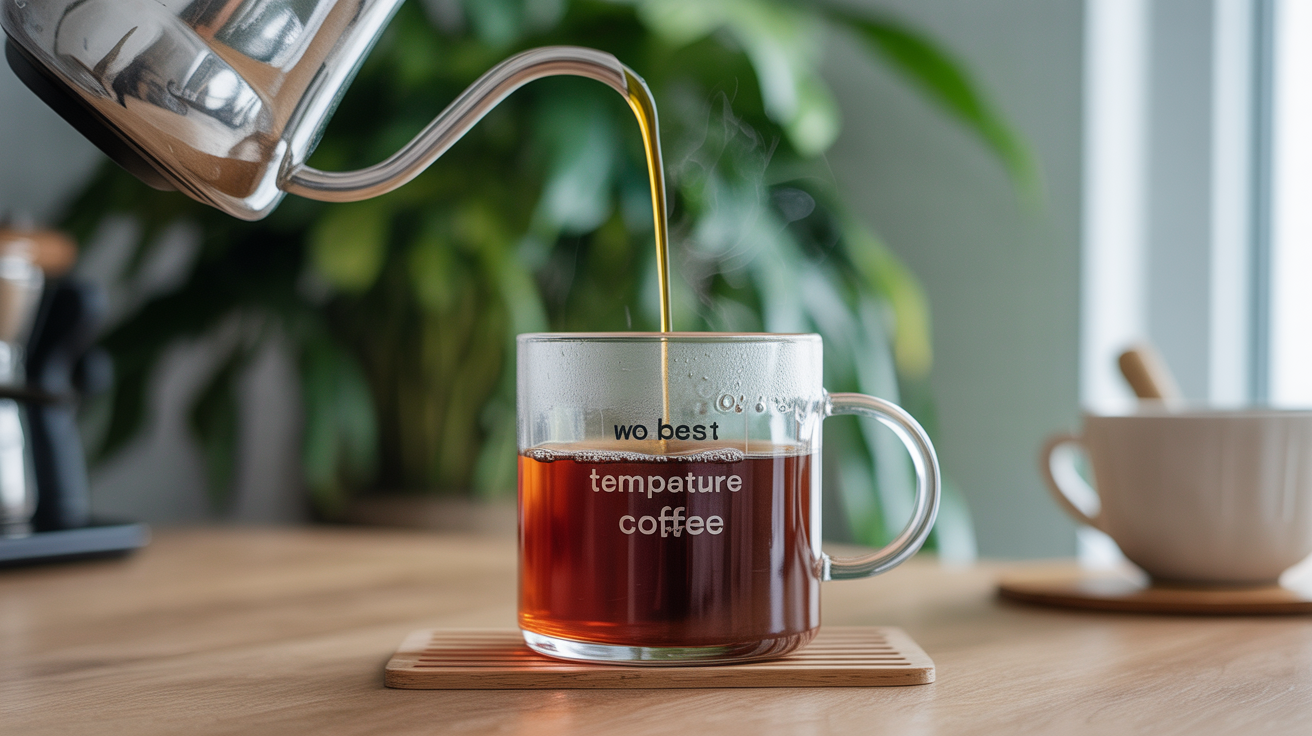
Most brewing problems trace back to two variables: grind size and water temperature. Grind size gets most of the attention, but temperature is just as influential. Use water that's too hot and your coffee tastes harsh and bitter. Use water that's too cool and the cup comes out flat, sour, and thin. The target is a narrow band: 195°F to 205°F (90.5°C to 96°C), which is where coffee solubles dissolve at a rate that produces a balanced, full-flavored cup.
That said, the exact number you want within that range depends on your brewing method, your roast level, and how your last cup tasted. This guide covers the reasoning behind the range, how each method differs, and practical ways to hit the right temperature at home without specialized gear.
Why Water Temperature Controls Flavor
Coffee grounds contain hundreds of soluble compounds, including acids, sugars, oils, and bitter compounds. These dissolve at different rates depending on heat. Some compounds are quite soluble and release quickly even at moderate temperatures. Others need sustained heat to come out. The goal is to extract enough of the desirable stuff (sweetness, fruit acids, body) without pulling out the harsh compounds that release last.
Under-extraction: too cold
Water below about 190°F (87.8°C) doesn't have enough energy to dissolve the full range of desirable compounds. The result is coffee that tastes sour, grassy, or weak. The sugars and pleasant acids haven't fully extracted, and the flavor feels unfinished. If your coffee regularly tastes thin or sharp, low brew temperature is often the culprit, especially if you're boiling a kettle and then letting it sit for several minutes before pouring.
Over-extraction: too hot
Boiling water at 212°F (100°C) extracts aggressively. The desirable compounds come out quickly, but the process doesn't stop there. Bitter compounds that would otherwise stay bound keep releasing, and lighter aromatics that would contribute complexity get scorched away before they have a chance to contribute to the flavor. The cup turns harsh, astringent, or dry. Darker roasts are more vulnerable here, since the roasting process has already developed bitterness that additional heat amplifies.
The extraction sweet spot
The Specialty Coffee Association sets the ideal brew temperature at 200°F (93.3°C), plus or minus 5 degrees. This range gives you enough heat to fully dissolve the pleasant compounds from the grounds without pushing into over-extraction territory. Most modern brew guides use 200°F (93°C) as the default starting point for this reason.
Temperature Targets by Brewing Method
Different methods extract differently because they vary in contact time, pressure, and how the water moves through the grounds. Temperature targets shift accordingly.
Pour-over and drip
For pour-over methods (V60, Chemex, Kalita Wave) and most automatic drip machines, 200°F to 205°F (93°C to 96°C) is a reliable starting range. The water passes through the grounds in a matter of minutes, so you need enough heat to extract fully in that window.
Lighter roasts can handle the upper end of the range, since they're denser and harder to extract. Medium roasts sit comfortably around 200°F to 202°F (93°C to 94.4°C). If you're working with a dark roast and the cup tastes harsh, drop to 195°F to 197°F (90.5°C to 91.7°C) and see if the edge softens.
A gooseneck kettle with a built-in thermometer makes hitting this range straightforward. Variable-temperature models let you set a number and hold it, which removes the guesswork entirely.
Espresso
Espresso machines use pressure to extract concentrate from finely ground coffee in 25 to 35 seconds. The standard temperature range for espresso is 90°C to 96°C (194°F to 205°F), with 93°C (199.4°F) as a common starting point.
Many home machines have a single boiler that cycles to temperature and signals readiness. The actual brew temperature can vary from the display, particularly on less expensive machines. If your shots consistently taste sour even with a fine grind, your machine may be running cool. If they taste dry and hollow, it may be running hot. On machines with temperature controls (usually labeled PID), adjusting in 1°C increments is the right approach.
French press
French press steeping runs for 4 to 5 minutes, which is a long contact time. Water at 200°F (93°C) works well. Some brewers deliberately pull back to 195°F (90.5°C) for coarser grinds or larger batches, since the longer steep compensates for the slightly lower starting temperature.
Because the water and grounds sit together throughout the steep, the brew cools gradually over those minutes. Starting at the top of the range helps offset that temperature drop.
AeroPress
AeroPress is flexible, and that flexibility extends to temperature. Traditional recipes call for 175°F to 185°F (79°C to 85°C), particularly for the inverted method with longer steep times (2 to 3 minutes). Lower temperatures with extended contact can produce a smooth, less bitter cup, especially from medium or light roasts.
That said, many AeroPress competition recipes use 200°F to 205°F (93°C to 96°C) with very short brew times (60 to 90 seconds). The method tolerates both approaches. If you're getting harsh results, cool the water. If you're getting a flat or sour cup, heat it.
Cold brew
Cold brew sits at room temperature or in the refrigerator using water between 34°F and 72°F (1°C and 22°C). There is no "brew temperature" concern here in the same sense. The trade-off is time: cold brew requires 12 to 24 hours of steeping to fully extract. Because extraction at low temperatures favors certain compounds over others, the flavor profile is different from hot brewing, typically lower in acidity and less bright.
How to Reach the Right Temperature Without a Thermometer
A dedicated thermometer or a temperature-controlled kettle gives you certainty, but neither is required to brew decent coffee.
The off-boil rest method: Boil your water, then let it sit off the heat for 30 seconds to 1 minute. At sea level, boiling water drops from 212°F (100°C) to roughly 200°F to 205°F (93°C to 96°C) in about 30 to 45 seconds. This puts you squarely in the target range for most pour-over and drip methods.
The wait time increases at altitude. Water boils at lower temperatures as elevation rises (about 1°F per 500 feet / 0.6°C per 150 meters above sea level), so at 5,000 feet (1,524 m) your boiling point is already around 202°F (94.4°C). Off-boil water may already be within range without waiting.
Reading your equipment: If you're using an electric kettle with a temperature display, the reading is generally accurate within a few degrees. Many gooseneck kettles now include thermometers as a standard feature, and variable-temperature models hold a set temperature until you're ready to pour.
For grinder choice and how it interacts with extraction, understanding burr vs. blade grinders matters as much as temperature control. Inconsistent particle sizes from a blade grinder cause uneven extraction that no amount of temperature precision can fix.
Adjusting Temperature as a Dialing-In Tool
Once you have your ratio and grind size roughly dialed in (a common starting point is 1 g of coffee per 15 to 17 ml of water, or roughly 60 g per liter), temperature becomes a useful lever for fine-tuning.
Tasting sour or weak? Try increasing your brew temperature by 2°C to 3°C (roughly 3°F to 5°F). If that doesn't resolve it, the grind may need to be finer.
Tasting harsh, bitter, or dry? Drop the temperature by 2°C to 3°C. If the problem persists, coarsening the grind is the next step.
Changed roast levels? Lighter roasts generally need higher temperatures; darker roasts do better at the lower end of the range. If you've switched from a medium to a light roast and the cup has gotten sour, temperature (and grind) both need to go up.
Keep one variable stable while you adjust the other. Changing grind size and temperature at the same time makes it difficult to understand what actually changed the flavor.
Selecting a grinder that gives you consistent output is worth prioritizing early, since grind consistency determines whether temperature adjustments actually produce predictable results.
Frequently Asked Questions
What temperature should I brew coffee at?
The broadly accepted target is 195°F to 205°F (90.5°C to 96°C), with 200°F (93°C) as a practical starting point for most methods. Espresso machines operate in a similar range. Cold brew is the exception, using room-temperature or refrigerator-cold water over 12 to 24 hours.
Can I use boiling water for coffee?
Boiling water at 212°F (100°C) is slightly above the ideal range for most methods. It won't ruin a cup, but it can push the extraction toward bitterness, especially with darker roasts. Letting boiled water rest off the heat for 30 to 45 seconds typically brings it down to 200°F to 205°F (93°C to 96°C), which is a better starting point.
Why does my coffee taste sour even though I brew it hot?
Sour flavor usually signals under-extraction. If your water temperature is in the 195°F to 205°F (90.5°C to 96°C) range but the cup still tastes sour, grind size is the more likely cause. Coarser grinds extract more slowly; tightening the grind gives water more surface area to work with. Check both temperature and grind before making other changes.
Does altitude affect brew temperature?
Yes. Water boils at a lower temperature at higher elevations: roughly 202°F (94.4°C) at 5,000 feet (1,524 m) and 194°F (90°C) at 10,000 feet (3,048 m). At moderate elevations, you're already close to the target range straight off the boil. At higher elevations, you may find that coffee over-extracts at "boiling" temperatures that would be fine at sea level, or that you need to account for the lower boiling point when calibrating.
Does a gooseneck kettle affect temperature?
The kettle shape itself doesn't change temperature, but a gooseneck spout gives you much better control over pour rate and direction, which affects how evenly the grounds saturate. Many gooseneck kettles include a thermometer or temperature setting, which is why they're common among pour-over brewers who want precision. The temperature control is the feature; the spout shape is about consistency of contact.