Espresso
Ristretto vs Lungo vs Normale, Explained
Ristretto vs lungo vs normale: learn the ratios, flavor differences, and when to pull each espresso shot type at home.
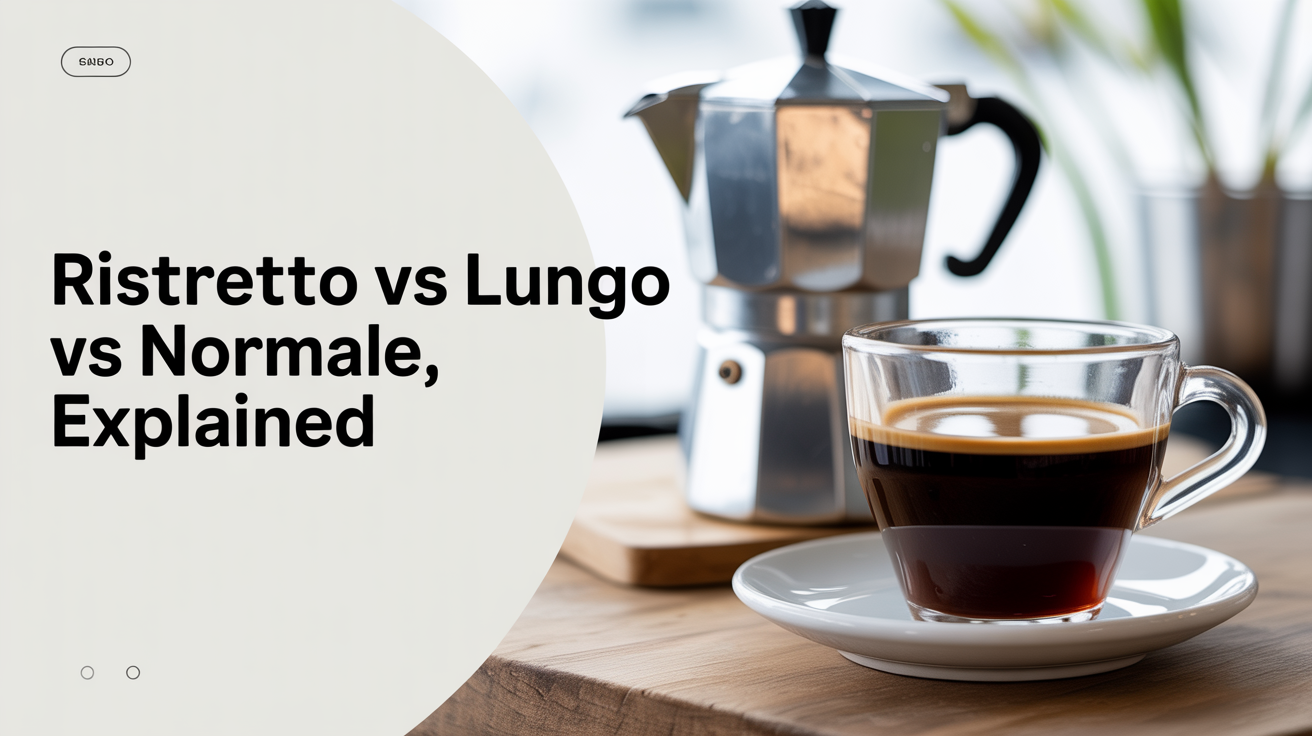
Pull three shots from the same beans, the same grind setting, and the same machine, and you can get three genuinely different drinks. The difference is not the dose. It's how much water you let through the puck, and when you stop the shot. That is the whole story of ristretto, normale, and lungo, and once you understand the numbers, the flavor differences stop feeling mysterious.
The Three Shot Types, Defined
All three shots start the same way: ground coffee packed into a portafilter basket, tamped level, locked in, and brewed at roughly 9 bars of pressure. What changes is the yield, meaning the volume of liquid that comes out.
The Italian names are descriptive. Ristretto means restricted. Normale means standard. Lungo means long. Each name tells you roughly how much water passed through the coffee.
Normale
A normale is a standard single or double espresso. Using a 18 g dose (the most common double-basket load), you let the shot run until you collect around 36 ml of liquid. That works out to a 1:2 brew ratio by weight. The shot takes about 25 to 30 seconds.
This is what most cafes mean when they say "espresso." It is the baseline against which the other two types are measured.
Ristretto
A ristretto uses the same 18 g dose but stops much earlier, collecting only 18 to 22 ml of liquid. The ratio lands around 1:1 to 1:1.2. Extraction time runs roughly 15 to 20 seconds because you're pulling less water through the puck.
Because you stop the shot sooner, you capture the early compounds that dissolve first: sugars, fruity acids, and certain aromatic oils. The more bitter compounds that come out later never make it into the cup.
Lungo
A lungo pushes in the opposite direction. Same dose, but you let the shot run longer, collecting 54 to 72 ml, roughly a 1:3 to 1:4 ratio. The extraction stretches to 35 to 45 seconds.
Lungo is not an Americano. An Americano is a normale with hot water added afterward. A lungo actually extracts more from the coffee, pulling compounds that simply do not appear in a shorter shot. The result is different in character, not just volume.
The Ratios and What They Mean Practically
A quick reference for a standard 18 g double basket:
| Shot Type | Dose | Yield | Ratio | Time |
|---|---|---|---|---|
| Ristretto | 18 g | 18–22 ml | 1:1 to 1:1.2 | 15–20 sec |
| Normale | 18 g | 34–38 ml | ~1:2 | 25–30 sec |
| Lungo | 18 g | 54–72 ml | 1:3 to 1:4 | 35–45 sec |
These are starting points, not absolutes. Some roasters specify tighter targets, and your machine's actual brew temperature matters too. A good range is 90 to 96°C (194 to 205°F) for all three shot types, with lighter roasts benefiting from the higher end of that range.
The grind setting stays the same across all three shot types if everything else is equal. Grind finer and the resistance goes up, slowing flow. Grind coarser and the water moves faster. If you change from a normale to a ristretto without touching the grind, the shot will simply run fast and light. To properly pull a ristretto at a slower, more controlled pace, you typically need to grind a bit finer, which builds more resistance while you collect less liquid. Dialing in these variables takes some practice, but the ratio target is your anchor.
How Each Shot Tastes
The flavor differences between these shot types come down to extraction chemistry, not brewing magic.
Why Ristretto Tastes Sweeter
Water pulls compounds out of coffee in a rough sequence. Sugars and fruity acids dissolve early. Bitter chlorogenic acids and other harsh compounds come out later. A ristretto stops before those later compounds fully appear, so the cup tilts toward sweetness and brightness.
A well-pulled ristretto is dense and syrupy, often tasting of chocolate, dried fruit, or citrus zest depending on the bean. It is concentrated in the sense of intensity per sip, though it actually contains less caffeine than a lungo (more on that below).
Why Lungo Tastes More Bitter
The extended extraction on a lungo pulls out compounds that simply are not present in a normale or ristretto. This makes a lungo more bitter and noticeably thinner in texture, because the concentrated early compounds are now diluted across a larger volume of liquid. Some people find lungas taste slightly woody or tea-like compared to a normale.
Whether that is good or bad depends on what you're after. Some drinkers prefer the gentler intensity without adding hot water. Others find lungo shots too astringent.
The Normale as a Reference Point
A normale sits in the middle. The early sweet compounds are present, and a controlled amount of the later bitter compounds have also dissolved, which creates the characteristic intensity and slight bitterness that most people associate with espresso. It works as a standalone shot and holds up well under steamed milk.
When to Pull Each Shot Type
The question of which to use depends mostly on what you are making and what you want the flavor to do.
Ristretto in Milk Drinks
A ristretto is a strong choice for milk-based espresso drinks like flat whites, cortados, and small lattes. The sweetness and density cut through steamed milk cleanly, and the flavor registers clearly even in a relatively high milk-to-coffee ratio. Several third-wave cafes default to ristretto as the base for their milk drinks, partly for this reason.
Because ristretto shots are small, they also keep the drink from becoming too dilute. A flat white built on a double ristretto (about 40 ml total) stays tight and coffee-forward.
Normale for Straight Drinking and Cappuccinos
If you drink espresso straight, the normale is the most forgiving format. The flavor is familiar and balanced, and it has enough volume to sip slowly without cooling off immediately. Cappuccinos work well here too, since the foam and milk provide texture while the normale provides a clear coffee backbone.
Lungo When You Want Volume Without an Americano
Some people want a larger, lower-intensity espresso without diluting it with added water. A lungo fills that gap. It's still technically espresso, extracted through pressure, just with more of the coffee's soluble material pulled through. If you enjoy the ritual of espresso but find normals too intense, a lungo is worth trying before you reach for the Americano pitcher.
If your lungo shots taste flat or muddy rather than gently bitter, the grind may be too coarse and the water is channeling rather than extracting evenly. Uneven extraction and channeling have some easy fixes worth checking before you blame the beans.
A Note on Caffeine
This comes up constantly, so it is worth addressing directly. Many people assume ristretto has more caffeine because it tastes stronger. It does not. Caffeine is highly water-soluble and comes out of coffee early in the extraction, but a longer extraction with more water pulls more caffeine out overall.
A double lungo will contain more caffeine than a double ristretto from the same dose of coffee, even though the ristretto tastes more intense. The intensity you taste is concentration per milliliter, not caffeine content.
If you are managing caffeine intake and prefer smaller drinks, a ristretto is genuinely a lower-caffeine option. If you want maximum caffeine extraction, a lungo or a longer normale achieves that more effectively.
Frequently Asked Questions
What is the difference between a ristretto and a normale?
Both start with the same dose of coffee, typically 18 g in a double basket. A ristretto collects only 18 to 22 ml of liquid in 15 to 20 seconds, while a normale collects 34 to 38 ml in 25 to 30 seconds. The ristretto stops before bitter compounds fully extract, so it tastes sweeter and denser. The normale extracts a broader range of compounds and has a more familiar balanced espresso flavor.
Is a lungo just a watered-down espresso?
No. A lungo extracts more material from the coffee grounds through continued brewing pressure, which produces a chemically different cup from a normale with hot water added. An Americano is made by pulling a normale and adding hot water afterward. A lungo runs the shot longer. The distinction matters because a lungo will often taste more bitter and tea-like, while an Americano tastes closer to a diluted normale.
Which has more caffeine: ristretto or lungo?
A lungo has more caffeine. Caffeine is water-soluble and keeps extracting as more water passes through the grounds. A ristretto stops early, leaving some caffeine behind in the puck. The ristretto may taste more intense per sip, but that intensity is concentration, not caffeine content.
Can I pull a ristretto on any espresso machine?
Yes, with one adjustment. To pull a proper ristretto, you usually need to grind finer than your normale setting. This increases resistance so the shot extracts slowly even though you stop at a smaller yield. Without the finer grind, the water rushes through too quickly and the ristretto ends up thin and underextracted rather than sweet and dense. Most home machines that can pull a decent normale can pull a ristretto; it just requires a grind adjustment.
Does the type of bean matter when choosing between these shots?
It does. A lighter roast with natural fruit acidity often shines as a ristretto, where those early-dissolving fruity compounds are highlighted. A medium or darker roast can handle the longer extraction of a lungo without turning excessively harsh. Normale works across a wide range of roast levels and is generally the safest starting point when trying a new bean.