Coffee Recipes
Iced Americano at Home
Learn how to make an iced americano at home with two shots of espresso, cold water, and ice. Ratio tips, roast advice, and a side-by-side vs. latte.
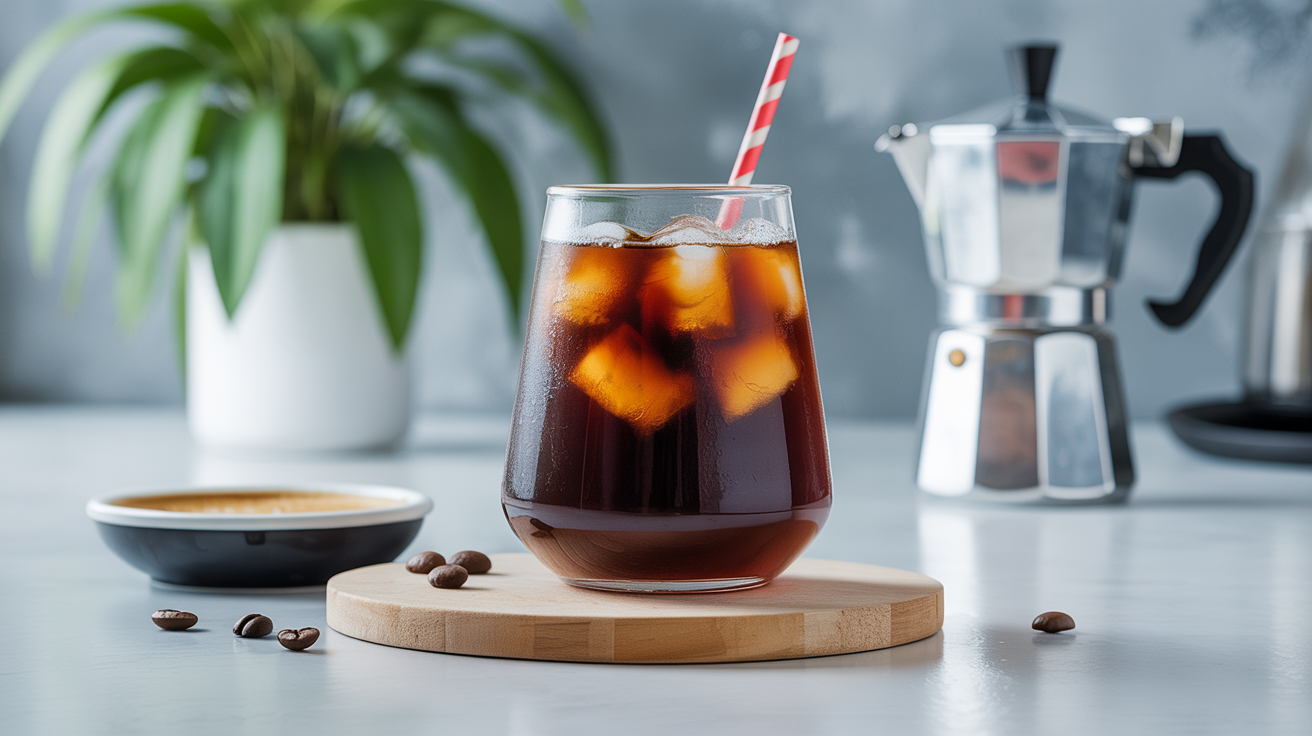
An iced americano is two or three shots of espresso poured over ice and diluted with cold water. That's the whole recipe. No milk, no syrup, nothing you don't already have if you pull espresso at home. The result is a clean, bold, low-calorie iced coffee that tastes like espresso rather than cold brew, and you can make one in under two minutes once your shot is running.
What Goes Into an Iced Americano
An americano, hot or iced, is espresso plus water. The traditional ratio is 1 part espresso to 2 parts water. For the iced version, that water is cold and served over ice instead of poured into the shot hot.
The espresso
Most home recipes call for a double shot (doppio), which is 36–40 ml of liquid espresso brewed from 18 g of ground coffee. A single shot (18–20 ml from 9 g) works for a smaller drink or if you prefer less caffeine. Whatever you normally pull, use that as your baseline.
The brew temperature inside the group head runs around 200°F (93°C), so fresh espresso arrives hot. That's fine. You'll pour it straight onto ice.
The water
Cold filtered water is the right choice here. A comfortable starting point is 120–150 ml (4–5 oz) per double shot. More water gives you a lighter, longer drink; less keeps things more concentrated and intense.
The ice
Roughly 150–200 g of ice fills a 12 oz (355 ml) glass and chills everything quickly. Large cubes melt slower and dilute less over the course of drinking, but standard freezer cubes work perfectly well.
The Iced Americano Recipe
Equipment
- Espresso machine (or Moka pot, which gets close enough)
- 12 oz (355 ml) glass or cup
- Kitchen scale, optional but helpful for dialing things in
Ingredients
- 18 g ground coffee (for a standard double shot)
- 36–40 ml brewed espresso
- 120–150 ml cold filtered water
- 150–200 g ice
Steps
- Fill your glass with ice before you start the shot. This way the espresso hits cold ice immediately.
- Add the cold water directly over the ice. Water first is the key sequence: the ice layer between the water and the incoming hot espresso cushions the temperature shock and prevents splashing.
- Pull your double shot and pour it slowly over the ice. The espresso sinks through the water and creates a brief layered look before you stir.
- Stir once or twice. Drink immediately.
The whole process from pressing start on your grinder to sipping takes under two minutes.
Moka pot version
A Moka pot doesn't produce true espresso pressure (9 bar machine versus roughly 1–2 bar on the stovetop), but the concentrated brew it makes holds up well over ice. Use a similar ratio: about 20 ml of Moka output to 120 ml of cold water. The flavor will be slightly more bitter and less syrupy than machine espresso, but the format works fine.
Iced Americano vs Iced Latte
These two drinks get confused often, and the difference is one ingredient: milk.
| Drink | Espresso | Added liquid | Milk? | Approx. calories |
|---|---|---|---|---|
| Iced americano | 2 shots | Cold water (120–150 ml) | No | ~10–15 kcal |
| Iced latte | 2 shots | Milk (200–250 ml) | Yes | ~120–180 kcal |
An iced latte is creamier, softer, and noticeably less intense. Milk dilutes the espresso and adds natural sweetness. An iced americano stays closer to the espresso character, with that thin, transparent body you don't get from milk-based drinks.
Neither is better. If you want something that tastes like espresso in a longer format, go americano. If you want something closer to a cold coffee drink with a creamy texture, go latte.
Dialing In the Ratio
The standard starting point (2 shots plus 120 ml water plus ice) lands on the stronger side by design. From there, adjust to suit what you actually want from the cup.
Stronger
Drop the water to 90–100 ml. The espresso flavor comes forward, and the finish gets drier and more bitter. Some people prefer this in the morning.
Lighter
Go up to 180–200 ml of water, or use a 16 oz cup. This starts to resemble a very light filter coffee and works well if you want something to sip over a longer stretch.
Sweeter without adding syrup
Pull your shots a little shorter. A 32 ml pull instead of 40 ml from the same dose is often sweeter and less bitter, because the early part of the extraction carries more soluble sugars. Shorter shots over ice can taste noticeably rounder.
Adding syrup
Simple syrup (equal parts sugar and water, dissolved) stirs in without leaving grit. Vanilla, brown sugar, and hazelnut syrups are common additions. Start with 10 ml and adjust. Add it to the water before the espresso so it mixes in evenly.
One thing people sometimes substitute is cold brew concentrate in place of espresso. The result is a different drink: lower acidity, heavier body, no crema. Both are good, but they're not interchangeable if you're trying to match a specific flavor profile.
What Roast to Use
Any espresso roast you enjoy hot works over ice, though the flavor shifts when chilled.
Darker roasts tend to taste more chocolatey and less acidic in iced form. Medium roasts keep more of their fruit and brightness. Very light roasts can come across thin and sour when cold, so if you're using a light roast, pull a slightly longer shot (38–42 ml) to balance it.
Single-origin espressos show their character more clearly in an iced americano than in any milk drink, because there's nothing to round off the edges. If you've been curious about tasting what's actually in your espresso without distraction, an iced americano or a small cortado are two of the clearest formats for doing that.
A medium-dark, chocolatey blend is the most forgiving starting point if you're new to making these at home. It tastes good over ice almost regardless of where your ratio lands.
Frequently Asked Questions
Is an iced americano the same as cold espresso?
No. Espresso poured over ice without water is sometimes called an espresso on ice or a shakerato (if shaken). An iced americano adds cold water, typically 120–150 ml per double shot, which dilutes the concentration and creates a longer, more drinkable cup. Total volume on an americano runs 280–360 ml. An espresso on ice is 36–40 ml.
Should I add the water or espresso first?
Water first, espresso last is the widely recommended order. Add cold water to the ice, then pour the espresso on top. This prevents the hot shot from cracking a glass and reduces how much ice melts before everything is mixed. Some cafes reverse this for a layered presentation, but water-first produces a slightly more even dilution.
How much caffeine is in an iced americano?
A standard double shot contains roughly 120–150 mg of caffeine, depending on the bean, roast level, and dose. Adding water doesn't change the caffeine content. A double-shot iced americano has the same caffeine as a double-shot hot espresso.
Can I make one without an espresso machine?
Yes. A Moka pot, AeroPress, or a strong French press can all substitute. None produce true espresso pressure, so there will be less crema and a slightly different flavor, but the basic format works. For the AeroPress, use the inverted method with a fine grind and a 1:2 ratio to get something close to espresso concentration.
How long does an iced americano stay good?
Drink it within 20–30 minutes of making it. Ice keeps melting, and the drink gradually becomes more diluted and less cold. It won't spoil, but the balance shifts as dilution increases. If you need to make one ahead of time, brew the espresso, let it cool briefly, and add ice and water right before drinking.