Coffee Recipes
How to Make a Cortado
A cortado is 1 oz espresso cut with 1 oz steamed milk. Here's how to pull one at home, plus how it compares to flat whites and cappuccinos.
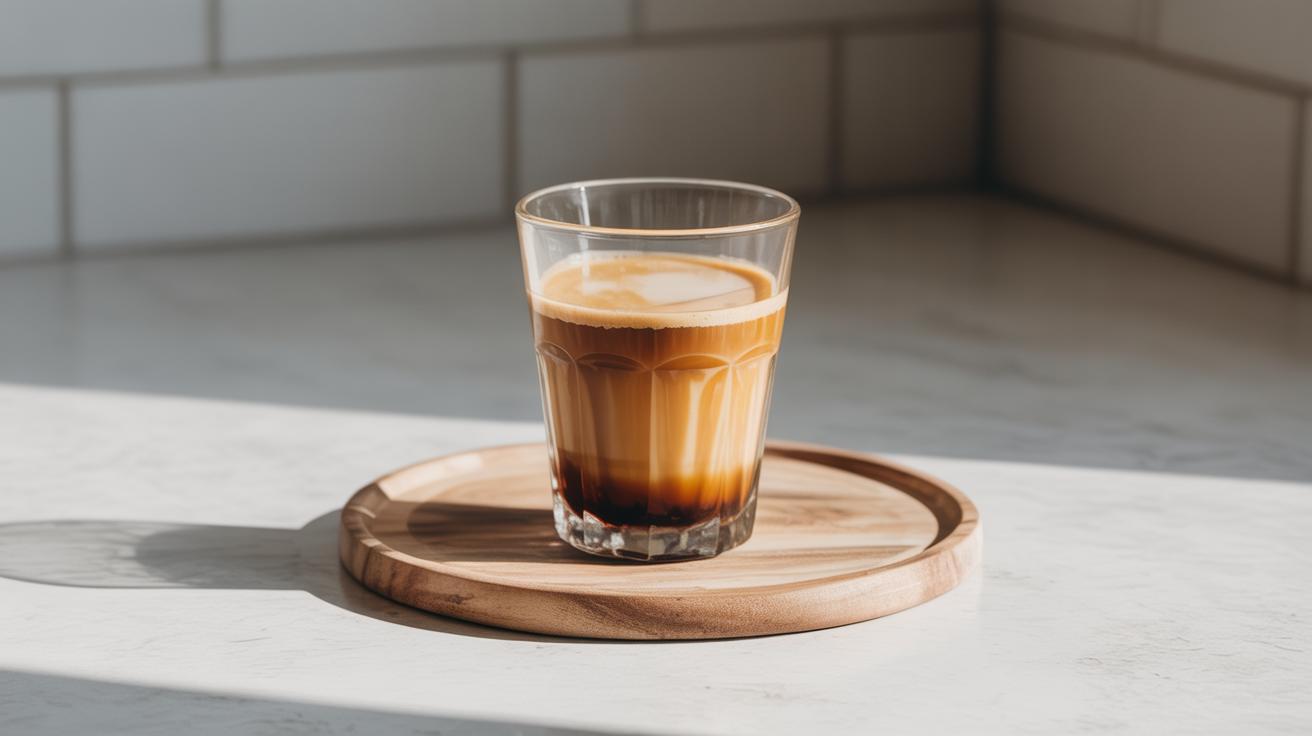
A cortado is two ounces of drink: one shot of espresso, one ounce of steamed whole milk. That's the whole recipe. The milk cools the espresso slightly and softens its edge without burying the coffee flavor under foam.
If you've been ordering cortados at a good espresso bar and wondering how to replicate one at home, this guide covers the method step by step, the gear you actually need, how it sits alongside similar drinks, and what to do if you don't have an espresso machine.
At a Glance
- The ratio is always 1:1, espresso to steamed milk, by volume. That's what separates a cortado from every other milk drink on the menu.
- You need real espresso (9 to 10 atmospheres of pressure), not a strong drip brew. A moka pot or AeroPress can get you close if you don't own a machine.
- Milk should be barely aerated, warm and pourable, not the thick dry foam of a cappuccino.
- Target 130 to 140°F on the steamed milk. Past 150°F, milk proteins break down and the texture and flavor both suffer.
- A cortado, a flat white, and a cappuccino all look similar in a small cup; the milk-to-foam ratio is what tells them apart.
- Bitterness almost always traces back to a shot pulled too fine or too long, not to a flaw in the milk.
What is a cortado?
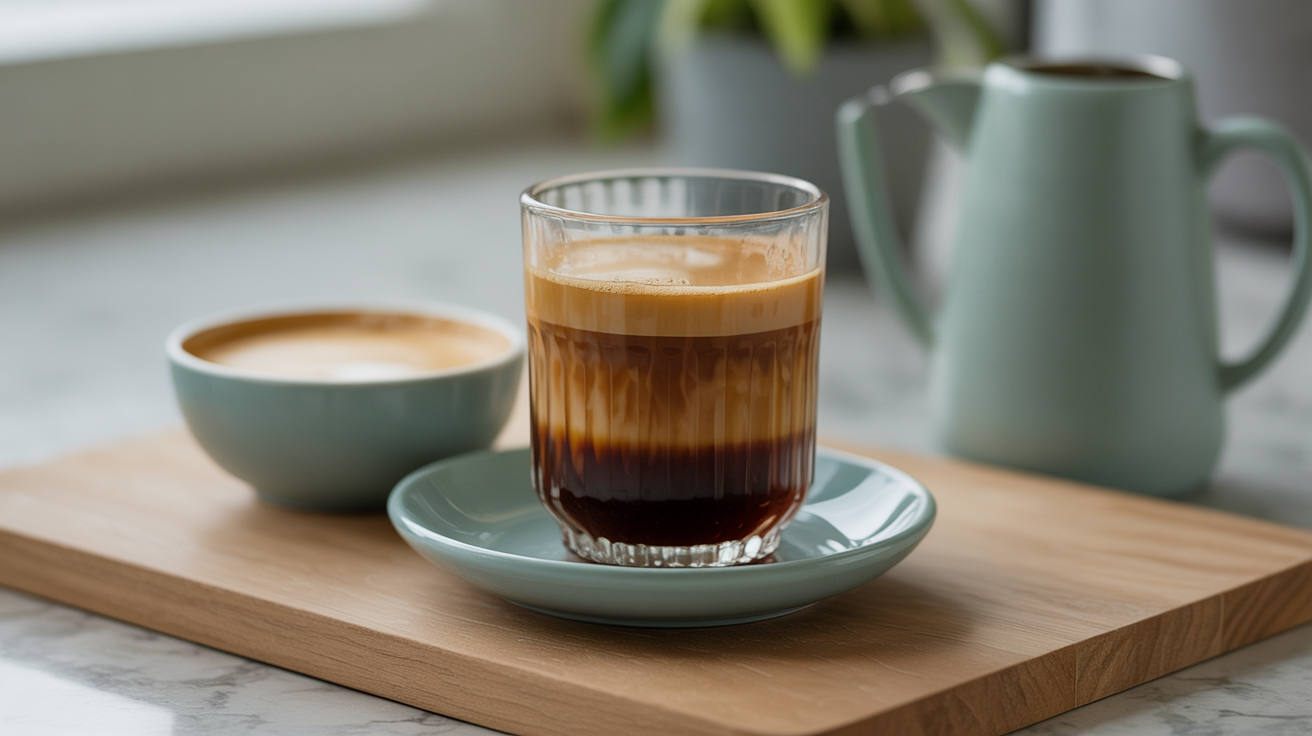
Cortado comes from the Spanish cortar, meaning to cut. The milk "cuts" the espresso, reducing its acidity without adding sweetness or volume. The drink originated in Spain, most likely the Basque region, and became standard in Cuban coffee culture (where the related cortadito is made with sweetened espresso) before spreading through third-wave espresso bars in the U.S. through the 2010s.
The ratio is 1:1, espresso to milk. Most recipes call for one double shot (about 2 oz) cut with 2 oz of steamed milk, which gets you a 4 oz drink. Some Spanish bars pull a single ristretto and pair it with about 1 oz of milk for a more concentrated 2 oz version. Both are correct; it's a matter of taste.
What makes a cortado distinct is the milk texture. You're not aiming for stiff foam. The milk should be microfoamed to something between liquid and latte-style foam, warm, lightly aerated, still pourable. Barely any surface foam.
Equipment you need
You don't need a professional machine, but you do need a way to pull actual espresso (9 to 10 atmospheres of pressure, per the industry-standard espresso definition). A standard drip machine or AeroPress won't get you there for a proper cortado, though the AeroPress can make a reasonable stand-in, covered below. Here's what works:
- Espresso machine with a steam wand, the standard home setup for cortados. Entry-level machines like the Breville Bambino or Gaggia Classic work well for this drink.
- Moka pot, brews concentrated coffee at 1 to 2 bars. It won't produce espresso, but the result is strong enough that a moka cortado is a reasonable approximation. Use a 2:1 moka-to-milk ratio since moka coffee is less concentrated than pulled espresso.
- Milk frother, a handheld frother or electric frother can steam milk to roughly the right texture. Not as controlled as a wand, but usable.
- Small glass, a 4.5 oz rocks glass or a gibraltar glass shows off the drink and keeps the proportions honest.
- A cheap kitchen thermometer, optional but genuinely useful while you're still learning to judge milk temperature by touch.
How to make a cortado: step by step
This recipe makes one standard home-sized cortado (roughly 4 oz total).
Pull the espresso
- Dose 18g of ground coffee into your portafilter for a double shot. Grind size matters here: too coarse and the shot runs watery in under 20 seconds; too fine and it stalls past 35 seconds.
- Tamp with even, level pressure, about 30 lbs.
- Pull your shot. You're targeting 36g of espresso out in 27 to 32 seconds, comfortably inside the 20 to 30 second window most standards use as a baseline. That gives you about 2 oz in the cup.
- If your shot tastes sour, grind finer. Bitter, grind coarser.
Steam the milk
- Fill your steam pitcher with 2 to 3 oz of cold whole milk. You need more milk than you'll use so the wand has something to work with.
- Purge the steam wand for a second before you start.
- Submerge the wand tip just below the surface. Keep the pitcher slightly tilted so the milk spins in a vortex.
- For the first 5 to 7 seconds, lower the pitcher slightly to introduce a small amount of air. You should hear a faint tearing sound, not a loud screech. After that, raise the pitcher to submerge the tip fully and heat without adding more foam.
- Stop when the pitcher is hot to the touch but not burning, around 130 to 140°F. A food-science breakdown of steamed milk notes that pushing much past that starts to scald the milk and denature its proteins, which is why cafes rarely steam past 150 to 155°F even for drinks that call for hotter milk. A thermometer helps until you develop the feel for it.
- Tap the pitcher on the counter and swirl to integrate any larger bubbles.
Combine and serve
Pour about 2 oz of steamed milk over the espresso. Free-pour, or use a spoon to hold back foam while the liquid milk goes in, then add a thin foam cap on top.
In practice they blend immediately, but a well-made one will show a thin foam cap. Don't stress the aesthetics.
Cortado vs. flat white vs. cappuccino
The drinks look similar in a small cup. The differences are in the milk ratio and foam texture.
| Drink | Espresso | Milk | Foam | Total size |
|---|---|---|---|---|
| Cortado | 2 oz (double) | 2 oz | Very little | ~4 oz |
| Flat white | 2 oz (double) | 3 to 4 oz | Thin microfoam | ~5 to 6 oz |
| Cappuccino | 2 oz (double) | 2 oz milk + 2 oz foam | Thick, dry foam | ~6 oz |
| Latte | 2 oz (double) | 6 to 8 oz | Thin cap | ~8 to 10 oz |
The cortado and flat white are close relatives. The flat white uses more milk and a slightly higher milk-to-espresso ratio, so it's a bit creamier and less intense. If you want the espresso flavor front and center with milk that smooths it rather than dilutes it, the cortado is sharper.
The cappuccino uses similar volumes of espresso and liquid milk, but the foam is thick and deliberately dry rather than poured. You're drinking a different texture entirely.
A latte is mostly milk with espresso flavoring. A cortado is mostly espresso with milk as a modifier. That's not a knock on lattes; adding a splash of milk to iced coffee is its own satisfying thing, but the cortado asks more of your espresso. Weak or stale beans have nowhere to hide.
Making a cortado without an espresso machine
If you don't own an espresso machine, you have a few options that get reasonably close.
Moka pot cortado: Brew a full moka pot using a 2-cup or 3-cup size (the small ones produce more concentrated coffee). Use about 2 oz of moka coffee to 1 oz of frothed whole milk. It won't taste identical (moka coffee has a different chemical profile than machine espresso, since it brews at 1 to 2 bars instead of 9), but the ratio logic holds and the result is strong and satisfying.
AeroPress concentrated shot: Brew 15g of coffee with 60ml of water at 200°F, 2-minute steep, then press. This gives you something espresso-adjacent at higher concentration than normal drip. Pair it with 1.5 to 2 oz of frothed milk. The flavor is cleaner and less syrupy than moka, which some people actually prefer.
Instant espresso powder: Not a great cortado, but dissolving 2 teaspoons of quality instant espresso (Medaglia D'Oro is the standard) in 1.5 oz of hot water and adding 1.5 oz of frothed milk is drinkable in a pinch. The dalgona method takes instant coffee in a completely different direction if you want to experiment further.
Getting the milk texture right
The milk is where most home baristas struggle. The target for a cortado is velvety microfoam, smooth enough that you could almost see your reflection in it, with no visible bubbles. Here's what goes wrong:
Too much foam happens when you introduce air for too long. If you can hear loud bubbles or see the foam rising in the pitcher, the wand tip is too close to the surface. Submerge it more.
Scorched milk happens when you go too hot. Milk proteins begin breaking down noticeably above 150°F and taste flat, and the sugars start caramelizing in a way that reads as "burnt" rather than sweet. Get the milk warm enough that you can't hold the pitcher comfortably, then stop.
Watery texture happens when the milk is skim or low-fat. Whole milk foams better and tastes better in a cortado. The fat content affects how the microfoam holds together; lower-fat milks actually foam more easily in terms of sheer volume, but the foam is less stable and collapses faster once poured. You can use oat milk (the barista-blend varieties specifically, like Oatly Barista or Minor Figures) and it'll foam acceptably. Standard grocery oat milk tends to separate.
Different milks also top out at different ideal steaming temperatures before they start to taste burnt or break texturally, which is worth knowing if you're switching between dairy and plant milk:
| Milk type | Ideal steaming temperature | Notes |
|---|---|---|
| Whole dairy milk | ~150°F | Most forgiving; classic cortado texture |
| Soy milk | ~140°F | Can curdle if steamed too hot or too fast |
| Almond milk | ~130°F | Thin foam, lower temperature ceiling |
| Coconut milk | ~160°F | Higher fat content tolerates more heat |
For an actual cortado, aim for the 130 to 140°F range regardless of milk type; the table above is more about the upper limit each milk can take before it turns unpleasant, not the target for this specific drink.
For those who want to experiment with cold coffee drinks, homemade cold brew concentrate works differently than espresso but can be mixed with frothed milk for a cold-milk coffee in the same vein.
Frequently Asked Questions
What's the correct cortado ratio?
The standard is 1:1, espresso to steamed milk. For a double shot (2 oz espresso), that's 2 oz of milk, for a 4 oz drink total. Some bars use a 1:2 ratio (1 oz espresso to 2 oz milk), which produces a milder drink closer to a small latte. Strictly speaking, the 1:1 ratio is what defines it.
Can I make a cortado with a single shot instead of a double?
Yes. A single shot (1 oz) with 1 oz of steamed milk is a smaller, more intense version. Some people prefer it. The drink stays in proportion either way; you just end up with a 2 oz drink rather than a 4 oz one.
Is a cortado the same as a Gibraltar?
A gibraltar is a cortado served in a specific vessel: a Libbey Gibraltar glass, which holds about 4.5 oz. Blue Bottle Coffee popularized it in the early 2000s and the name stuck in specialty coffee circles. The drink inside is identical to a cortado. If someone offers you a gibraltar, they're handing you a cortado in a rocks glass.
Why does my cortado taste bitter?
Bitterness in espresso usually means over-extraction: too-fine a grind, too long a pull, or too much coffee in the dose. Try grinding coarser in small increments (one notch at a time) and check that your shot pulls in 27 to 32 seconds. Also check your water temperature; water above 205°F extracts more aggressively. Most home machines run a bit hot.
How is a cortado different from a macchiato?
A macchiato is espresso "marked" with a small amount of foam, about half a teaspoon, just enough to sit on top. There's almost no milk volume, just a visual mark. A cortado has significantly more milk (1:1 ratio) and the milk is actually stirred into the espresso to moderate the flavor. They're related drinks but the macchiato stays closer to straight espresso.
Can I make a cortado with pre-ground coffee instead of grinding fresh?
You can, but the shot will lack the brightness a fresh grind gives you, and pre-ground coffee loses aromatics fast once it's exposed to air. Espresso is unforgiving of stale grounds specifically because the fast, high-pressure extraction pulls flavor compounds quickly, so whatever's already faded in the grounds stays faded in the cup. If you only have pre-ground, use it within a few days of opening the bag rather than reaching for one that's been open a month.
Why does my home espresso machine struggle to make a real cortado?
Most sub-$300 espresso machines can technically hit 9 bars of pressure, but they often lack the thermal stability to hold water temperature steady through the whole shot, which shows up as inconsistent extraction from one pull to the next. If your shots vary noticeably in taste even when your grind and dose stay the same, that inconsistency is more likely the machine than your technique. A moka pot cortado, by contrast, is more forgiving because you're not chasing a narrow pressure and temperature window.
Can I make a cortado with plant milk?
Yes, though results vary more than with dairy. Barista-blend oat milks (Oatly Barista, Minor Figures) are formulated with added fat and stabilizers specifically so they steam and microfoam close to whole milk, and they're the most reliable non-dairy choice for a cortado. Soy tends to foam well but can curdle if it meets espresso that's too hot or too acidic. Almond and coconut milk foam less predictably; they can work in a latte where there's more milk to carry the drink, but in a cortado's 1:1 ratio, a milk that separates or foams thin is much more noticeable. If you're new to a plant milk, test it steamed on its own before committing it to a full cortado.
How much espresso should I practice pulling before trying a cortado?
If you're new to a home machine, spend a few sessions on straight espresso shots before adding milk to the equation. Pulling shots on their own lets you isolate grind size, dose, and tamp pressure without also managing a steam wand, and it's much easier to taste a dialed-in shot when it's not diluted with milk. Once you can reliably pull a shot that tastes balanced and pulls in the 27 to 32 second window on its own, adding steamed milk is a smaller, easier adjustment than trying to learn both skills in the same drink.