Coffee Recipes
Dalgona Whipped Coffee, the Easy Way
Make dalgona coffee at home with this step-by-step guide: the right ratio, whipping tips, and fixes for when it refuses to foam.
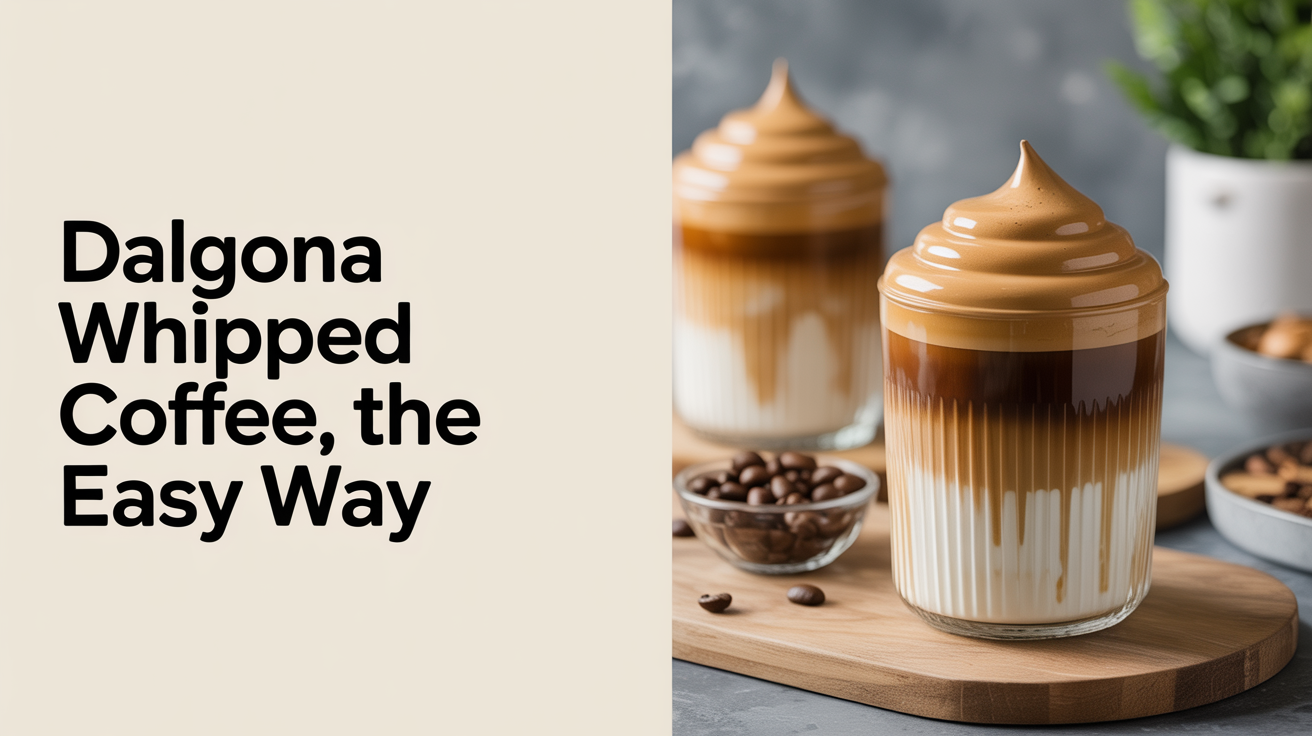
Dalgona coffee is two tablespoons each of instant coffee, sugar, and hot water, whipped until pale and thick, then spooned over cold milk. That's the whole recipe. Everything else is technique.
The drink blew up in early 2020 when people stuck at home discovered that instant coffee, given enough agitation, turns into something that looks like soft-serve. It's named after a Korean sugar candy with a similar color and texture. The flavor is stronger than it looks: bitter, almost caramel-edged, with a sweetness that cuts in after the first sip.
At a Glance
- The ratio to remember is 1:1:1, equal parts instant coffee, sugar, and hot water, by volume.
- Only instant coffee works. Ground coffee and most brewed coffee won't whip into a stable foam.
- By hand takes 6 to 8 minutes to stiff peaks; an electric mixer takes 2 to 3 minutes.
- Sugar isn't just for sweetness; it's structural. Cut it too far and the foam won't hold.
- Leftover foam keeps in the fridge, covered, for up to 24 hours before it's too far gone to save.
- A double serving (2 tbsp of each ingredient per drink) is a very concentrated dose of coffee, worth knowing if you're sensitive to caffeine.
What you need
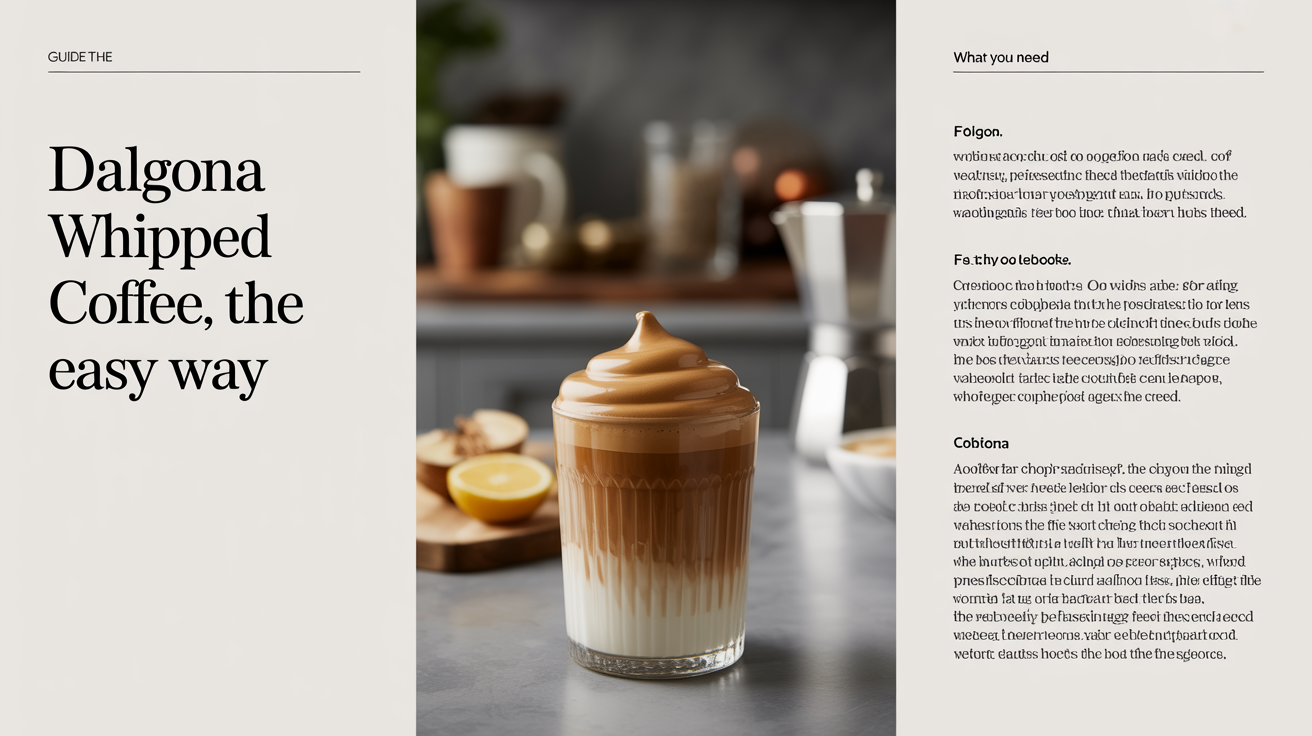
No special gear required. Here's the base setup:
| Ingredient | Amount |
|---|---|
| Instant coffee | 2 tbsp |
| Granulated sugar | 2 tbsp |
| Hot water (just off boil) | 2 tbsp |
| Cold milk (any kind) | 6 to 8 oz |
| Ice | as much as you want |
The 1:1:1 ratio is the thing to memorize. Equal parts instant coffee, sugar, and hot water, by volume. This ratio is what makes the foam stable. Go heavy on the water and you get a loose, runny foam that dissolves before you finish pouring. Go light and it seizes up before it's fully whipped.
For the coffee, instant is non-negotiable. Ground coffee won't work here at all, and espresso powder only works in some formulations (more on that below). Classic Nescafe, store-brand instant, whatever you have. It doesn't need to be good instant coffee; the whipping process changes the flavor profile significantly. What matters is that it's freeze-dried or spray-dried instant granules that fully dissolve in hot water, since the soluble compounds in instant coffee are what let it trap air, in a way that ground coffee's insoluble fiber never can.
Whipping it: by hand vs. electric mixer
By hand
Pour the three ingredients into a small bowl. Whisk vigorously in a circular motion, lifting slightly at the top of each stroke. It'll look like muddy liquid for the first two or three minutes. Keep going. Around the four-minute mark it starts to hold faint trails. By six to eight minutes you'll have stiff, glossy peaks.
Your arm will be tired. That's normal.
A balloon whisk works better than a flat whisk here. More surface area, more air incorporation per stroke.
Electric hand mixer or stand mixer
Use a medium-high speed. The same transformation happens, just faster: one to two minutes to soft peaks, two to three minutes to stiff. Stop when the foam holds its shape and doesn't slump back into itself.
Don't overwhip. Past a certain point the foam starts to deflate and turn grainy. If it looks like wet sand, you've gone too far and there's no coming back.
Immersion blender or milk frother
A handheld milk frother can do it, but it takes four to six minutes and you have to keep moving it around the bowl or it just spins a hole in the foam. Immersion blenders work in a tall narrow cup (the kind that came with the blender). Either is slower than a hand mixer but faster than a whisk.
Assembling the drink
Fill a glass with ice. Pour in 6 to 8 oz of cold milk. Top with the whipped coffee foam, spooning it on in a mound rather than spreading it thin.
Don't stir it immediately. Part of the appeal is watching the foam slowly dissolve at the edges while you photograph it (or just drink it). When you're ready, stir everything together before drinking or the first few sips will be straight bitter foam and the bottom will be plain milk.
Serving it over iced coffee or cold brew instead of plain milk makes it more complex: less sweet, slightly roasty. Worth trying once you've made the basic version a few times.
For a hot version, spoon the foam over steamed milk. The texture changes faster and it won't hold as long, but the flavor is good. Closer to a cappuccino than you'd expect from instant coffee.
Variations that actually work
Brown sugar dalgona: Substitute packed light brown sugar for granulated. The foam takes slightly longer to whip and the color goes from pale tan to a deeper caramel. Noticeably more complex flavor.
Matcha dalgona: Not technically coffee, but the same whipping method works with 2 tsp matcha plus 2 tbsp sugar plus 2 tbsp hot water. Matcha foam is greener and a little denser. Good if you want something without caffeine from coffee, though matcha has its own.
Cocoa version: Same ratio but with Dutch-process cocoa. It won't get as stiff as the coffee version (cocoa lacks the proteins that help instant coffee foam), but it's thick enough to spoon. Best used immediately.
If you want something cold but less sweet, try it alongside a cortado for contrast. Two very different approaches to concentrated coffee, same afternoon.
Why it won't whip (and how to fix it)
It's staying liquid after five minutes. Almost always the water ratio. Too much water prevents the foam from setting. Double-check you used 2 tbsp water, not 2 oz. If the ratio is right, your water may not have been hot enough. It needs to be near-boiling to dissolve the coffee properly and initiate the whipping chemistry.
It foamed, then deflated. You overwhipped it past the stable peak stage, or the bowl had residual grease or oil on it (fat kills foam, the same way a greasy bowl ruins whipped egg whites). Use a clean, dry bowl.
I used espresso powder and it's not working. Some espresso powders work fine; others don't. The difference comes down to how they're manufactured. If yours isn't whipping, try adding a pinch of cream of tartar (about 1/8 tsp) to the mixture before whipping; it helps stabilize the foam the same way it stabilizes whipped egg whites.
It's too bitter. Reduce the coffee to 1.5 tbsp and keep the sugar and water at 2 tbsp. The foam won't be quite as stiff but the flavor mellows significantly.
It's too sweet. The sugar isn't just for flavor; it's structural. Cut it below 1.5 tbsp and the foam won't hold. If you want less sweet, try serving the foam over unsweetened oat milk or using a slightly smaller portion of foam per glass.
For cold-coffee fans, this pairs well with ideas from our iced latte guide: the assembly approach is similar and the milk-to-concentrate ratio logic transfers.
Storing leftover foam
The whipped foam keeps in the refrigerator, covered, for up to 24 hours. It deflates slightly but can be re-whipped with a fork for 30 seconds. After 48 hours it's too far gone to recover.
You can also scale the recipe up if you're making drinks for a few people. Four tablespoons of each ingredient (still 1:1:1) makes enough foam for two generous servings.
A worked example: scaling for a crowd
If you're making dalgona for four people, don't just multiply the mixing time along with the ingredients; whipping a bigger batch by hand takes proportionally longer because you're working against more volume with the same whisk.
| Servings | Instant coffee | Sugar | Hot water | Approx. whip time (hand) | Approx. whip time (mixer) |
|---|---|---|---|---|---|
| 1 | 2 tbsp | 2 tbsp | 2 tbsp | 6 to 8 minutes | 2 to 3 minutes |
| 2 | 4 tbsp | 4 tbsp | 4 tbsp | 8 to 10 minutes | 3 to 4 minutes |
| 4 | 8 tbsp (0.5 cup) | 8 tbsp (0.5 cup) | 8 tbsp (0.5 cup) | 12 to 15 minutes, in two batches | 5 to 6 minutes |
Past four servings, whip in two separate batches rather than one giant bowl. A too-large volume relative to your whisk or beater head takes disproportionately longer and is more likely to whip unevenly, with stiff foam at the edges and loose liquid in the middle.
Frequently asked questions
Does dalgona coffee work with regular ground coffee?
No. Ground coffee doesn't dissolve in water, so there's nothing to whip into foam. The technique depends on the soluble proteins and starches in instant coffee. You need instant coffee or a compatible instant espresso powder.
Can I use a sugar substitute?
Some work, some don't. Powdered erythritol and powdered monk fruit can produce foam but it's less stable than sugar foam and deflates faster. Liquid sweeteners (honey, agave, simple syrup) add too much moisture and the foam won't set properly. If you want to reduce sugar, start with 1.5 tbsp regular sugar rather than switching to a substitute.
Is the coffee strong?
Stronger than it looks. Two tablespoons of instant coffee dissolved in 2 tbsp water is a very concentrated mixture. For comparison, an 8-ounce cup of regular brewed coffee runs about 95 mg of caffeine, and the FDA generally treats about 400 mg a day as not associated with negative effects for most healthy adults. A full dalgona serving is roughly in the range of one to two cups of drip coffee worth of caffeine, though the exact amount depends on the brand. If you're pregnant, guidance commonly cited by coffee industry health resources caps intake around 300 mg a day, which one dalgona serving can approach on its own. If you're sensitive to caffeine, start with 1 tbsp of coffee and adjust from there.
What milk works best?
Whole dairy milk gives the cleanest base flavor. Oat milk is the most popular non-dairy option and works well. Almond milk is thinner and can make the drink taste watery; if you use it, go with the original (not unsweetened) for better body. Coconut milk (the canned, full-fat kind) is rich enough to compete with the foam in a good way.
Can I make dalgona coffee without sugar?
The sugar is part of the foam's structure, not just sweetness. Without it the foam deflates in a couple of minutes. You can cut it to 1 tbsp and still get usable foam, but going to zero means you won't have foam at all, just liquid whipped coffee that sinks straight into the milk.
Why does my dalgona foam separate into layers instead of staying mounded?
Usually one of two things: the mixture wasn't whipped long enough to reach the stiff-peak stage, or it sat too long between whipping and serving and started to collapse under its own weight. Foam that's genuinely at stiff peaks should hold a mounded shape on a spoon without slumping. If yours slides off a spoon rather than holding a peak, give it another minute or two of whipping before you call it done.