Brewing Methods
Coffee Grind Size for Every Brew Method
A practical coffee grind size chart mapping particle size to every brewing method, with tips for adjusting when your cup tastes bitter or weak.
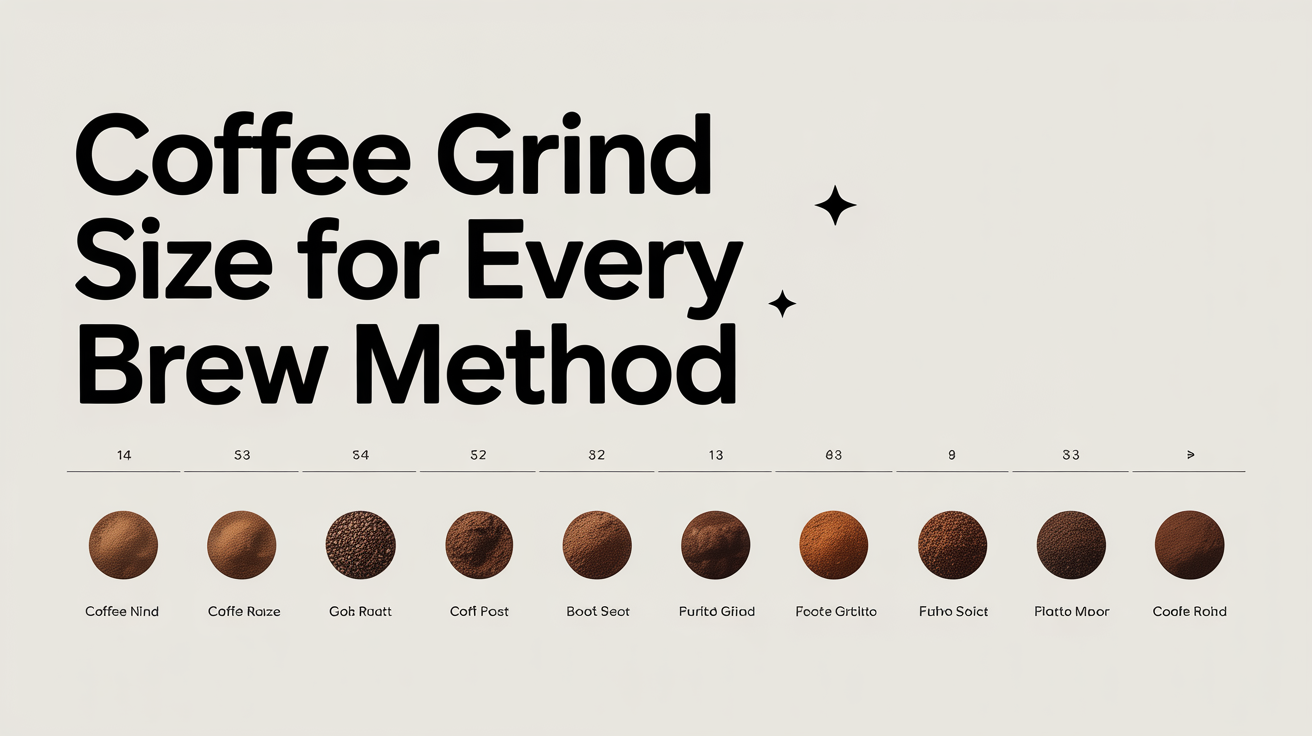
The grind size you choose before brewing matters more than most other variables. Too coarse and water rushes past the grounds too quickly, pulling thin, sour flavor. Too fine and extraction drags on, turning the cup muddy and bitter. Every brewing method has a contact time (how long water and grounds stay together), and the grind size is how you match the coffee's surface area to that window.
This guide covers the full spectrum, from extra-coarse cold brew to ultra-fine Turkish, so you have a single reference for any brewer on your counter.
Why Grind Size Controls Extraction
When water passes through ground coffee, it dissolves soluble compounds in a predictable order: fruit acids and lighter aromatics come out first, then sweetness and body, and finally bitter compounds arrive last. A coarser grind has less total surface area exposed, so extraction moves slowly. A finer grind has far more surface area, so the same contact time extracts much more material, including more of those late-stage bitter compounds.
Contact Time Is the Variable You're Matching
Each brewing method holds water in contact with grounds for a different amount of time. A French press steep runs about 4 minutes. An espresso shot runs 25 to 30 seconds. Cold brew steeps anywhere from 12 to 24 hours. The grind size you pick has to suit that window: long contact time needs a coarser grind to avoid over-extraction; short contact time needs a finer grind to pull enough flavor in the available seconds.
Burr Grinders vs. Blade Grinders
Burr grinders crush beans between two abrasive surfaces, producing a fairly consistent particle size. Blade grinders chop randomly, leaving a mix of powder and chunks that brew unevenly. For any of the grind sizes below to work reliably, you need a burr grinder. The numbers and descriptions in this guide assume burr grinding.
A Coffee Grind Size Chart, Method by Method
The sizes below run from coarsest to finest. Think of them as a spectrum, with small steps between adjacent methods and larger jumps at the extremes.
| Brew Method | Grind Size | Approx. Particle Size | Contact Time |
|---|---|---|---|
| Cold brew | Extra coarse | ~1.5 mm | 12–24 hours |
| French press | Coarse | ~1.0–1.2 mm | 4 minutes |
| Drip (standard basket) | Medium-coarse | ~0.8–1.0 mm | 5–8 minutes |
| Flat-bottom pour-over (Kalita, Stagg) | Medium | ~0.6–0.8 mm | 3–4 minutes |
| V60 / Chemex | Medium-fine | ~0.5–0.7 mm | 2.5–4 minutes |
| AeroPress (standard) | Medium-fine | ~0.5–0.7 mm | 1–2 minutes |
| Moka pot | Fine | ~0.3–0.5 mm | 5–7 minutes on heat |
| Espresso | Fine to extra-fine | ~0.2–0.4 mm | 25–35 seconds |
| Turkish / ibrik | Ultra-fine (flour-like) | under 0.1 mm | 2–4 minutes slow boil |
Particle sizes vary between grinders, so these millimeter figures are rough references. The practical calibration is taste (covered in the next section) and visual texture.
Cold Brew: Extra Coarse
Cold brew uses room-temperature or refrigerated water for 12 to 24 hours. That long contact time means any finer grind will over-extract severely, producing a bitter, tannic concentrate. An extra-coarse grind, resembling coarse sea salt or raw sugar crystals, keeps extraction balanced across many hours. A common ratio for a concentrate is 1 g coffee per 8 ml water; for a ready-to-drink batch, 1 g per 15 ml works well.
French Press: Coarse
The French press is an immersion brewer where grounds sit in water for the full steep. A coarse grind (think kosher salt) gives the extraction enough surface area for a full-bodied cup without releasing heavy silt. Grind too fine and the mesh plunger won't filter the fines properly; you'll end up with muddy coffee and a bitter finish. See the French press step-by-step guide for the complete brewing method and timing.
Pour-Over: Medium to Medium-Fine
Pour-over methods vary more than people expect. A flat-bottom brewer (Kalita Wave, Stagg X) with a restricted drain works well at medium. A conical brewer (V60, Origami) drains faster and often needs medium-fine so water doesn't rush straight through. Chemex falls somewhere in between: the thick paper filter slows flow considerably, so medium to medium-fine usually lands well. If your pour-over finishes in under 2.5 minutes, go finer. If it stalls past 4 minutes, go coarser.
AeroPress: Flexible, But Usually Medium-Fine
The AeroPress tolerates a wide range because you control both grind and steep time. A medium-fine grind with a 1 to 2-minute steep is a versatile starting point. You can run it coarser with a longer steep (closer to French press in character) or finer with a shorter steep for something denser and more concentrated. The AeroPress technique guide walks through several distinct approaches.
Moka Pot: Fine, Not Espresso-Fine
The moka pot forces pressurized steam through the grounds from below. It needs a fine grind to resist that flow long enough for a proper brew, but espresso-fine compacts too densely and can cause pressure buildup. The target texture is closer to table salt than the powdery feel of espresso grounds. Filling the basket loosely without tamping is standard practice.
Espresso: Fine to Extra-Fine
Espresso forces hot water through a compressed puck at around 9 bar of pressure in 25 to 35 seconds. The grind has to be fine enough that 18 to 20 g of coffee creates sufficient resistance to slow the water to that timing. Espresso grind is notably sensitive: a half-step coarser or finer can shift shot time from 25 to 45 seconds. Dialing in espresso is its own process and worth treating separately from these other methods.
Turkish Coffee: Ultra-Fine
Turkish coffee calls for a powder that feels like flour between your fingers. The ibrik (cezve) is heated slowly on low heat, bringing the coffee near a boil, and the ultra-fine grounds never filter out. They settle in the cup after pouring. Most standard home grinders can't reach this fineness; you need either a dedicated Turkish grinder or a burr grinder with a specific Turkish setting at the very bottom of its range.
How to Adjust When the Cup Tastes Off
Once you know the target grind size for a method, taste is your feedback loop. Two problems cover most bad cups.
Bitter, Harsh, or Dry (Over-Extracted)
Over-extraction means water spent too long pulling from the grounds, reaching the bitter compounds that come out late in the extraction window. The cup feels dry and astringent at the back of the mouth, often with a harsh finish. Possible causes: grind too fine, brew time too long, or water temperature too high (above 205°F / 96°C). Move one or two steps coarser and taste again. For pour-over, you can also try pouring a bit faster.
Sour, Weak, or Thin (Under-Extracted)
Under-extraction means water moved through too quickly without dissolving enough material. The result tastes sour, sharp, and hollow, sometimes with a grassy or metallic note. Possible causes: grind too coarse, brew time too short, or water too cool (below 195°F / 90°C). Move one or two steps finer. For pour-over, a slower pour or a longer 30 to 45-second bloom before continuing can also help.
When Grind Isn't the Only Variable
If you've adjusted grind size in both directions without fixing the problem, check water temperature before making further changes. Most methods perform best between 195°F and 205°F (90°C to 96°C). Espresso targets 199°F to 204°F (93°C to 95°C). Cold brew is the exception, using ambient or refrigerated water. A thermometer or a kettle with temperature control removes this variable completely.
Frequently Asked Questions
What happens if I use the wrong grind size?
The cup will taste off in a predictable direction. Too coarse produces thin, sour, or grassy coffee because extraction was incomplete. Too fine produces bitter, dry, or muddy coffee because extraction went too far. Adjusting grind size is the fastest way to fix most problem cups.
Can I use pre-ground coffee across different brew methods?
Most pre-ground coffee is milled to a medium grind, which works reasonably well for drip machines and flat-bottom pour-overs. It's too coarse for espresso and moka pots, and too fine for French press (you'll get silt in the cup) and cold brew (expect bitterness from the long steep). If you're brewing with a dedicated method, grinding fresh gives you control that pre-ground coffee can't provide.
How do I figure out which grinder setting matches which grind size?
Grinder numbering varies between brands and isn't standardized. Start at a midpoint setting, brew a cup, taste it, and move coarser or finer based on the result. After a few sessions with a given method, you'll have a reliable home number. Write it down near the grinder so you don't have to rediscover it each time.
Does the coffee-to-water ratio change with grind size?
The ratio stays roughly the same regardless of grind; grind size adjusts extraction speed, not dosing. A standard starting ratio for most methods is 1 g coffee per 15 ml water (about 1:15). Cold brew concentrate typically runs 1:8 to 1:10. Espresso uses a much tighter ratio: 1 g of coffee to roughly 1.5 to 2.5 ml of espresso yield, depending on the style you're pulling.
Does a finer grind go stale faster?
Yes. Finer grounds have more surface area exposed to air, so they oxidize more quickly. Whole beans stay reasonably fresh for 2 to 4 weeks after the roast date. Once ground, that window shortens considerably. Grinding just before brewing makes the biggest flavor difference, regardless of which method you use.