Equipment
Manual vs Electric Coffee Grinders
Manual vs electric coffee grinder: a practical breakdown of grind quality, cost, speed, and who should choose which type for home brewing.
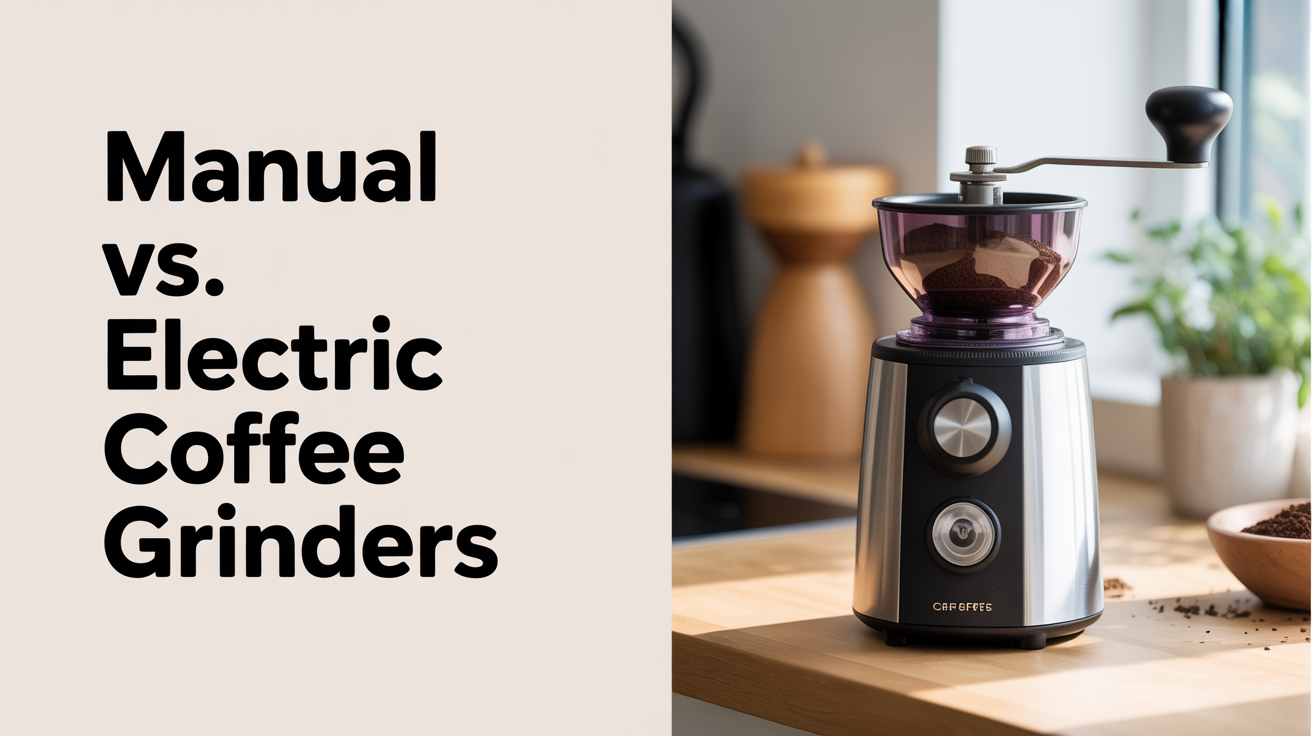
The short answer: both types can produce excellent grind quality. The difference comes down to how much you want to spend, how fast you need coffee in the morning, and how much counter space you have. This guide walks through the real trade-offs so you can make a practical call for your own setup.
How Each Type Works
Both manual and electric grinders split into two broad categories: burr grinders and blade grinders. Blade grinders (the spinning-chopper style) are generally worth skipping regardless of whether they're hand-powered or electric. They chop beans unevenly, produce a wide range of particle sizes, and make consistent extraction nearly impossible. If you're comparing manual vs electric, you're really comparing burr grinders, which use two abrasive surfaces to crush beans to a uniform size.
For a deeper look at why the burr mechanism matters so much, see Burr vs Blade Grinder: Why It Matters.
Manual burr grinders
A hand grinder uses a crank to turn one burr against a stationary second burr. You hold the grinder, load the bean hopper, and rotate the handle until all the beans have passed through. The grounds collect in a catch cup at the bottom. Most hand grinders are conical burr designs, which tend to produce fewer fines (the ultra-small particles that cause bitterness) than flat burr designs at the same price point.
Electric burr grinders
An electric grinder does the same thing mechanically, but a motor drives the burrs. You set a grind size using a stepped or stepless collar, dose your beans by weight or volume, and press a button. Most home models use either flat or conical burrs, and higher-end options offer doserless hoppers that grind directly into a portafilter or a cup.
Where Manual Grinders Have the Edge
Price-to-quality ratio
A well-built hand grinder with steel or ceramic burrs typically costs $40 to $120. At that price range, the grind quality often rivals electric grinders that cost two to three times as much. The reason is simple: the motor, housing, and electronics in an electric grinder account for a significant portion of the manufacturing cost. A hand grinder puts almost all the budget into the burrs themselves.
For pour-over, AeroPress, or French press brewing, a $60 hand grinder can produce grind consistency that is genuinely hard to distinguish from an electric grinder at $150 to $200. This makes manual grinding an efficient starting point if you want quality without a large upfront spend.
Portability
A hand grinder fits in a bag. Most models are 7 to 9 inches tall and narrow enough to slip into a jacket pocket or small backpack compartment. If you travel, camp, or want coffee in a hotel room without relying on the in-room blade grinder, a hand grinder is straightforward to pack. Electric grinders are countertop appliances; they don't travel.
Quiet operation
Electric grinders are loud. Depending on the model and burr type, expect 70 to 90 dB during operation. That's comparable to a food processor or a hair dryer. A manual grinder produces a low grinding sound, around 40 to 55 dB depending on the grind size, making early-morning grinding a less disruptive exercise if anyone else is sleeping.
No power required
This is minor for most people but relevant if you're off-grid, dealing with a power outage, or brewing in a space without easy outlet access.
Where Electric Grinders Have the Edge
Speed
Grinding 20 g of beans for a single pour-over by hand takes roughly 60 to 90 seconds at a medium-fine setting. Grinding 30 g at a finer setting for espresso can take 2 to 3 minutes. Most electric grinders handle the same dose in 10 to 20 seconds. If you're brewing multiple cups back-to-back, or if you're caffeinating two people every morning under time pressure, hand grinding adds up fast.
Convenience and consistency
With an electric grinder, you set the grind size once and return to the same setting every morning. Many models have numbered grind steps, making it easy to note your preferred setting and come back to it after cleaning. A manual grinder also holds its setting between uses, but the physical act of cranking means more variable hand pressure, which can slightly affect how quickly beans feed through the burrs. It's a small effect, but it's real.
Espresso grinding
Espresso requires a very fine grind (particles around 200 to 400 microns) and tight particle size distribution. Fine grinding by hand takes significant effort and time. Some premium hand grinders handle espresso well, but they tend to cost $150 to $300+. At that price, a purpose-built electric espresso grinder with flat burrs becomes a competitive alternative. For daily espresso use, most people find an electric grinder a better fit.
High-volume brewing
Brewing a full French press, a large batch AeroPress, or multiple filter cups at once means grinding 40 to 60 g or more. That's a lot of hand-cranking. An electric grinder handles larger doses without the physical effort scaling in the same way.
Price Ranges and What You Get
| Budget | Manual Option | Electric Option |
|---|---|---|
| Under $50 | Entry-level ceramic burr, works well for French press and drip | Blade grinders only; not recommended |
| $50–$120 | Quality steel burr grinders; good for most filter methods | Entry electric burr grinders; acceptable for filter, limited for espresso |
| $120–$250 | High-end hand grinders with tight tolerances; competitive for espresso | Mid-range flat or conical burr; solid all-around performance |
| $250+ | Specialty espresso hand grinders | Purpose-built espresso grinders with stepped or stepless adjustment |
The key takeaway: for filter brewing methods (pour-over, AeroPress, French press, Chemex), a manual grinder at $60 to $100 competes with an electric grinder at $150 to $200. For espresso, the calculus shifts and an electric grinder tends to deliver more convenience per dollar spent.
For more help thinking through your next grinder purchase, how to choose a coffee grinder covers the full decision framework.
Which One Makes Sense for Your Setup
A few questions that point toward the right answer:
You probably want a hand grinder if: you're brewing one or two cups of filter coffee per day, you want strong grind quality without spending $200+, you travel with your brewing gear, or you share a home with early risers who don't want to hear a motor at 6 a.m.
You probably want an electric grinder if: you're pulling espresso shots daily, you brew multiple cups back-to-back each morning, you don't want the physical effort of cranking, or you need speed as part of your morning routine.
The hybrid approach: some home brewers own both. A mid-range hand grinder for weekday pour-over (quick, quiet, accurate) and a more capable electric grinder for espresso on weekends is not an unusual setup. It's also not strictly necessary. A good hand grinder handles filter methods excellently, and a good electric grinder handles them too.
Frequently Asked Questions
Does a manual grinder produce better grind quality than an electric grinder?
Not inherently. Grind quality depends mostly on the burrs, their size, their material, and how tightly the mechanism is built. A hand grinder with quality steel burrs can outperform a cheap electric model, but a high-end electric grinder will generally outperform a budget hand grinder. The advantage of manual grinders is that you get better burrs for the same price.
Is hand grinding coffee worth the effort?
For most filter brewing methods, yes. Grinding 18 to 22 g of beans for a pour-over takes about 60 to 90 seconds and requires mild, sustained effort rather than strength. It becomes a small ritual for many people rather than a chore. For espresso, where you might grind 18 g at a much finer setting, the effort is more noticeable and the case for electric becomes stronger.
Can you use a manual grinder for espresso?
Yes, but with caveats. It takes 2 to 4 minutes of cranking per dose at fine espresso settings, and the effort is real. Some purpose-built espresso hand grinders cost $200 to $300 and produce excellent results. If you're already spending that much, an electric espresso grinder becomes competitive. For occasional espresso, a capable hand grinder works; for daily double shots, electric is more practical.
How long do manual grinders last?
Steel burr hand grinders are durable and largely mechanical, with few parts that wear quickly. Ceramic burrs can chip if a small rock or foreign object gets into the hopper, but ceramic resists edge wear longer than steel under normal use. Treated with basic care (brush cleaning every few weeks, avoiding moisture), a quality hand grinder lasts many years.
Do electric grinders need more maintenance than manual ones?
Both require cleaning to prevent stale coffee oils from building up on the burrs. Electric grinders have more components (motor, housing, grounds chute) that collect residue. Most manufacturers recommend a brush clean every 5 to 10 uses and a full burr cleaning monthly. Manual grinders are simpler to disassemble and clean. Neither type is high-maintenance; it's more a question of access and ease of disassembly.