Coffee Recipes
How to Make Vietnamese Iced Coffee at Home
Make ca phe sua da at home using a phin filter and sweetened condensed milk — bold, sweet, ice-cold, and distinct from lattes or cold brew.
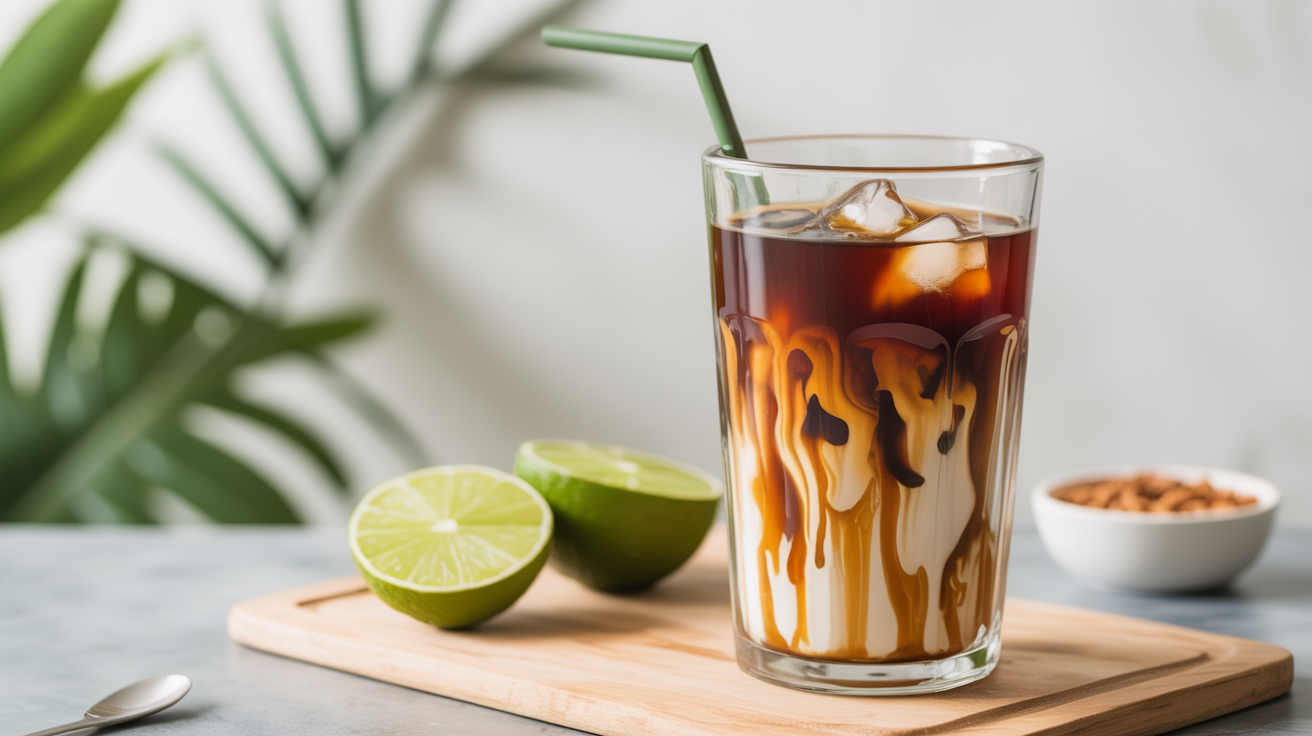
Vietnamese iced coffee has a flavor profile unlike anything else in the iced coffee world. Strong brewed coffee, a generous pour of sweetened condensed milk, and a glass packed with ice come together to produce something boldly bitter and deeply sweet at once. The drink is called ca phe sua da in Vietnamese, and it is brewed with a small aluminum drip filter called a phin rather than a paper-filtered pour-over or espresso machine.
If you have had it at a Vietnamese restaurant and assumed it required special equipment or hard-to-find ingredients, this guide should put that to rest. A phin costs less than $10, the coffee is available at most Asian grocery stores, and the whole process takes about 10 minutes once you understand the technique.
What Sets Ca Phe Sua Da Apart
Ca phe sua da is not a Vietnamese version of an iced latte. The two drinks start from different places and end up in different territory.
Iced lattes use espresso, which extracts quickly under pressure at around 195°F (90°C), producing a concentrated shot diluted with milk. Ca phe sua da brews through a phin at a slower drip rate, typically 4 to 8 minutes for a single serving. The coffee ends up thicker and more bitter than a latte, partly because Vietnamese blends often carry some robusta beans, and partly because the condensed milk adds sugar rather than providing a milk-forward texture.
Cold brew and ca phe sua da are also completely different, even though both go over ice. Cold brew macerates for 12 to 24 hours at room temperature and comes out smooth and low in acidity. Phin-brewed coffee arrives hot from the filter and lands directly on ice, so the chill is fast and the flavor is sharp, not mellow.
These distinctions matter practically. You are not substituting one drink for another based on convenience. Ca phe sua da is its own thing, with a particular balance of bitterness and sweetness that neither espresso drinks nor cold brew replicate.
What You Need
The Coffee
Authentic ca phe sua da relies on a dark-roasted Vietnamese-style blend. Most of these blends include some robusta beans alongside arabica. Robusta has a naturally harsher, more bitter profile, and it produces a thicker body, which is exactly what the drink needs to stand up to the sweetened condensed milk.
Darker roasts carry less of the origin character from the bean and more of the roasting process itself: caramel, dark chocolate, slightly smoky notes. Coffee roast levels explained goes into more detail if you want to understand why those flavors develop the way they do and how to read a bag's roast label.
For ca phe sua da, a pre-ground Vietnamese brand found at Asian grocery stores in 200 g to 500 g cans works well. Medium-coarse grind, roughly the texture of coarse sea salt, is the target for a phin. If you are grinding your own, a burr grinder set to medium-coarse will get you there.
A standard single-serving phin uses 20 to 25 g of coffee, which is noticeably more than a typical pour-over at 15 to 17 g. That higher dose relative to water volume is part of what makes the brew so concentrated.
The Phin Filter
A phin is a small stainless steel or aluminum gravity drip filter with four parts: a chamber that sits over your cup, a perforated press insert that rests on top of the grounds, a lid to hold in heat during the brew, and a base plate that rests on the rim of your glass or cup.
Phins come in sizes from about 3-cup to 10-cup. For home use, a 4-cup or 6-cup phin is the most practical. These size labels refer to approximate volume rather than a precise measurement, so expect a single serving from a 4-cup phin to yield roughly 60 to 90 ml of brewed coffee.
Phins are sold at Asian grocery stores, Vietnamese specialty shops, and online. Aluminum versions are inexpensive and work just as well as stainless steel for home brewing.
Sweetened Condensed Milk
Sweetened condensed milk is the traditional sweetener, doing the work of sugar and cream in one ingredient. The standard starting ratio is 2 tablespoons (roughly 40 ml) per serving, added to the bottom of the glass before the coffee drips in. You can dial this up or down based on preference.
Stirring the condensed milk in first means it incorporates easily as hot coffee melts it. Some people stir it in after brewing instead, which is fine, but the result is the same.
Brewing Ca Phe Sua Da, Step by Step
Set Up Your Glass and Filter
Add 2 tablespoons (40 ml) of sweetened condensed milk to a tall glass and set it aside. Spoon 20 to 25 g of medium-coarse ground coffee into the phin chamber. Place the press insert on top of the grounds and press gently with your fingers. Do not pack it tightly as you would espresso grounds. Light, even hand pressure is enough.
Place the phin on top of a heat-proof glass or small cup. Some brewers put the phin directly over the serving glass from the start, but using a separate cup during brewing makes it easier to monitor the extraction without worrying about overfilling.
Bloom and Brew
Heat water to around 200°F (93°C). If you do not have a temperature-controlled kettle, bring water to a boil and let it rest for about 30 seconds.
Pour roughly 30 ml of water over the grounds slowly to wet them. Wait 30 seconds. This bloom step releases CO2 from the coffee and helps even extraction across the bed of grounds.
After the bloom, fill the phin chamber to just below the rim, typically 120 to 150 ml of water. Put the lid on. The drip should begin within a minute or so and finish in 4 to 8 minutes.
If the drip takes more than 10 minutes, your grind is too fine. If it finishes in under 3 minutes, the grind is too coarse or the press insert is sitting too loosely over the grounds. Adjust the grind or the insert pressure for the next brew.
Pour Over Ice and Serve
Once the brew finishes, lift the phin off the cup and set it aside. Stir the brewed coffee with the condensed milk until combined. Pour the mixture over a glass packed with ice. The coffee chills fast, and the condensed milk swirls through the dark liquid as the ice begins to melt and dilutes the drink slightly.
Some people add 30 to 60 ml of cold water or a splash of whole milk at this stage. That is optional. Traditionalists drink it without any additions.
If You Don't Own a Phin
A drip coffee maker can work as a substitute, with some trade-offs. Use a higher coffee-to-water ratio than you normally would, about 1:8 by weight (25 g coffee to 200 ml water), to get a concentrated brew. The flavor will be a bit cleaner and less thick than a phin produces because paper filters strip out more of the oils that contribute to body.
A French press is another option. Use the same 25 g to 200 ml ratio, steep for 4 minutes, press, and pour hot over a glass with condensed milk and ice. The body will be richer than a paper-filtered version, closer to phin coffee in texture.
What does not work well is standard drip brewed at normal household strength. The resulting coffee is too thin, and the condensed milk overwhelms it rather than balancing it.
Frequently Asked Questions
What kind of coffee does ca phe sua da traditionally use?
Vietnamese coffee blends typically combine arabica and robusta beans, roasted dark. Robusta contributes bitterness, caffeine, and body. You can find canned Vietnamese blends at many Asian grocery stores, usually already ground to a medium-coarse texture suitable for a phin.
How much condensed milk should I use?
Start with 2 tablespoons (about 40 ml) and adjust from there. If you prefer a less sweet drink, try 1 tablespoon and taste after stirring. There is no fixed ratio that works for everyone, since condensed milk brands vary in sweetness and individual preference matters more than any formula.
Can I make ca phe sua da ahead and refrigerate it?
You can brew the coffee, mix it with the condensed milk, and refrigerate the concentrate for up to 24 hours before adding ice. Do not pour it over ice before refrigerating, as the ice will dilute the drink as it melts. When ready to serve, pour the chilled concentrate over a fresh glass of ice.
Why is my phin dripping too slowly?
The most common cause is a grind that is too fine. If the water sits in the chamber for more than 10 minutes without moving, try a coarser grind setting. The press insert may also be screwed or pressed down too tightly. Ease up on the pressure and see if the flow rate improves. A correct extraction should finish in 4 to 8 minutes.
Is Vietnamese iced coffee the same as cold brew?
No. Ca phe sua da uses hot water, around 200°F (93°C), that drips through the phin in 4 to 8 minutes, producing a small volume of strong hot coffee that goes directly over ice. Cold brew is made by steeping grounds in room-temperature water for 12 to 24 hours, producing a smooth, low-acid concentrate. The flavor profiles are quite different: cold brew is mellow and rounded, while ca phe sua da is bold, bitter, and sharply cooled by the ice.