Equipment
Coffee Filters Compared: Paper, Metal, and Cloth
A practical guide to coffee filter types: how paper, metal, and cloth filters differ in flavor, maintenance, and which brewing methods they suit best.
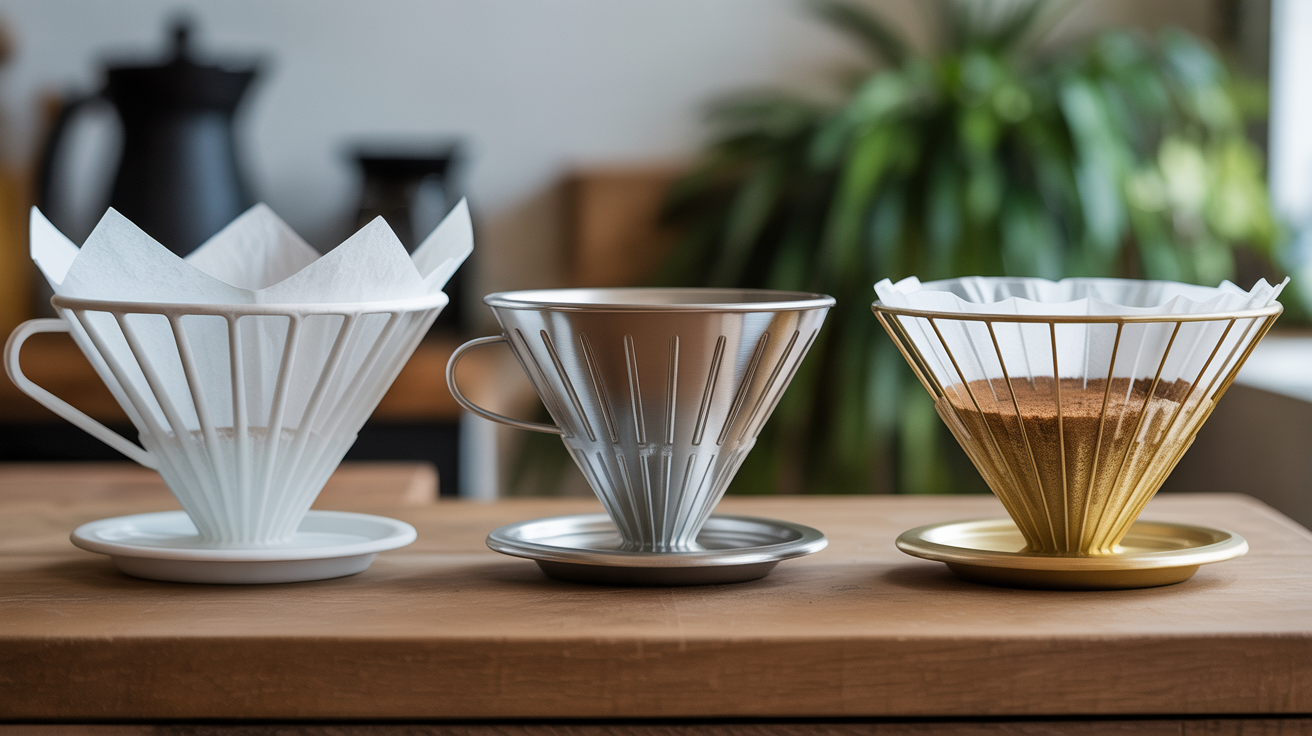
The filter you brew through shapes your cup more than most people expect. Paper, metal, and cloth each pass different compounds, trap different particles, and ask different things of you in terms of upkeep. None of them is universally the right choice. Each one suits a particular style of brewing and a particular tolerance for maintenance.
Here is a plain account of how they work and what they produce.
Paper Filters
Paper filters are the most widely used option for home brewing, and for good reason. They are cheap, disposable, and produce a remarkably clean cup.
What Paper Actually Filters Out
Paper is dense enough to catch the fine coffee particles that pass through metal and cloth. More significantly, it absorbs most of the coffee oils (primarily cafestol and kahweol, both diterpenes found in coffee fat). Those oils are what give French press and moka pot coffee their heavier texture. With a paper filter, the oils stay behind, and the liquid in your cup is almost completely clear.
The result is a bright, lighter-bodied brew where acidic and fruity notes come through cleanly. For a light-roast Ethiopian or a floral Yemeni coffee, a paper filter lets the complexity of the bean stand on its own without any textural interference.
Bleached vs. Unbleached
Both types work the same way. Bleached (white) paper filters are treated with either oxygen or chlorine to remove the raw paper smell. Unbleached (brown) filters skip that step, so they can carry a faint papery taste if you skip the rinse.
The fix is simple: before you brew, pour 200 ml of hot water (around 93°C / 200°F) through the filter to rinse it into your dripper. Dump that water, then add your grounds. This takes about 15 seconds and eliminates any trace of paper taste, regardless of whether your filter is bleached or unbleached.
Grind Size and Filter Fit
Paper filters work across most pour-over devices (V60, Kalita Wave, Chemex) but each brewer uses a different filter shape, so they are not interchangeable. A Chemex filter is noticeably thicker than a standard V60 filter, which affects flow rate. Using the right shape for your brewer matters more than brand.
For paper, a medium-fine grind (around the texture of table salt, or roughly 25 to 30 on most numbered grinders) gives a 3 to 4 minute brew for a standard 15:1 ratio (e.g., 30 g coffee to 450 ml water). Grind too fine and the paper slows water almost to a stop; too coarse and the brew runs fast and tastes thin.
Metal Filters
Metal mesh filters, typically made from stainless steel, keep none of the coffee oils. They pass fine particles along with the oils, producing a full-bodied, heavier cup that sits somewhere between a V60 brew and a French press.
Mesh Size and What It Lets Through
The weave of a metal filter is measured in microns. Most home metal filters fall between 150 and 200 microns. A V60 paper filter stops particles around 10 microns. That gap is why metal-filtered coffee always has some sediment at the bottom of the cup and a richer, sometimes slightly gritty mouthfeel.
If you enjoy the body of a French press but want a bit more clarity, a metal filter on a pour-over brewer is a useful midpoint. You get the oils and a fuller texture without the heavy sludge you find at the bottom of a plunger pot.
Grind size matters more with metal filters. Because the mesh does not restrict flow the way paper does, you often need a slightly finer grind (around 20 to 25 on a numbered scale) to slow the brew down enough to achieve proper extraction. A grind that runs too fast through metal produces a weak, under-extracted result. Your choice of grinder has a real impact here: consistent grind size keeps the flow rate predictable and gives you more control over the outcome.
Cleaning and Longevity
A metal filter needs a rinse after every use. Coffee oils go rancid within a day or two, and a filter coated in old oil will add a flat, stale character to the next brew.
Once or twice a month, soak the filter for 15 to 20 minutes in a solution of 5 g baking soda dissolved in 500 ml of hot water, then scrub gently with a soft brush and rinse thoroughly. Some brewers use a diluted white vinegar soak (equal parts vinegar and water) instead, which also breaks down mineral buildup. Avoid dish soap if you can; soap residue lingers in the mesh and can affect flavor.
A well-maintained stainless filter lasts years. Most show no degradation in performance after two or three years of daily use.
Cloth Filters
Cloth filters (usually cotton or hemp) occupy a genuine middle ground. They pass more oils than paper but fewer particles than metal, producing a cup that is fuller-bodied than paper-filtered coffee but cleaner than metal-filtered.
Flavor Profile
The texture of cloth-filtered coffee is silky rather than heavy. The oils pass through but most of the fine sediment does not. Fans of this style describe it as a rounder, softer cup than paper produces, without the gritty finish that metal can leave. The nel drip method, traditional in Japanese kissaten coffee culture, uses flannel cloth specifically to achieve this quality.
Cloth works well for medium and dark roasts where you want body and sweetness without excessive bitterness. Light roasts can also work, but the cloth's tendency to let oils through can sometimes mute the very clarity that makes bright, fruity light roasts interesting.
Storage and Upkeep
Cloth filters require more attention than either paper or metal. After each use, rinse the filter under warm running water immediately, removing all grounds. Do not use soap. Allow it to dry completely between uses, or store it wet in the refrigerator in a sealed container (change the water daily). A cloth filter left damp at room temperature develops mold within a day.
Replace a cloth filter when it starts to discolor significantly or develop any off-smell that rinsing does not remove. Depending on use frequency, this is usually every three to six months. Because they are organic material, cloth filters are compostable at end of life.
Choosing the Right Filter for Your Setup
The simplest way to decide is to match the filter type to the cup you want, then consider the maintenance you are willing to do.
| Filter Type | Body | Clarity | Oils Passed | Maintenance | Cost Over Time |
|---|---|---|---|---|---|
| Paper | Light to medium | Very high | Almost none | Minimal (disposable) | Low to moderate |
| Metal | Full | Lower, some sediment | Most | Moderate (regular cleaning) | Very low (reusable) |
| Cloth | Medium | Medium-high | Partial | High (store carefully) | Low (reusable) |
If you brew on a V60 and love floral, acidic coffees, paper is the obvious choice. If you want to cut back on disposables and prefer a richer cup, a metal filter is a practical swap. If you are curious about the flannel-drip style and willing to commit to proper storage, cloth rewards the extra effort.
One thing that is sometimes overlooked: your grinder influences results as much as your filter does. A burr grinder with consistent particle size lets each filter type perform as it should. A blade grinder produces uneven particles that make any filter harder to dial in. You can read more about that distinction in this guide to burr vs. blade grinders.
Frequently Asked Questions
Do paper filters change the taste of coffee?
They do, but mainly by removing what other methods leave in. Paper traps coffee oils and fine particles, so the cup is cleaner and brighter. Whether that reads as an improvement depends on your preference. If you usually drink French press, paper-filtered coffee will taste thin by comparison. If you prefer delicate, tea-like cups, paper is likely your filter.
Are metal filters safe to use daily?
Yes. Food-grade stainless steel is inert and does not leach anything into the coffee. The main health consideration that comes up around metal filters is that coffee oils (specifically cafestol) do raise LDL cholesterol over time when consumed regularly in large quantities. Paper filters trap those oils; metal does not. If that is a concern, paper is the better option for daily high-volume brewing.
How often should I replace a cloth filter?
Most cotton or hemp filters hold up for three to six months with daily use, assuming you rinse them immediately after every brew and store them properly (dry or refrigerated). The clearest signal that replacement is needed is a persistent off-smell that does not wash out, or obvious discoloration that affects the taste of the brew.
Can I use a paper filter in a metal filter holder?
In some cases, yes. A few metal dripper designs accept both. Placing a paper filter inside a metal one slows down the flow significantly and shifts the cup profile toward the paper end of the spectrum. Some brewers use this combination deliberately to get a cleaner result from a brewer that was designed for metal. Test with a small batch first to see how it affects your brew time.
Does filter type affect caffeine content?
Not meaningfully. Caffeine is water-soluble and passes through all three filter types with minimal retention. The primary variables that affect caffeine in the cup are brew time, water temperature, coffee-to-water ratio, and roast level, not filter material. A 15:1 ratio brewed at 93°C / 200°F for 3 to 4 minutes will produce a similar caffeine level regardless of whether you use paper, metal, or cloth.